What Sufism can teach us about the modern world
How should Islam be approached: through the juridical-legal tradition or through the mystical tradition? Mainstream Islamic scholarship generally regards the various expressions of Islam as constituting a single, normative tradition and often exhibits a degree of resistance to religious innovation. In contrast, Sufi traditions across different historical periods and cultural contexts have typically demonstrated greater openness in addressing the challenges posed by changing times and circumstances.
These differing orientations are particularly evident in the contrasting approaches of what Vincent J. Cornell has termed “corporate Islam”—the dominant, often monolithic expression of mainstream Sunni Islam—and Sufi Islam. According to Cornell (2014), corporate Islam tends to emphasise the preservation of an idealised and pristine religious order that is largely insulated from historical change. Sufi traditions, by contrast, have generally engaged with contemporary realities with greater flexibility and creativity while remaining firmly rooted in Islamic orthodoxy ("Islam." In The Crisis of the Holy: Challenges and Transformations in World Religions, edited by Alon Goshen-Gottstein, pp. 125–149).
As Frithjof Schuon (2006) observes, Sufis are no less committed to the essential tenets of Islam than adherents of normative religious practice; however, they often express that commitment through dynamic and context-sensitive interpretations (Sufism: Veil and Quintessence: A New Translation with Selected Letters, ed. James S. Cutsinger, p. 167). Because of their creativity and dynamism, adherents of mainstream (normative) Islam often blame Sufis for the decline of Islam, regard Sufi doctrines as bid'a (innovation), and sometimes label Sufism as a disease.
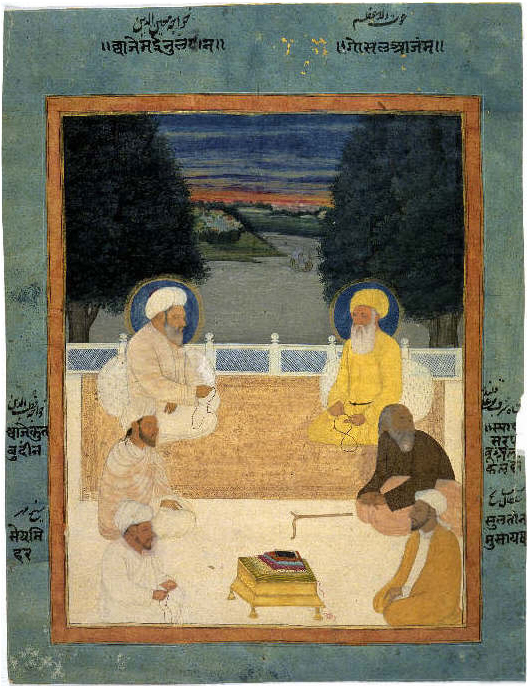
It has been argued that many contemporary adherents of mainstream Islam remain largely confined within inherited frameworks of the past, reducing religious identity to a fixed creed. In this sense, Islam becomes analogous to the millet system of the Ottoman period—a "hermetic, self-contained religious community that exists concurrently with but in nearly total separation from the millets of other religions" (Cornell 2014, p. 129). Such an approach tends to emphasise communal boundaries and doctrinal conformity at the expense of the Qur'anic vision of Islam as an individual and conscious submission to the will of God.
According to this critique, contemporary corporate Islam bears little resemblance to the rich intellectual legacy of classical Islamic civilisation. Its engagement with theology, philosophy, Sufism, and other scholarly traditions has often been limited, resulting in a narrowing of the intellectual horizons of the faith. Consequently, Islam becomes increasingly isolated from broader human conversations and experiences. This disengagement from the diverse scholarly traditions of the past has also contributed to the rise of Islamic fundamentalism. As Cornell observes, such tendencies have "lost sight of the Qur'anic concept of the universality of revelation" while simultaneously developing a distorted view of the world in which Islam is regarded as the sole repository of normative truth.
Cornell characterises this condition as an epistemological crisis (2014, p. 129), one that contemporary Muslims must confront. The solution, however, does not lie in abandoning the intellectual and spiritual legacies of the Islamic tradition. Rather, it requires a renewed engagement with the vast corpus of classical scholarship—legal, theological, philosophical, and mystical—in order to address the challenges of the present. By drawing creatively upon this rich heritage, Muslims can remain faithful to their tradition while responding meaningfully to the realities of the modern world.
For many Sufi traditions, the defining feature of the contemporary age is modernity, with its accompanying realities of pluralism, diversity, and democratic participation. In responding to these conditions, Sufis often draw upon the classical notion that the true mystic is ibn al-waqt—the "son of the moment" (Schuon 2006, p. 123). This concept signifies a spiritual orientation in which the seeker lives fully in the divine present, free from attachment to the past or anxiety about the future. As Schuon explains, the Sufi is "situated in God's Present without concern for yesterday or tomorrow", for this present moment is a reflection of divine Unity; the One manifested within time becomes God's eternal "Now", a reality that transcends temporal limitations.
At a practical level, ibn al-waqt also implies continual attentiveness and responsiveness to the divine will. In Schuon's words, it means that the Sufi "keeps himself at all times in the divine Will", recognising that each present moment embodies what God intends for him (Understanding Islam, 1998 [1961], p. 187). This spiritual disposition encourages engagement with the circumstances of one's own age rather than retreat into an idealised past. Consequently, many Sufi traditions have sought to address the challenges of modernity through creative and context-sensitive interpretations that remain grounded in enduring spiritual principles.
Sufis insist on remembering God not only in a contemplative way, but also by witnessing (mushahada) the "signs" (ayat) around them because, as some Sufis believe, God discloses Himself in every existing thing (Sachiko Murata 1992, The Tao of Islam: A Sourcebook on Gender Relationships in Islamic Thought, p. 192). One of the signs of such disclosure (tajalli) is time itself; signs are also revealed in the Book and in nature (Schuon 1998 [1961], pp. 161, 165). Witnessing as well as embodying these signs, which is a cultivated virtue, is called ihsan, or "doing the beautiful", to quote William C. Chittick (2000, Sufism, pp. 4–6), and is also a method of becoming a Muslim. It emphasises knowing, especially knowing one's own self. This ihsan, or "doing the beautiful", together with sincerity (ikhlas), constitutes tasawwuf.
One of the early Egyptian Sufis, muftis, and fuqaha, Ibn 'Ata Allah (d. 1309), urged his fellow coreligionists to live in accordance with the present time and to accept its consequences as manifestations of the divine will. According to him, a true believer should have absolute trust (tawakkul) in God, adapt himself to present circumstances, "go with the flow", and trust that God will see him through changing times. As one Prophetic tradition states, God is time. He expressed this view in a quatrain:
When I saw destiny flowing
There was no doubt or hesitation about it.
So I entrusted all of my rights to my Creator
And threw myself into the current
(quoted in Cornell 2014, p. 146).

Compared with the normative tradition, the Sufi tradition, it appears, is more inclined towards interreligious openness, as some Sufi masters (such as Delaor Husayn Maizbhandari, Vilayet-e Mutlaka, 7th ed., 1960) argue that Islam is not the only chosen path through which humanity can reach God. This is how Sufism "contributes to opening up Muslims' field of vision through its encouragement of interreligious exchanges and the intermingling of cultures."
Islam, and Sufism in particular, often regards the diversity of peoples, cultures, and religions as an expression of divine wisdom rather than a deviation from it. The Qur'an provides a foundation for religious pluralism by affirming both the universality of divine revelation and the legitimacy of religious diversity. It teaches that God has assigned different communities their own paths and laws and that human beings should compete in righteousness rather than seek uniformity (Q. 5:48). The Qur'an further declares that every community has received a messenger (Q. 10:47), indicating that divine guidance is not limited to a single people or tradition. Moreover, it extends the promise of salvation to all who believe in God, the Last Day, and act righteously, including Jews, Christians, and other faith communities (Q. 2:62). Together, these teachings suggest that religious diversity is part of God's design and that moral excellence, rather than religious exclusivism, is central to the Qur'anic vision of human coexistence.
From this perspective, human diversity is understood as a reflection of divine wisdom rather than a product of historical chance. The Qur'an presents differences in language, ethnicity, culture, and communal identity as signs of God's creative purpose. Building on this inclusive vision, some Muslim scholars have acknowledged figures such as Buddha, Zoroaster, and Akhenaton as recipients of divine guidance. Likewise, certain South Asian Muslim thinkers have regarded the Vedas as divinely inspired scriptures and have consequently extended the concept of the "People of the Book" (Ahl al-Kitāb) to include Hindus. Such interpretations reflect a broader Islamic understanding that divine revelation and guidance have reached diverse peoples throughout human history (Eric Geoffroy 2010, p. 182).
Despite its diversity across cultures and historical periods, Sufism has generally upheld the Qur'anic values of pluralism, coexistence, and respect for human diversity. By emphasising the universality of divine mercy and the presence of truth in different religious traditions, Sufis have often fostered inclusive and constructive engagement with others. This outlook is rooted in the central Sufi principle of divine love, exemplified by Rābiʿa al-ʿAdawiyya's (d. 801) famous statement: "My love of God has prevented me from the hatred of Satan." Her words reflect the Sufi conviction that complete devotion to God transcends hostility and cultivates a spiritual vision grounded in love, compassion, and openness towards all creation.
Sufi spirituality is deeply rooted in the belief that the purpose of creation is for God to be known, a theme expressed in the famous ḥadīth qudsī, "I was a hidden treasure and desired to be known; therefore, I created the world." The Qur'an itself underscores the intimacy of the relationship between God and humanity, declaring, "We are nearer to him than his jugular vein" (50:16). It also speaks of a reciprocal relationship of love between God and His servants. Nevertheless, many theologians within the normative tradition have tended to interpret divine love primarily in terms of obedience to God's commands rather than as a mutual bond of love between the Creator and the believer. Sufis seek to discover this divine reality by contemplating the signs of God manifested throughout creation, viewing the cosmos as a mirror reflecting the Divine Presence. In fact, love occupies a central and defining place in Sufi spirituality. For Sufis, the relationship with God is not merely one of submission but also of profound affection, longing, and intimacy. This love extends beyond God to encompass God's Beloved, the Prophet Muhammad (PBUH), whose exemplary character and spiritual perfection serve as a model for the believer. As Annemarie Schimmel (1994) observes, devotion to the Prophet became an indispensable element of Muslim piety and spiritual life (Deciphering the Signs of God: A Phenomenological Approach to Islam, p. 251). Consequently, the Sufi path is characterised not only by obedience and devotion but also by a deep cultivation of love—love for God, love for the Prophet, and ultimately love for all creation as a reflection of the Divine Beloved.

In Sufi thought, all of creation participates in the praise and remembrance of God, making the cosmos a vast network of divine signs that point towards its Creator. This vision is closely linked to the Prophet Muhammad, whose very name is derived from the root meaning "to praise", and to the Qur'anic teaching of mutual love between God and humanity. Sufism places this divine love at the centre of spiritual life, viewing it as a universal force that transcends legal, doctrinal, and communal boundaries. The Sufi seeks not only to love God but also to manifest that love towards all creation. Consequently, love is understood as more than a religious obligation or emotional experience; it is the fundamental reality that connects God, humanity, and the cosmos. The spiritual path, therefore, is ultimately a journey of love leading to the realisation of the unity and interconnectedness of all existence.
Sufism shares important spiritual and philosophical affinities with several religious traditions. Sufis have long revered Jesus as a model of love, humility, asceticism, and self-sacrifice, and early Sufi literature has frequently drawn upon Christian saints and monastic traditions. Scholars have also identified parallels between Sufi teachings and Neoplatonism, particularly in their metaphysical conceptions of reality. Likewise, the Sufi doctrine of fanāʾ (self-annihilation in God) has often been compared to the Buddhist concept of nirvāṇa, while aspects of Sufi thought and experience have been linked to Vedāntic philosophy. These similarities suggest that Sufism has historically engaged in a broader spiritual dialogue with other religious and philosophical traditions, reflecting its universal and contemplative orientation (Robert C. Zaehner 1960, Hindu and Muslim Mysticism).
The parallels between Sufism and other religious traditions remain open to interpretation, with scholars debating whether they arise from historical influence, cultural exchange, or independent but similar mystical experiences. Regardless of their origin, these affinities have contributed to Sufism's openness to the spiritual insights of other faiths. By identifying shared themes and aspirations across traditions, Sufism creates space for interreligious understanding and dialogue, often making it more accessible to non-Muslims than more exoteric forms of Islamic thought.
In addition, differences between the main currents of Islam also emerge in their understandings of gender. The Qur'an affirms the spiritual equality of men and women, emphasising that both are equally capable of faith, devotion, moral conduct, and divine reward, as expressed in verse 33:35. This passage underscores a shared framework of spiritual responsibility and dignity for both genders within the Islamic tradition.
In the period following the Prophet Muhammad's death, however, some scholars argue that this Qur'anic ethos of gender balance was gradually overshadowed by pre-Islamic Arabian cultural norms that reflected patriarchal attitudes. Practices such as the re-emphasis of veiling and the reinforcement of gender hierarchy contributed, in this view, to a departure from the Qur'an's broader emphasis on balance, moderation, and the "middle path" (see Khaled Abou El Fadl 2001, Speaking in God's Name). As the saying goes, "What God giveth, man taketh away."
Within Islamic intellectual history, Sufi thinkers have at times offered alternative perspectives on gender that challenge more conventional theological assumptions. Figures such as Ibn al-ʿArabī developed symbolic interpretations of the divine in which attributes associated with receptivity and creativity are linked to femininity, suggesting that the Divine can be encountered through feminine symbolism as well. He famously suggested that while the divine name is grammatically masculine, the divine essence reflects a receptive and generative dimension that may be symbolically associated with femininity, particularly in relation to divine creativity. From this perspective, the Divine may be encountered symbolically in the feminine (Sa'diyya Shaikh 2012, Sufi Narratives of Intimacy: Ibn 'Arabi, Gender, and Sexuality, pp. 173–179). Similarly, Rūmī's poetry expresses the idea that the feminine reflects divine radiance and creative power.
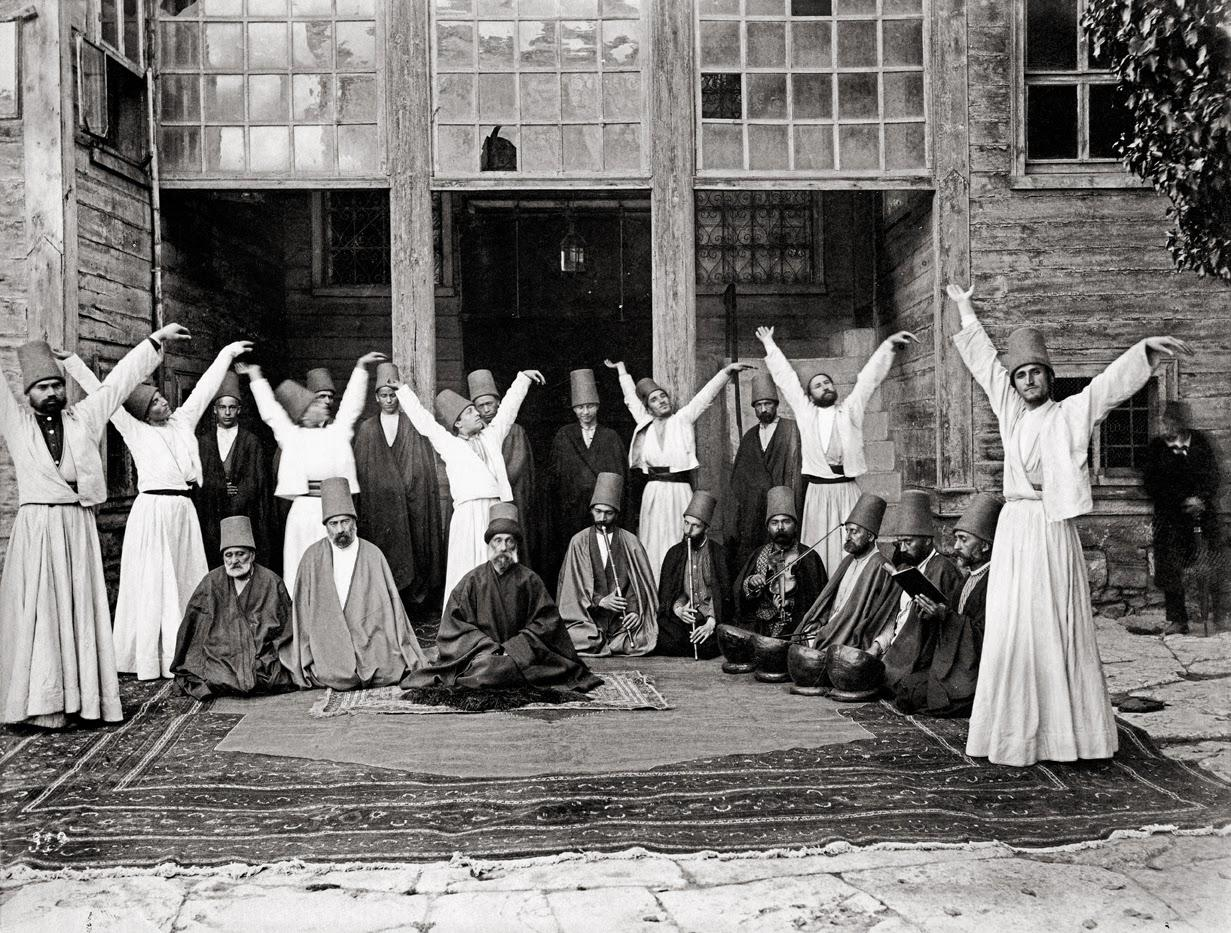
Across Sufi literature, including poetry, hagiography, and Qur'anic exegesis, there is a recurring emphasis on the spiritual significance of women and their role in the mystical life. On this basis, scholars such as Annemarie Schimmel (1975) have argued that Sufism has often provided a more inclusive space for the spiritual and social recognition of women than other strands of Islamic thought (The Mystical Dimension of Islam, p. 426).
In addition, Sufi traditions reinterpret the concept of jihād in primarily inward and ethical terms. The highest form of struggle, often called al-jihād al-akbar, is understood as the purification of the self and the refinement of its moral disposition. As al-Hujwīrī (d. 1073) explains, the true mujāhid is one who strives against his own lower self (nafs) for the sake of God. This inner struggle is aimed at spiritual purification so that one may attain both self-knowledge and knowledge of God. In this context, the well-known saying, "He who knows himself knows his Lord" (man ʿarafa nafsahu faqad ʿarafa rabbahu), is often invoked to emphasise the centrality of introspection. Rūmī articulates a similar idea poetically: after seeking God in places of worship, he ultimately finds the divine presence within the heart.
From this perspective, the emphasis on inward transformation and divine love is sometimes less visible in exoteric or juridical interpretations of Islam. Moreover, viewing Islam as a fixed and idealised system detached from its historical context can lead to a backward-looking understanding of the tradition. As Ibn al-ʿArabī suggests, every present moment is equally significant in the divine order (Cornell 2014, p. 135). Modernity, in this sense, may be understood as another modality of the present in which the divine discloses itself, a reality that Sufi interpretive frameworks are particularly well equipped to engage.
Dr Sarwar Alam is currently an Adjunct Professor of Religious Studies at George Mason University, USA. He can be reached at [email protected].
Send your articles for Slow Reads to [email protected]. Check out our submission guidelines for details.

Decanonising Tagore: The recursion of recentered greatness
The journey of Qawwali across South Asia: Music, mysticism, and cultural exchange

Thinking with Partha Chatterjee

Why secularism is losing ground in South Asia
Interview / Modern Islam has always been a 'secular' entity

How the banned film Satluj reopened the darkest wound in Punjab's history

What the 2026 World Cup reveals about racism in football

How Kolkata shops preserve the memories of East Bengal

How Roman Jakobson changed modern thought