Modern Islam has always been a 'secular' entity

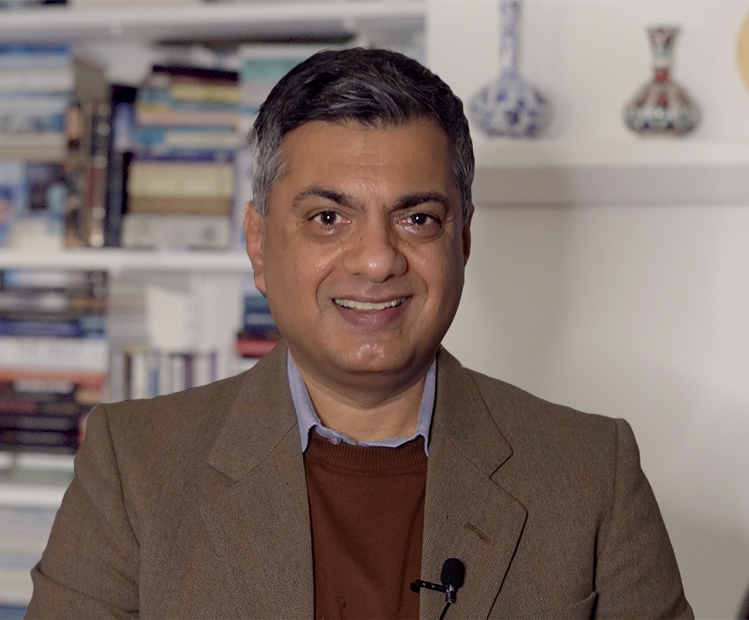
In conversation with Faisal Devji, renowned historian, author of several books, and Beit Professor of Global and Imperial History at the University of Oxford.
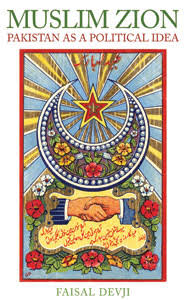
The Daily Star (TDS): Let us begin with your acclaimed book, Muslim Zion: Pakistan as a Political Idea. As majoritarian nationalism gathered strength in nineteenth- and twentieth-century Europe and India, Jews and Muslims increasingly came to see themselves as vulnerable minorities. While the idea of a Jewish state had a long intellectual history, most notably articulated by Theodor Herzl in The Jewish State (1896), the idea of Pakistan emerged much later. Do you see any historical parallels?
Faisal Devji (FD): It was not Zionism that influenced Muslim thinkers so much as the making of Jews into a 'minority' with the emergence of nation-states in Europe, something Aamir Mufti has written about. For majorities and minorities have political meaning only in nation-states, where demography plays a decisive role in defining nationality and, therefore, political power. Jews came to be understood as the archetypal minority, especially after the First World War, which had destroyed four great continental empires in Europe. Indian Muslims, too, came to be defined as a minority in the late nineteenth century with the rise of Indian nationalism and the gradual broadening of political representation. Though very different kinds of minorities, Muslims were regularly compared to European Jews, whose fate was often held out as a warning to them. Eventually, both groups sought to abandon the disempowering status of a minority in order to become a nation in their own right.
This did not initially mean the creation of a new nation-state, but rather entailed conceptions of federal and multinational polities. Jinnah's two-nation theory was meant to rid Muslims of the status of a minority so that he could negotiate with Congress on the basis of equality rather than acknowledge it as representing a majority. It was only with the Second World War that the nation-state became a goal for each of these national movements.
By 1946, Dr Ambedkar, in his book on Pakistan, could compare the evolution of Muslim nationalism with Zionism without contradiction. Indeed, Jinnah praised and recommended his book to the Muslim League. Yet Zionism was by no means the only model of minority nationalism for the League, with Jinnah frequently mentioning the Unionists in Northern Ireland, the Sudeten Germans, and others as well.
The Lahore Resolution of 1940, as is well known, spoke of multiple Muslim nations or states rather than a single one, which suggests that the Muslim League was still open to a more federated political structure for India. Even Choudhry Rehmat Ali, who came up with the name Pakistan, envisioned a set of Muslim states scattered all over India. But this is not the same thing as saying Pakistan was a 'bargaining chip', either then or when a unitary state came to define it.
On the contrary, Muslim nationalism always possessed a distinctive idea of itself that was very different from its Indian or Hindu rival. This was in part due to its geographically and demographically scattered character, which disallowed the Muslim League from basing its idea of nationality on a historical or territorial foundation. For the European understanding of blood-and-soil nationalism that characterised Congress, as well as Hindu nationalism, would always subordinate Muslims to an India whose religious groups shared the same past and geography. In order to claim autonomy, therefore, Muslim nationalism had to reject history and geography in favour of nationality as a pure idea represented by Islam as a universal form. This is what eventually came to be called an ideology by Islamists, which is to say something that can be instantiated in any time and place.
More than this, Muslim nationalism was paradoxically critical of the very idea of the nation-state, which was recognised as being the political form within which minorities were created and disempowered. Iqbal, claimed by Pakistan as its national thinker, was ferociously critical of the nation-state as an agent of violence and, in his poetry, praised the abandonment of any idea of a homeland. The Islamists who came after him went on to condemn nationalism as a form of idolatry in which property and particularity were worshipped in place of an omnipresent God.
TDS: Bengali Muslims strongly supported Pakistan despite Bengal's initial exclusion from the idea. Was this driven mainly by fears of becoming a minority in India, or did Bengal's unequal social structure, where most Muslims were peasants and many zamindars were Hindus, prove equally important?
FD: It is important to point out that the Muslim League and the Pakistan Movement were founded and, for the most part, led by Muslims from the so-called minority provinces of India. Apart from Bengal, no other Muslim-majority province displayed any attachment to the League's cause until the very eve of independence. Bengal was therefore practically the only part of colonial India where the League had experience of government, and Calcutta was initially envisioned as the capital of Pakistan.
Why was Bengal an exception of this kind? In part, because it had already been partitioned by Lord Curzon in 1905, and so its Muslim-dominated eastern part had a constitutional and political history of its own. There was also the ideal of the 'peasant utopia', which Andrew Sartori tells us was redirected from the agricultural colonisation of Assam to the idea of Pakistan once Muslim migration eastwards was banned. Whether Bengali Muslims imagined being part of an entirely new country separated from Calcutta and the rest of India remains an open question, since Jinnah himself thought that, without the West's great metropolis, East Bengal wasn't worth having.
TDS: How do you assess the ideas and political leadership of Pakistan's founding figures, particularly Muhammad Ali Jinnah and Muhammad Iqbal?
FD: Jinnah thought that the political problem of India had to do with the fact that its majorities and minorities were wrongly defined by religion and so made into permanent categories. In a democracy, he argued, majorities and minorities should be temporary and changing entities formed through political and economic debate, with each capable of being converted into its opposite. The making of communal majorities and minorities, however, prevented the emergence of these transient and democratic ones and created a permanent political hierarchy instead. Yet this hierarchy was also unstable because Hindus were not really a majority and Muslims not really a minority in any accepted sense.
The former were divided by caste as well as by religious belief and practice, while the latter comprised a gargantuan population with regional majorities in two parts of the country and could not therefore be considered a minority. Having given up on a multinational or federated political future for India, Jinnah thought that, by separating the country into two nation-states, he could split these false majorities and minorities to create real ones, which would then lose their political character and give way to the democratic majorities and minorities he favoured. This was one reason for wanting to keep religious minorities in both India and Pakistan rather than exchanging populations, another being to ensure continuing relations between them.
I see in the emergence of Bangladesh the end of decolonisation as a political logic and the beginning of a new historical period. For unlike India and Pakistan, which were both post-colonial states claiming their independence from Britain, the independence of Bangladesh was produced from and in opposition to a post-colonial state.
Iqbal, as I have said, was critical of the nation-state as a political form, but did think that Muslims should have political autonomy, if not independence, in those parts of the country in which they were a majority so that they could be free to reform and reimagine Islam. In particular, he thought that Islam needed to be rid of "the stamp of Arabian imperialism".
TDS: How do you interpret the causes of Partition in 1947? Was it the culmination of a long historical process or a contingent outcome of late colonial politics? And how did Bangladesh's emergence in 1971 reshape the intellectual and political assumptions that underpinned the Pakistan movement?
FD: Partition had become the standard mode by which Britain resolved questions of territorial control within and even beyond her empire. The demarcation of boundaries so as to create separate countries occurred in the Americas, Africa, and Asia, as well as in Europe itself. The partition of India was therefore part of a larger logic which included Ireland in 1920 and Palestine in 1948. And in India itself, of course, there had already been a partition of Bengal in 1905. The founding of nations does not lead inevitably to partition, since imperial and other kinds of polities have always been multinational. Think of the USSR and Yugoslavia, as well as Czechoslovakia and Canada, as self-consciously multinational polities.
The emergence of Bangladesh can be seen as the final act in South Asia's partition, returning to Curzon's original partition of 1905. But I don't think this is a persuasive explanation. I see in the emergence of Bangladesh the end of decolonisation as a political logic and the beginning of a new historical period. For unlike India and Pakistan, which were both post-colonial states claiming their independence from Britain, the independence of Bangladesh was produced from and in opposition to a post-colonial state. Coming into being towards the end of decolonisation globally, Bangladesh represents the culmination of its history and the beginning of another kind of political founding in civil war within the post-colonial state. It places the post-colonial state in the past and opens the door to a new political future, despite otherwise sharing the same history as its predecessors.
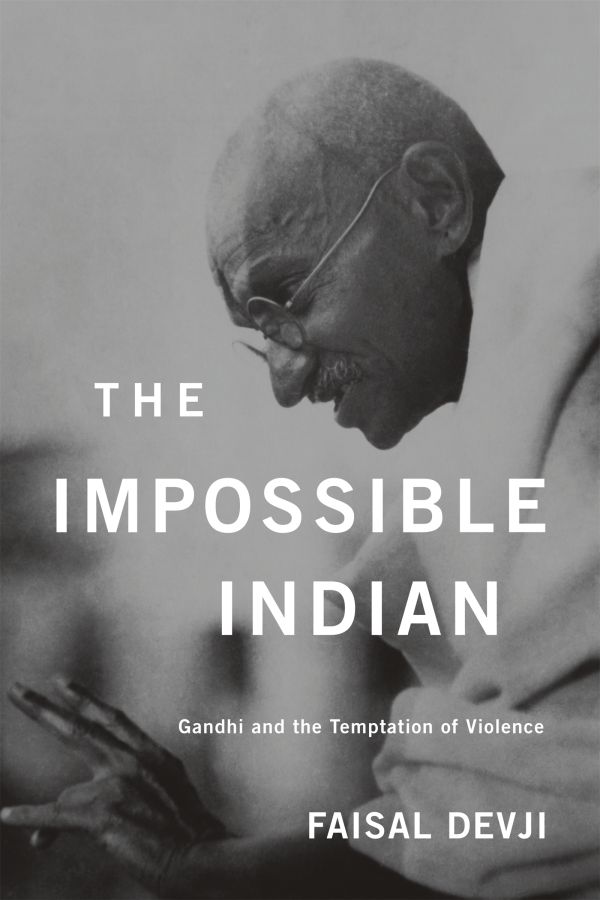
TDS: You argue that Gandhi sought to free not only India but the world from violence. How did his ideas of truth and non-violence evolve through anti-colonial struggle, Partition, and communal conflict? And what relevance do they hold for understanding violence today?
FD: Gandhi's major conceptual move was to shift political debate from the question of war and peace to that of violence and non-violence. While war and peace are legal categories for which states are the only real actors, violence and non-violence deliberately forsake juridical language and the state itself as a conceptual framework. They are, in some respects, universal moral and philosophical categories that can exist anywhere and whose agents can be individuals as much as armies. Unlike peace, furthermore, which is meant to be war's opposite and a positive category in its own right, non-violence is a negative one that takes its meaning from a violence that Gandhi thought inevitable.
Non-violence was potentially present within violence itself, which could thus be converted into its opposite by laying claim to the same virtues that violence proposed. It was their intimacy that, for Gandhi, permitted such a conversion. This allowed Gandhi to separate non-violence from peace and, therefore, pacifism by arguing that the former could occur even on the battlefield and through war itself. Thus, he held up the Bhagavad Gita as an exemplary text on non-violence, even though it is an account of Krishna urging Arjuna to wage war. That is because, unlike Western moral and political thinking, for which the choice between war and peace or good and evil is crucial, for Arjuna, in Gandhi's telling, choice has become irrelevant. Whether Arjuna leaves the battlefield of Kurukshetra or not, many will die in a war he cannot prevent. In this situation, Arjuna must exercise not choice, which has been rendered superfluous, but instead identify and do his duty in light of his position and role in the story of the Mahabharata that has culminated on the battlefield.
In Gandhi's view, by sacrificing his relatives, friends, and preceptors in the Kaurava army, Arjuna was acting non-violently by putting a stop to the story of violence that had led to Kurukshetra. This he did by fighting not for any instrumental reason that would create a new instalment in the story of violence, but by refusing to define his acts in terms that could only allow for its continuation. By renouncing any consideration of the future and the actions required to bring a particular vision of it about, Arjuna cut short the story of violence. Any morality based on choice therefore lacked universality, in Gandhi's opinion, and was also doomed to privilege ends over means in a purely instrumental and, therefore, violent way. Valuing means over ends meant repudiating such instrumentality and leaving the future open in a way much more conducive to a broader range of possible goods.
TDS: You and Shruti Kapila argue that the Bhagavad Gita became a foundational text of modern Hindu political thought, playing a role comparable to Machiavelli's The Prince or Hobbes's Leviathan in Europe. How did Hindu political thinkers reinterpret the Gita to shape political ideas and action in the colonial, nationalist, and civilisational contexts?
FD: The important thing about the Bhagavad Gita as a key text of modern Indian political thought is that it allowed its commentators to reflect upon their present in purely philosophical terms. They didn't have to think about the colonial state or the different caste and religious groups that interacted with it in their own name, not out of fear of censorship but precisely in order to think philosophically about politics. For Gandhi, this meant, in addition, repudiating history itself as the crucial way in which politics was, and continues to be, imagined. After all, modern politics is always about pointing to the past, either as a lost golden age which needs recovering or as a tragedy whose repetition must be prevented at all costs. It is therefore exclusionary and violent by definition. History, of course, was also one of the ways in which the British thought about their colonies, imagining them as not yet being ready for self-government and therefore in need of an education in modernity by way of history.
But for Gandhi, history was not just a way of defining some people as modern and others as traditional and so in need of colonial pedagogy; it was dangerous because it made for new kinds of collective identification and, therefore, violent mobilisation. Hindus and Muslims could both see themselves as victims of the other, creating a historical mistrust that made it difficult for either community to open up to its perceived adversary. Unlike history, myth is universal and malleable enough to offer multiple interpretations while preventing any one-to-one identification with a particular past.
TDS: How do you understand Islam's changing forms of political agency during the transition from the nineteenth to the twentieth century?
FD: Islam was founded in the middle of the nineteenth century as a new kind of category. Whereas in the past it had been one of a number of different terms used to identify Muslim belief and practice, it came to dominate the rest as a proper name and, therefore, an actor or protagonist in history. This was a radically novel understanding of Islam, one that emerged from the spread of colonialism, which had diminished the sovereignty of Muslim political as well as religious authorities.
The new middle-class Muslims who first reimagined Islam in this fashion were thus able to speak in its name in a way that would have been impossible previously. And they were followed later by Islamists and others who adopted the same understanding of Islam while stressing a different set of characteristics.
On the one hand, then, Islam was democratised in this way, but on the other, its emergence also illustrated the loss of Muslim agency and, therefore, politics. Islam, moreover, was defined in historical and sociological rather than theological terms. It was understood in demographic and cartographic ways as a product of and actor in history, initially as a civilisation and later, in the twentieth century, as an ideology, especially among Islamists. This meant that modern Islam has always been a 'secular' category and entity, one which it has been difficult to endow with theological meaning despite, and perhaps because of, the many efforts made to do just this.
TDS: How should we understand Islamic morality and militancy in the age of modernity and globalisation, particularly when modernity has taken multiple forms rather than a single universal path, while a global capitalist economy operates through diverse forms of the state?
FD: Destructive as it was, I see the emergence of Muslim militancy in the early twenty-first century as a transitional phenomenon. It indicated the end of the Islamist project and, therefore, of the long Cold War of which it had been a part. Arising after the Bolshevik Revolution following the First World War, and in partial imitation of it, Islamism as a revolutionary ideology enjoyed its golden age during the Cold War, when the world was indeed divided in ideological terms. The end of the Cold War and the decade of globalisation in the 1990s swept Islamism into the dustbin of history (to use a Bolshevik phrase), to be replaced on the radical edge of Islam by Al-Qaeda and ISIS as true products of globalisation. The former operated worldwide without any desire for a state, while the latter did create a state, but with a global citizenry and no defined borders. The Islamists had sought to create a self-governing Islamic society defined by the sacred law in such a way as to prevent the state, which they associated with colonial rule, from exercising sovereign jurisdiction in its own name.
Iran provides an interesting example of the fate of Islamism and its ideological state. While we tend to think of its Islamic Revolution as an inaugural moment, it was actually a latecomer to Islamism, even though a very successful one.
The militants, for their part, sought to eradicate the very roots of sovereignty from the Muslim individual him- or herself. Initially attributed by Islamist thinkers to God alone, sovereignty in the Sunni world, at any rate, came to be seen as a form of idolatry which had to be extirpated. The militants understood it as lying hidden within individuals, who thus had to be hollowed out and made transparent. For Al-Qaeda, this meant privileging the self-sacrifice of the suicide bomber, and for ISIS, the killing of all 'heretics' and the making of a flat or empty and virtual militant self.
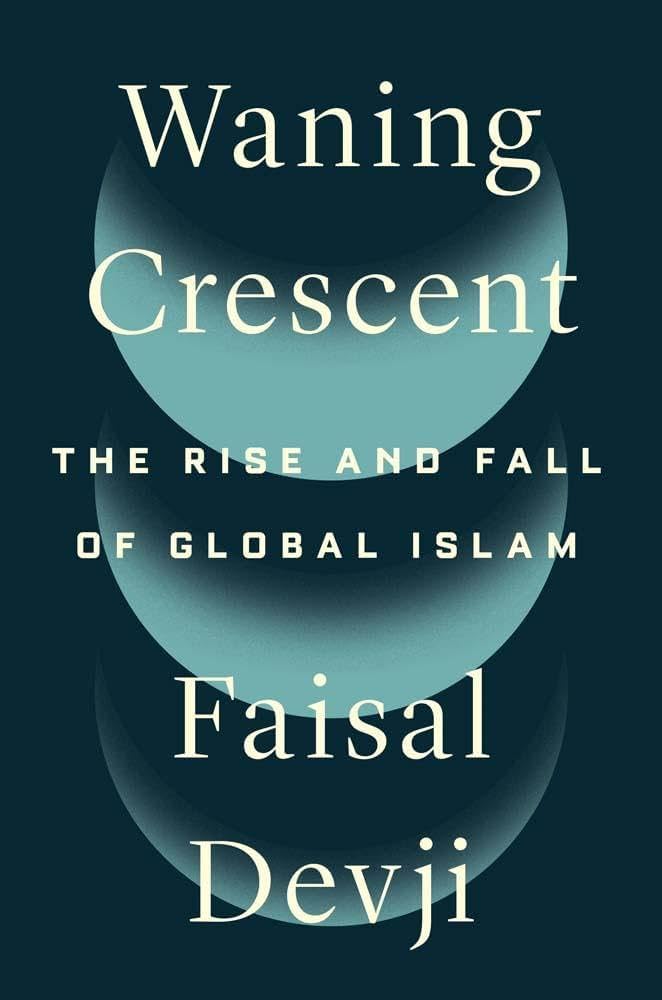
TDS: Finally, your latest book, The Waning Crescent: The Rise and Fall of Global Islam, speaks of "the end of Islam". What do you mean by this, particularly in relation to the making and unmaking of ideological Islamic states in the post-Cold War era? And if Iran can survive after this war within its existing system, can that be understood as the persistence of Islamism, or does it indicate its transformation into something else?
FD: Iran provides an interesting example of the fate of Islamism and its ideological state. While we tend to think of its Islamic Revolution as an inaugural moment, it was actually a latecomer to Islamism, even though a very successful one. Arising only a decade before the end of the Cold War, the Islamic Republic was also distinctive in that it was led by traditionally trained clerics and not the lay intellectuals and journalists who were the founding figures of Islamism elsewhere. It was only through Islamism that these clerics were able to assume a global role, and it is indeed only where clerics have appropriated it that Islamism has survived. The Taliban are the other example of this phenomenon, with Iran and Afghanistan the world's only Islamist states. Islamism, in other words, was already taken over and reinterpreted by clerics at the end of the 1970s.
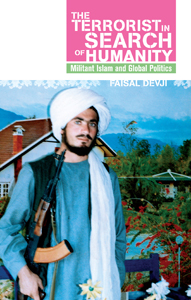
But the war in Iran today seems to have removed clerics from political power there. Apart from the new Supreme Leader, whom nobody has seen or heard in public, none of the leading figures of Iranian politics are clerics. The country is now run by the Revolutionary Guard, with a sprinkling of laymen, and I would be surprised if clerics ever returned to power there. They, or the Supreme Leader, might remain symbolically important, like monarchs in European countries, but the language of politics seems to have changed and is no longer defined by Islam in the same way as in the past.
While it is an exception in some ways, then, as a clerical latecomer to Islamism, Iran nevertheless fits the story I tell in my book. If anything, and as is well known, it is the most secular country in the Middle East, where religious observance is low and mosques are empty. In this sense, Iran might even be ahead of its peers in the history of Islam.
The interview was taken by Priyam Paul.
Send your articles for Slow Reads to [email protected]. Check out our submission guidelines for details.

How the banned film Satluj reopened the darkest wound in Punjab's history

What the 2026 World Cup reveals about racism in football

How Kolkata shops preserve the memories of East Bengal

How Roman Jakobson changed modern thought
Football as freedom: From colonial Bengal to Bangladesh
The forgotten South Asian soldiers of the First World War
How Dhaka lost its green and water: Revisiting the first master plan of the city
Bengal’s forgotten connections with Nazi Germany
Muzharul Islam and his spaces of belonging