Thinking with Partha Chatterjee
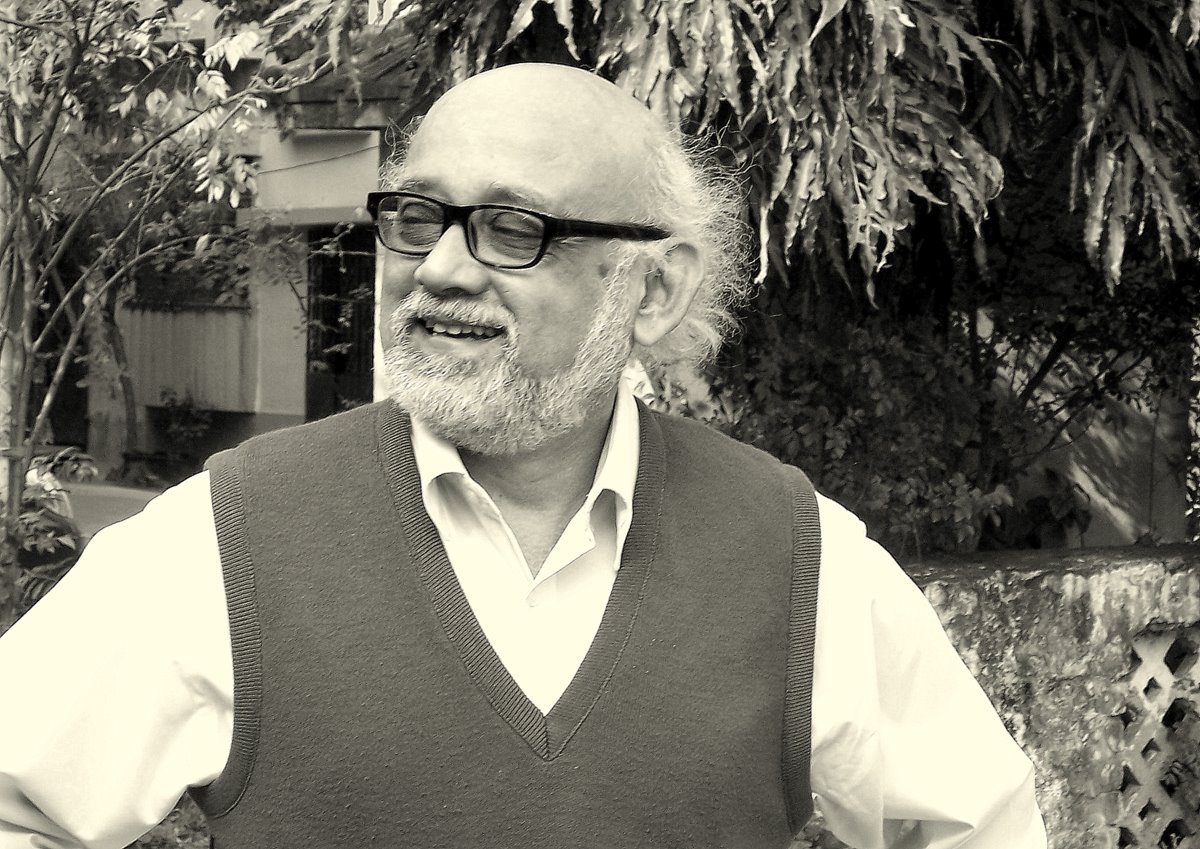
Professor Partha Chatterjee (born 1947) is one of the finest social scientists, straddling the disciplinary boundaries of political science, history and anthropology with equal expertise. Professor Chatterjee was associated with the prestigious Centre for Studies in Social Sciences, Calcutta (CSSSC), for several decades, both as a faculty member and as its distinguished Director from 1997 to 2007. He was also Professor of Anthropology and South Asian Studies at Columbia University in New York, besides being a member of the celebrated Subaltern Studies Collective, which revolutionised the study of history and society in India and abroad during the 1980s and 1990s. The scholarly movement aimed to shift the focus of historical writing away from elitist concerns and towards the aspirations, experiences and movements of marginalised or suppressed people.
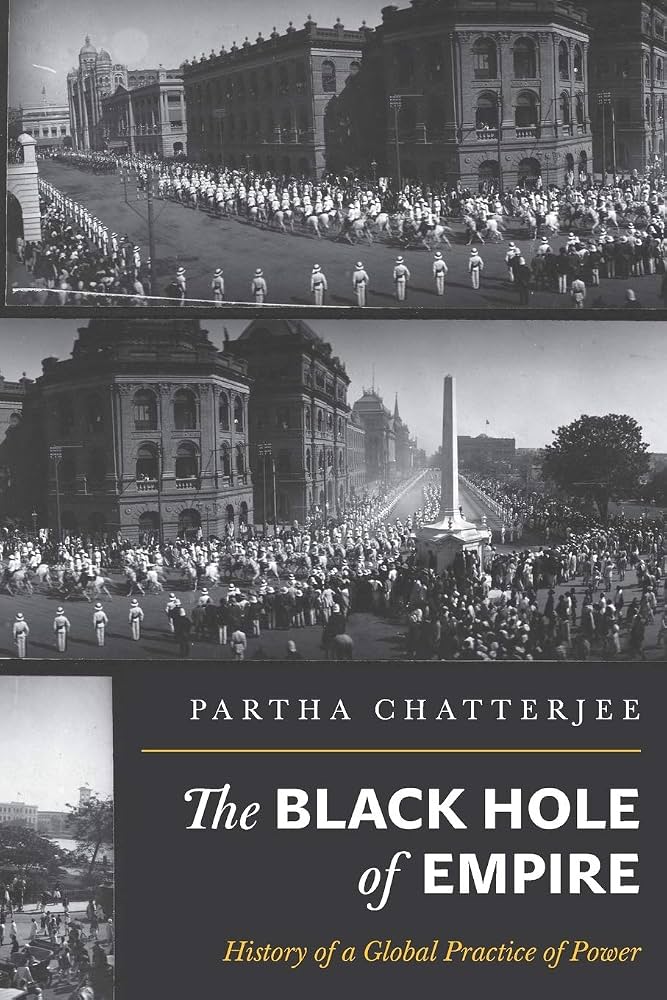
Professor Chatterjee is widely recognised as a highly respected scholar, with a number of path-breaking books to his credit. For some idea of his intellectual brilliance, a good entry point is The Black Hole of Empire: History of a Global Practice of Power (2012). His other books will further enlighten the uninitiated: the critical analysis of The Nation and Its Fragments: Colonial and Postcolonial Histories (1993) and the gripping narrative of A Princely Impostor? The Strange and Universal History of the Kumar of Bhawal (2003). All these came after the blockbuster Nationalist Thought and the Colonial World: A Derivative Discourse? (1986). Professor Chatterjee's other excellent scholarly ventures are equally awe-inspiring.
Having worked for many years as a Fellow in History at CSSSC, this writer had the good fortune of collaborating with him on several fascinating research projects that challenged dominant paradigms in the writing of history. As an iconoclast, he is arguably the most cosmopolitan Bengali bhadralok scholar in an otherwise homogeneous and decadent academic milieu in Kolkata. Less well known are his fine credentials as a dramatist and actor, which form part of a typically Bengali investment in cultural capital.
Professor Chatterjee's political position remains unintelligible to those who do not know him well enough. For more than thirty years, he must have voted for the CPM, even as the party's leaders and followers repeatedly condemned him as a Naxalite, Maoist and so forth. Under Mamata Banerjee's rule, he must have been regarded as one of the last Leftist intellectuals who were never persuaded of the value of her street-level politics as part of what is described as party-society in Bengal.
If he were given the choice of deciding where to locate himself along the spectrum of activist, ideologue, scholar and philosopher, Professor Chatterjee would choose to be a philosopher-friend of the activist at the bottom rung. For him, new histories need to be written that address the concerns of ordinary people. This commitment resulted in the edited volumes History and the Present (2002), with Anjan Ghosh, and History in the Vernacular (2008), with this writer, besides the twin volumes on popular politics: The Politics of the Governed: Reflections on Popular Politics in Most of the World (2004) and Lineages of Political Society: Studies in Postcolonial Democracy (2011).
The abuse of history in contemporary political battles exposes a fundamental uncertainty about what constitutes the Indian nation and whom it excludes. For Professor Chatterjee, the national core comprised ideologues and people with different shades of Hindu identity, while the periphery consisted of large sections of people rendered marginalised for social and historical reasons. Within the core itself, there is a major division between secular nationalists with a modern and progressive outlook and those with a regressive Hindu identity. The latter has gained the upper hand in recent decades through electoral success both at the Centre and in several states, most recently by taking over the bastion of Bengal. This has created further difficulties for people who were already marginalised as fragments at the periphery of the nation-state.
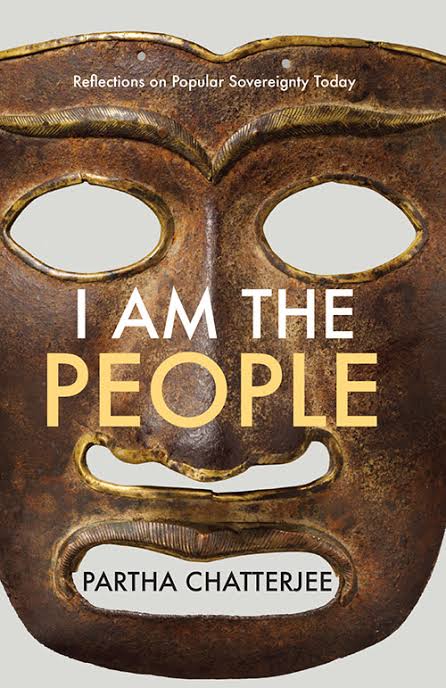
Professor Chatterjee's book, I Am the People (2020), helps us understand the havoc being created by authoritarian regimes everywhere. Populist politics is throwing up strong, authoritarian leaders who are expected to bring the economy back on track. Since such leaders often lack the necessary education and expertise, and do not even listen to sound advice in the interests of society—people, nation or state—they are unable to deliver. Instead, blame is deflected onto racial, ethnic or religious minorities. This is creating a mess with serious repercussions for the democratic system itself, the line between populism and fascism being dangerously thin.
Indeed, the responsibilities of the state—whether the social democratic welfare state or neo-liberal governmentality—are critical. This is irrespective of whether people are identified as citizens with sovereign rights, in whose name governments are run, or counted as a mass of surplus population whose interests and demands should be properly addressed. It is also too much to expect that people who constitute the crowd that lynches human beings can make a wise choice about the kind of rulers they want. Thus, enlightened leaders working for public good within an ethical state will remain a dream or an ideal, as the mob is unleashed and protected by those who control the institutions of government.
Offering a magisterial synthesis of Indian politics over the past seventy-five years in his most recent book, For a Just Republic (2025), Professor Chatterjee concludes that the insistence on a civilisational history of India by the votaries of both unity-in-diversity and Hindu nationalism has only perpetuated a normative view of the nation that privileges the North Indian upper-caste male and reduces political choice to one between soft and hard Hindutva. A more just federation of equal parts would shift the deep memories of cultural solidarity and conflict to where they properly belong, namely the caste-class formations built around the country's linguistic regions, which do not exclude communities such as Adivasis and Muslims. These are concerns that no discussion of contemporary politics and history can afford to ignore. Professor Chatterjee's sharpest critique of modern political irrationalities can be found in his invocation of a powerful ancient Indian philosophical argument in The Truths and Lies of Nationalism as Narrated by Charvak (2021).
Raziuddin Aquil is a historian and professor at Delhi University.
Send your articles for Slow Reads to [email protected]. Check out our submission guidelines for details.
The journey of Qawwali across South Asia: Music, mysticism, and cultural exchange
Why secularism is losing ground in South Asia
Interview / Modern Islam has always been a 'secular' entity

How the banned film Satluj reopened the darkest wound in Punjab's history

What the 2026 World Cup reveals about racism in football

How Kolkata shops preserve the memories of East Bengal
How Roman Jakobson changed modern thought
Football as freedom: From colonial Bengal to Bangladesh
The forgotten South Asian soldiers of the First World War