Why secularism is losing ground in South Asia

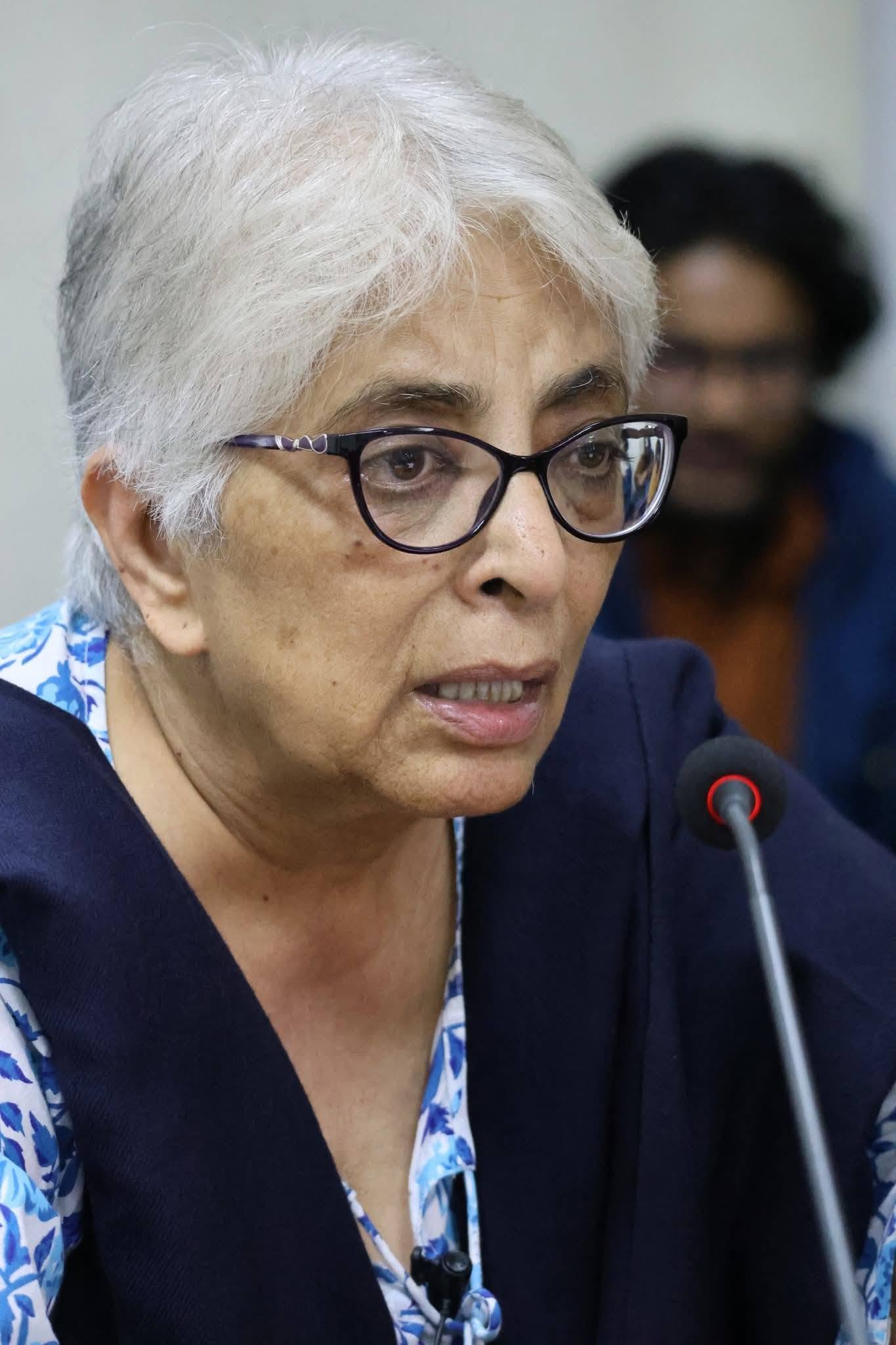
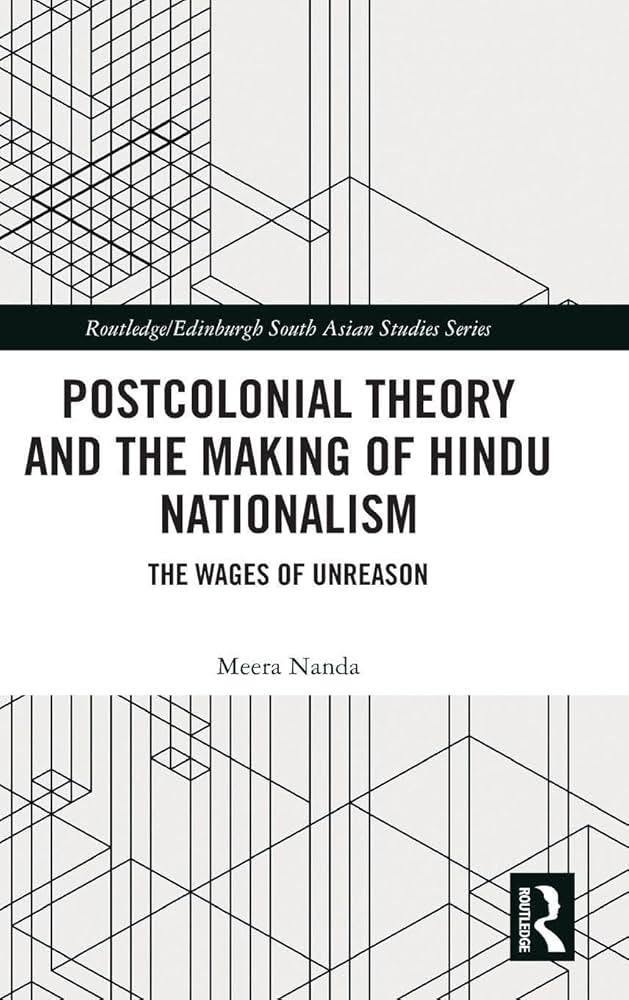
In conversation with Dr Meera Nanda, philosopher and historian of science, and author of Postcolonial Theory and the Making of Hindu Nationalism (2025).
The Daily Star (TDS): You argue that the Hindu Right has drawn heavily on the postcolonial Left's critique of the Enlightenment. Similar "decolonial" rhetoric is now used across South Asia to justify majoritarian religious politics. How did two seemingly opposing camps end up speaking the same language?
Meera Nanda (MN): This question goes to the heart of what my book tries to show: that something about postcolonial and decolonial theory makes it remarkably serviceable to traditionalists and religious nationalists of every stripe. Many of my critics brush aside the obvious convergence between postcolonial theory and the Hindu nationalist call to "decolonise the Indian mind", insisting that the latter is merely "misappropriating" or "distorting" the "emancipatory" goals of postcolonial theory. To me, this amounts to a wilful refusal to face up to the fact that the "emancipatory" language of postcolonial theory hides a reactionary, nativist core. Rather than misappropriating this core, the Hindu Right finds it very much in agreement with its own beliefs.
Here are three ways the fundamental assumptions of postcolonial theory overlap with the long-standing cultural nationalism of the Hindu Right:
- The starting point of postcolonial theory is that although formal colonialism has ended, "mental colonialism" has not. The ideas that have governed India since independence – secularism, individual rights, Marxist socialism, scientific rationalism (what Nehru called "scientific temper") and developmentalism – were all born in Europe. By accepting these ideas as universally applicable, Indian elites have trapped the country in a Eurocentric framework, foreclosing the possibility of a modernity that is authentically "our own", one driven by India's own social and cultural ideals.
This is no different from the insistence of cultural nationalists, from Gandhi and Vivekananda to Modi, that India must be guided by its own "soul", which lies in its "spirituality".
- It is a foundational axiom of postcolonial theory that judging India, or the Orient more broadly, by secular social-scientific concepts, such as bourgeois individual freedoms or the Marxist concept of class struggle, and using the post-Enlightenment idea of scientific rationality to judge the validity of local knowledge, amounts to "epistemic violence" and "epistemic injustice". This relativism derives from Edward Said (via Foucault and other post-structuralists), who see all claims to objective knowledge as constructs of discourses inevitably shaped by power. Europe and its knowledge traditions must be "provincialised" so that India can be understood through indigenous conceptual categories.
This is precisely the logic the BJP under Modi has used to "reform" school and higher education, bringing them into line with "traditional knowledge systems" derived from Hindu philosophical traditions.
- To give the "subaltern" (the lower orders) a voice silenced first by colonial powers and later by "mentally colonised" elites, it is essential to rediscover and understand the worldview of the non-elite masses. This is the "emancipatory" element of subaltern studies, integral to the postcolonial project.
The problem is that the subaltern mind is not "autonomous" of traditional elite power-knowledge, as subaltern studies historians dogmatically claim. It is entrenched in and shaped by dominant religious ideologies. Subaltern consciousness leads straight to Hinduism, and even to Hindutva, as is clear from the enthusiastic participation of subalterns in the demolition of the Babri Masjid and in numerous communal riots. To idolise the subaltern mind as a source of non-Eurocentric, indigenous knowledge is far from "emancipatory".
TDS: South Asia has embraced new technology and economic growth, yet religious orthodoxy and superstition often seem to be growing alongside them. Why has modernisation not produced a more secular and rational public culture?
MN: Adopting modern technology and a capitalist economy while decrying the cultural values of modernity as "Western" and "colonial", and therefore unsuitable for South Asia, has brought us to our current impasse, where superstition, religious fanaticism and nativism are thriving amid growing economic liberalisation and globalisation.
I recently came across a good example of what reactionary modernism looks like on the ground: in India, the first popular AI-powered apps are all astrological! The jyotishis are taking the lead in putting AI to work at scale, and they are doing a thriving business because there is huge demand for these ancient superstitions. I would not be surprised if the software engineers writing the code for these programs are themselves avid consumers of astrology.
The 'emancipatory' language of postcolonial theory hides a reactionary, nativist core. Rather than misappropriating this core, the Hindu Right finds it very much in agreement with its own beliefs.
The seeds of reactionary modernism were sown early in the freedom movement, from the late nineteenth century onward. I have not read much on the Islamic reform movements of this era, but well-known Hindu intellectuals, notably Vivekananda and Dayananda Saraswati, took a thoroughly reactionary modernist stance. They wanted an India with "muscles of steel", as Vivekananda put it, but the soul of a yogi: technologically advanced while preserving its "spiritual" soul. Gandhi, at least, was more consistent. He rejected the macho virtues that modern technology would confer, just as he rejected the rest of the modern world, where men and women would have free choice as individuals, live in cities, and elect parliaments.
How did they square the circle? Essentially, they treated modern technology and industry as the common heritage of humanity, while dismissing the modern science that had fuelled that industry as a "mere" rediscovery of knowledge already known to the ancient Aryan sages who composed the Vedas and other sacred texts. They happily accepted the material artefacts of the modern age, railways, telegraphs, electricity and the rest, while rejecting the philosophical materialism of modern science as a sign of Europe's moral depravity. In other words, modern technology was treated as a universal good to which all humanity had a claim, while modern science was absorbed into Hindu "spirituality".
The net result of this intellectual chicanery was that the critical rationality of modern science was disabled. In the West, the birth of modern science led to the Enlightenment, which challenged the theological foundations on which medieval culture rested. In India, Hinduism faced no such frontal challenge because modern science was simply folded into "Vedic" spirituality and mysticism.
There were feeble attempts in the first few decades after independence to encourage "scientific temper" and critical thought that might challenge the metaphysical foundations of Hinduism. But nothing came of these Nehruvian slogans. From around the 1980s, modern science itself came under attack for its "Eurocentrism" and "epistemic violence". The net result was technological modernisation without corresponding de-traditionalisation.
TDS: When scientific consensus is challenged in the name of indigenous knowledge by governments and interest groups, what should the scientific community's response be?
MN: This is indeed the challenge: how to defend the universal reach of reason when cultural and religious nationalists hold all the levers of power. It is not easy, especially when secular intellectuals themselves have fallen into the trap of cultural relativism and equate universalism with Eurocentrism.
My approach is to fight this battle on the basis of evidence and methodology, case by case. During the COVID pandemic, for example, the Indian government actively promoted Ayurvedic and other indigenous medicines, including such absurd "remedies" as cow urine and dung. You fight that battle on the basis of evidence and efficacy. But you do not stop when the crisis ends; you have to keep challenging the foundations of Ayurveda and show that these have been falsified in the light of modern science. This is where the history and philosophy of science come in handy. (I tried to show the fallacies of pre-modern Indian science in my 2016 book, Science in Saffron: Sceptical Essays on the History of Indian Science.)
A similar battle is needed against the introduction of so-called "traditional knowledge systems" into school and university curricula. I have made a start on this in my recent book, A Field Guide to Post-Truth India. I believe the scientific community and secular intellectuals have to join forces and keep fighting. No doubt we will be called all kinds of names. But that is the price you pay.
TDS: Secularism across South Asia is increasingly under pressure from religious nationalism. What does this mean for its future?
MN: I believe very strongly that you need a secularised culture for secularism to take root. A culture as saturated with gods, goddesses, godmen and gurus as India is today is not hospitable to secularism. Why would those for whom everything is permeated with the divine want to separate the state from the dictates of dharma? Why would those who define their identities in religious terms not want the state to be the guardian of their faith?
A resilient secularism requires secularised minds. This is easier said than done, especially under current circumstances. I don't have an easy answer. All I can say is: keep fighting against irrationalism and bigotry wherever you find them.
TDS: Identity politics has become increasingly influential across South Asia. What impact has this had on debates over class, labour and economic inequality?
MN: Culturalism from both the Left and the Right has led to a neglect of the material conditions of the labouring poor.
The postcolonial Left rejects class analysis because it is "foundational" and "Eurocentric", and insists that subaltern consciousness is shaped less by material interests than by community norms. Subaltern Studies, the most cutting-edge "history from below" school in India, focuses on the cultural and religious differences between the Indian working classes and the working classes as theorised by Marxism or by modernisation theories. They consider the very idea of class struggle antiquated. All they have to offer are contextual alliances between the poor, new social movements, NGOs and the like. This is what Partha Chatterjee's theory of "political society" is all about.
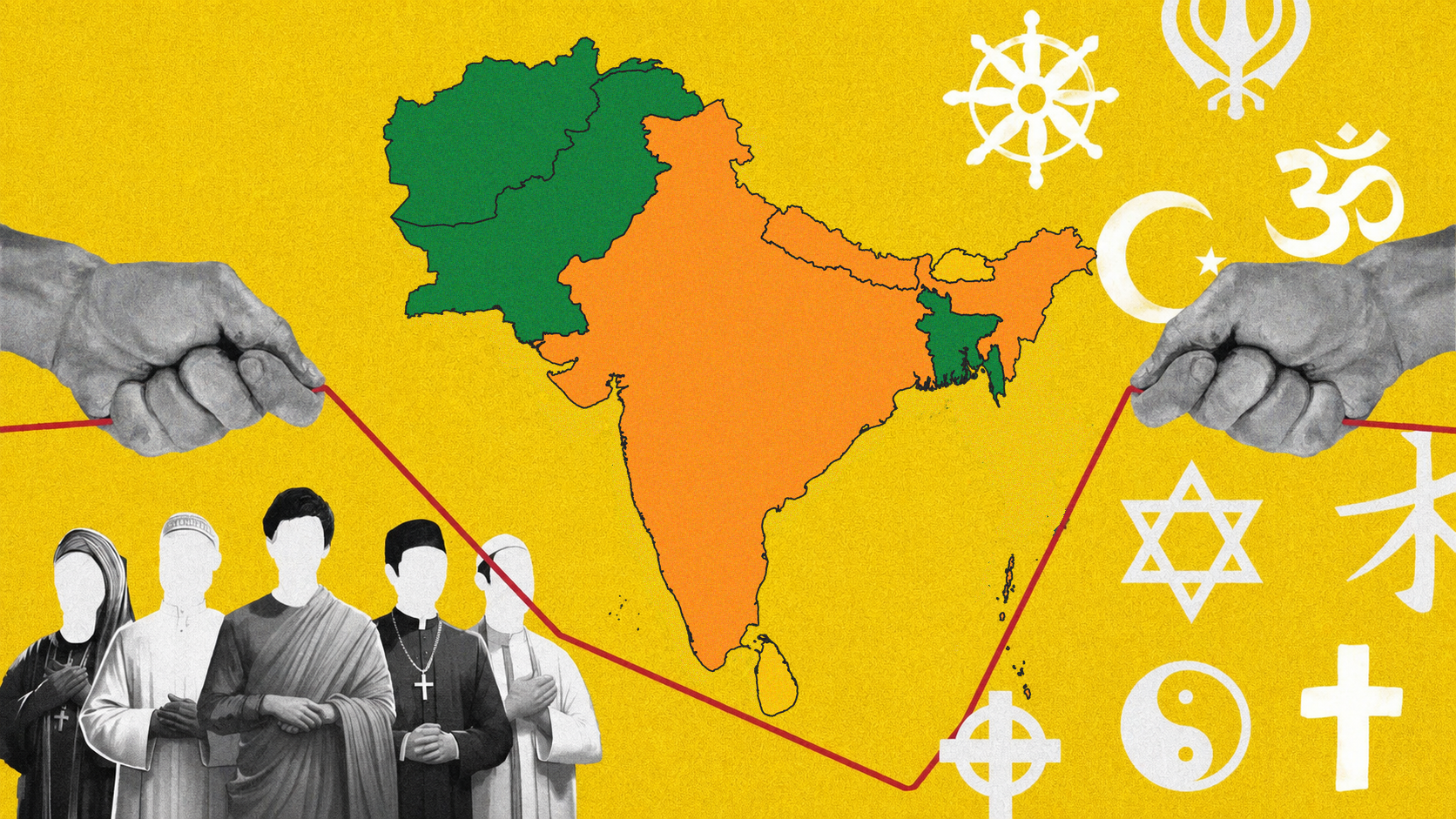
The Hindu Right is trying to unite the working classes, the majority of whom belong to lower castes and Dalits, under the banner of Hinduism, and set them against Muslims and Christians. The RSS has a presence at the grassroots through its shakhas, schools and even trade unions. Working people are indoctrinated to think of themselves as Hindus above all.
The ideologues of the Hindu Right, like the postcolonial Left, also argue that class conflict happens in the West but not in India. Hindu society, they insist, is an "integral" or "organic" society in which different groups are different parts of the same body. How can a foot (the labouring castes) fight against the head (the thinking castes, the Brahmins)? In this "integral society", there is only harmony, with all parts working in unison, as in a human body.
The ruling dispensation has fully embraced the market as the solution to social problems. In practice, this means massive subsidies, tax breaks and land grants to big businesses, whom they see as "trustees" of the poor. For the poor, there is only dole: meagre cash transfers tied to building vote banks. Instead of creating social infrastructure, such as good schools and hospitals available to all for the long term, the poor are sustained by cash handouts.
The BJP government is using Hinduism to build what it calls "Brand Bharat". India has begun selling itself to foreign corporations and countries as the land of spiritual wisdom, yoga and the like.
Basic material needs and public goods have always been the terrain of the Left. Struggles over material issues can, and should, bring diverse religious communities together in a united front. Something like this did happen with the farmers' movement in Punjab and with the agitation against the constitutional amendment that tied citizenship to religion. There are social movements on the Left that are still active. Unfortunately, though, intellectuals' attention has focused more on cultural identities.
The interview was taken by Khairul Hassan Jahin.
Send your articles for Slow Reads to [email protected]. Check out our submission guidelines for details.

Interview / Modern Islam has always been a 'secular' entity
How the banned film Satluj reopened the darkest wound in Punjab's history

What the 2026 World Cup reveals about racism in football

How Kolkata shops preserve the memories of East Bengal
How Roman Jakobson changed modern thought

Football as freedom: From colonial Bengal to Bangladesh
The forgotten South Asian soldiers of the First World War
How Dhaka lost its green and water: Revisiting the first master plan of the city
Bengal’s forgotten connections with Nazi Germany