


Buses blind to the disabled
The physically challenged commuters denied of rights as few follow govt order to keep reserved seats for them
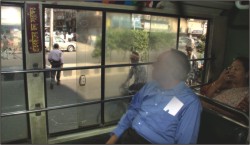
Reserved seats in buses are rarely kept reserved for the disabled.Photo: STAR
Although people with disabilities are supposed to have seats reserved for them in all public buses in the city as per a government order, they are regularly being denied of their rights by bus operators including the state-run BRTC. According to a government decision taken in September this year all the public buses in the city are supposed to have two designated seats for people with any type of disabilities. The two seats are supposed to be marked and positioned in easily accessible location. However, very few buses were found following the new order. In reality the disabled people are in most cases barred from boarding public buses. The designated seats mostly remain occupied by other passengers. The blind and the disabled persons are also allowed to travel in Bangladesh Road Transport Corporation (BRTC) buses with half fare. To avail the service the disabled persons need to have a card issued from the BRTC office. However the special offer remains only on papers. BRTC workers said they have no such instructions from the authorities. Rashidul Azam Russell, a physically challenged person who was born with no arms gives accounts of his painful experience a few days ago. “I was travelling from Gazipur to Mirpur. When I boarded the bus I saw the designated seats occupied. When I requested, no one responded positively. I stood all the way from Gazipur to Banani without any sign of empathy from anyone,” said Russell, currently working as an assistant coordinator, Centre for Disability in Development (CDD). Russell added, “I had no help while I got on the bus. During the whole time I was standing without any balance. We all know how the streets of Dhaka are. Whenever there were hard brakes, turns and bumps I could not help but trip over.” There is no recent survey regarding the total number of persons with disabilities in the country. According to a survey conducted by the World Health Organisation in 2000 about ten percent of the total population in Bangladesh is disabled. The estimated number is around 1.5 crore. Within 2007 the number has increased, say experts. Around 5,500 buses and minibuses are currently operating on 40 routes and 149 sub-routes in the city. BRTC is operating 171 buses including 50 double-deckers. BRTC also leased out 127 buses to private operators for carrying passengers between the city and its peripheries. These buses are supposed to follow all the rules of the corporation. Total number of BRTC buses running in the country is 550. The persons with disabilities have no place in all these buses. Dr Nafeesur Rahman, director, National Forum of Organisations Working With the Disabled (NFOWD) said, “Public transportation system in the country is not at all friendly to the people with disabilities in the first place but occupying designated seats while a disabled person stands shows serious lack of morality.” Rahman said in most cases public buses remain in a hurry loading and unloading passengers in the middle of the streets. There is no specific pick up points. Height of the footpath and buses are different. Besides, buses are designed differently. Some buses have entrance in the middle while some has the gate in the front. Passengers always compete for seats due to shortage of buses. “All these factors create problems for the people with disabilities who need help to get on. But no one wants to spend extra time helping a disabled person, so they prefer not to allow them in the bus,” said Rahman. Those who belong to the well off class can avail better transport but it is the poor who suffer, he mentioned. BRTC Chairman Colonel Aktar Kamal said, “Most people with disabilities are unaware of the BRTC social service mostly for lack of publicity. We are trying to develop a service friendly to everyone but our workers are not aware enough. With a little support from NGOs it is possible to train the workers on how to handle a disabled person.” Khandakar Rafiqul Hossain (Kajal), president of the Association of Bus Companies of Bangladesh, admitted the fact of denying the rights of the disabled. He said, “It is a social issue. Most of our workers are illiterate and they come from a class where they have to struggle to earn a living. They are also ignorant of rights issues.” “For them helping to a disabled person to board the bus means waste of time when they drive fast to the next stoppage and get more passengers,” he added. Kajal also blamed the general commuters for not cooperating. “Sometimes commuters refuse to give up the seat. They even tear up the stickers marking the designated seats. Drivers and helpers who are often abused by passengers remain silent just to avoid quarrels,” he said. Kajal said the association is thinking of arranging training sessions for drivers and helpers. “However, I don't know whether it will help as most helpers are floating people and they work on temporary basis,” he noted.
 For all latest news, follow The Daily Star's Google News channel.
Comments