Why Bangladesh innovates but rarely builds global companies
In April 2025, the Chief Adviser's Press Wing announced news that Bangladesh rarely gets to announce. ShopUp, the Dhaka-based B2B e-commerce platform, had joined forces with Saudi Arabia's Sary to create the SILQ Group through a $110 million investment round led by Sanabil Investments, a wholly owned subsidiary of Saudi Arabia's Public Investment Fund (PIF), and Peter Thiel's venture capital firm, Valar Ventures. It was Sanabil's first investment in South Asia. Together, the two companies had serviced over six lakh retailers and wholesalers, completed over $5 billion in transaction volume, and provided over $750 million in embedded financing. A company based in Dhaka is today the central hub of a Gulf–South Asia trade corridor projected to generate $682 billion in trade. "This moment is more than a funding headline," the government statement said. "It's a clear signal that Bangladeshi startups are ready for the world stage."
But look beneath the headline, and the picture is far less impressive. As reported by LightCastle Partners, Bangladeshi startups raised approximately $120 million during the first half of 2025. More than $110 million of this amount came directly from that single transaction. Remove SILQ from the equation, and nearly everything else within the ecosystem generated little to no capital; essentially, there were no recorded pre-Series A or Series A investments during the period. When the world stage opened up, the pipeline behind it was largely vacant.
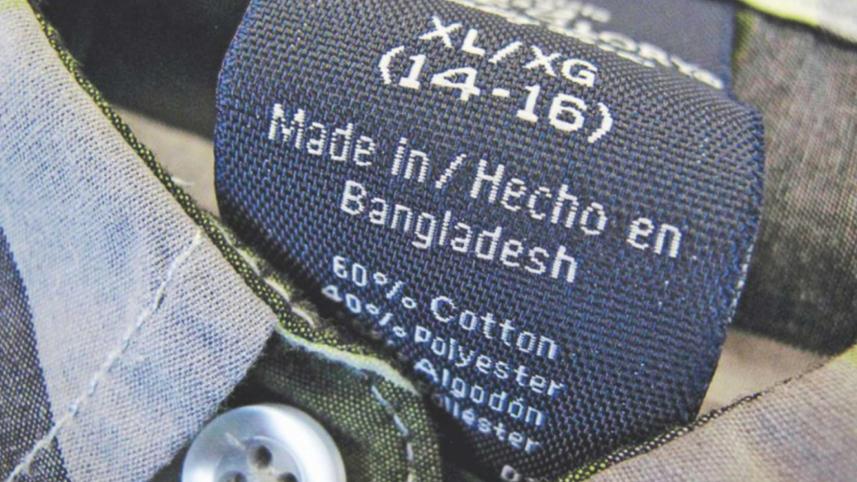
Thus, the contrast—celebration above, silence below—is perhaps the most accurate representation of Bangladeshi innovation available. I have observed this same pattern play out on a smaller scale for 18 years across various forms of energy and infrastructure development in Bangladesh and 20 other countries. A Bangladeshi engineer or company develops something innovative. It works. It receives an award or appears in local media outlets; a minister may even visit. And then nothing. The prototype collects dust. The founder either returns to trading or moves abroad to seek employment. Five years later, we are importing the same product from China or India at triple the cost.
A comfortable response to this observation is that Bangladesh suffers from an innovation problem. The narrative suggests we do not invest enough in R&D; therefore, we cannot innovate; therefore, we cannot industrialise. This narrative is incorrect. Furthermore, it is incorrect in a way that matters because it directs the policy conversation to the wrong end of the pipeline.
What the last 15 years tell us
Evidence from the past 15 years tells a different story about Bangladesh's capacity to innovate.
bKash began operations in 2011, offering a limited set of basic services: cash in, cash out, and send money. Through these services, it enabled tens of millions of people to access banking services that no traditional bank would have opened a branch to provide, created a nationwide network of small retail agents to act as "human ATMs" in rural areas that historically did not receive financial services, and received $250 million in investment from Japan's SoftBank in 2021, the largest startup deal in the country's history, making bKash our first unicorn. Pathao revolutionised urban logistics and mobility and received $12 million in 2024, one of the few major investments of that dismal year. 10 Minute School brought quality educational content to remote districts where a good teacher is a rumour. iFarmer linked more than six lakh smallholder farmers to finance, inputs, and markets.

Beyond this lies a less prominent but still developing tier of companies: multiple self-funded software businesses such as Apploye and Dorik, delivering value to clients across many countries; Markopolo, securing $1.5 million and receiving international recognition; and GoZayaan, entering Pakistan. At the base of this structure lies one of the world's largest pools of online freelancers: hundreds of thousands of young Bangladeshis selling their skills across borders every night.
There is a great deal of innovation relative to Bangladesh's economic size. However, very little of it is credited to us. A large portion of Bangladesh's software and design production is developed under white-label arrangements; that is, full-fledged platforms and systems built in Dhaka and Jashore are intended for use in Europe and America. The quality of the work is exceptional. Ownership of the work, profit margins, and branding rights go to the European and American companies. We have become proficient at creating value without owning it.
Next came the exodus of capital. Bangladeshi startups have received over $1.126 billion since 2010 through more than 460 transactions. Only approximately $76 million, barely seven percent, of those funds was provided locally. The peak occurred in 2021, when Bangladeshi startups received nearly $435 million through 94 transactions. By contrast, in 2024, funding dropped to roughly $41 million. This represented a 41 percent year-on-year drop in funding and the lowest annual total in six years. International investors provided 98 percent of even that total. Funding from local investors decreased by 95 percent, resulting in just $1.1 million being invested in 2024.
When global capital caught a cold, Bangladesh's startup ecosystem caught pneumonia. Startups that collectively received a billion dollars in funding have struggled to pay their employees' salaries; even successful ventures such as Chaldal have faced severe financial pressure. At the same time, the increased interest from Gulf-based investors, SILQ chief among them, reflects a lack of local capital rather than a deliberate strategy.
Finally, note that every successful Bangladeshi venture is a platform, software, or distribution business, and almost all of them sit within a short distance of each other in Dhaka. Examples include bKash, ShopUp, Pathao, and 10 Minute School. Although Pathao has achieved significant success at home, it has remained within the domestic market, unlike Indonesia's Gojek, which expanded regionally and became a super-app. Also, none of the internationally successful Bangladeshi ventures manufactures a physical product. Much of the success of fintech ventures can be attributed to the fact that they never had to interact with any of the components discussed throughout this article: no factory, no certification laboratory, no public tender, no term loan against equipment. Therefore, as soon as any Bangladeshi innovation takes on a physical form, it enters an entirely different country.
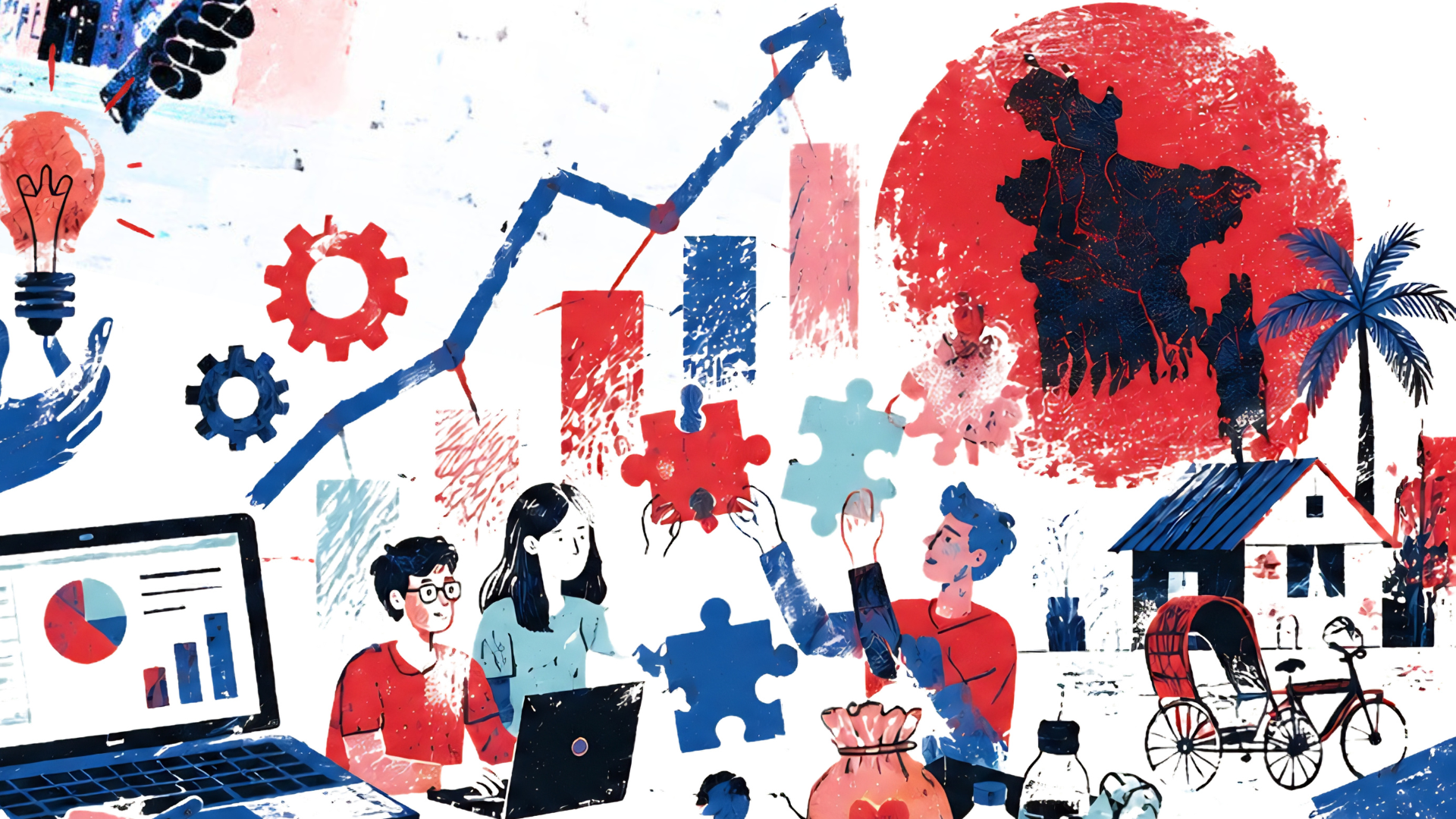
Bangladesh does not have an innovation problem. It has a commercialisation problem. Innovations are created in Bangladesh; however, they typically perish on the way to market. The strongest evidence that these problems can be solved is that we have solved them before.
The chain of commercialisation, and where it breaks
All products that have entered the global marketplace have travelled along a single path: idea, prototype, pilot testing, certification, financing, first customer, scalability, and export. Whether this path runs through Daejeon, Shenzhen, Ho Chi Minh City, or Dhaka, it is identical everywhere. Countries differ not in the number of talented people travelling down the path, but in how many bridges span the chasms along it.
As a Bangladeshi inventor, travel down the path described above and count how many chasms you encounter along the way.
The certification gap: Assume that a firm in Gazipur creates a truly innovative solar controller, battery pack, or piece of agricultural equipment. Before it can approach potential customers seriously, the firm must test the product and obtain certification from a recognised standards body. Because of limited resources and accreditation gaps, domestic laboratories are rarely able to certify first-of-a-kind products. Consequently, prototypes must be shipped abroad to India, Singapore, or Germany, then tested at foreign laboratories, at foreign rates, and certified in foreign currencies. Certification costs often exceed the entire cost of developing the prototype. The macro statistics support this observation: Bangladesh spends an extremely low share of GDP on research and development, a small fraction of one percent, compared with over 2.5 percent in China, roughly 0.5 percent in Vietnam, and 0.7 percent in India. How much money will you spend developing something if you cannot afford to get it certified?
The first customer gap: This one is particularly brutal since we have built it into our own policies. There is one large buyer in Bangladesh: the state. Public procurement, under the Public Procurement Rules 2008, follows standard tender documents. These tender documents require all applicants to provide evidence of experience, both general and specific, in supplying similar goods over the last few years. Every contractor in the country knows these qualifications by heart. "Show me your experience," they say. "Have you ever supplied something like this before? In such quantities? At this price?"
Now read this from the perspective of a brand-new product. By definition, a new Bangladeshi product has never been supplied before. Thus, it does not meet the qualification requirements. So the state, which in other countries acts as the first domestic customer for emerging industries, in Bangladesh serves as a buyer only for existing products, which also means existing imports.
I am being very careful on this point because the experience provision was established for a purpose. It protects the government's funds from untested and unstable vendors. Anyone who witnessed Evaly's and Eorange's cashback scams and how they burned an entire generation of consumers, or saw the travel-booking site Flight Expert vanish overnight, understands why gatekeepers hold on to their gates. Once trust is lost, tighter restrictions follow. As Sylvana Quader Sinha, founder of Praava Health, told this newspaper about her own field: "The real problem isn't about booking appointments or visiting pharmacies; it's about trust." The problem is not that the experience clause exists. The problem is that no alternative doorway exists beside it: no innovation procurement window, no first-article exemption, no pathway under which an initial public order can be awarded to a tested, certified, and locally produced product. The wall has no gate.
The financing gap: Now, let us assume that our entrepreneur managed to find a private first customer, for example, a factory owner willing to take the risk. She takes her working prototype and purchase order to a local bank. The bank then asks a question completely unrelated to either item: What land can you pledge?
In Bangladesh, bank lending is primarily collateral-based. Land and building titles are considered acceptable forms of collateral. Cash-flow lending is relatively rare. Lending against a confirmed purchase order is even less common, and lending against intellectual property is virtually non-existent. However, a trading company purchasing finished products via a letter of credit can secure funding for its entire business cycle using that same letter of credit tied to the purchased goods. Conversely, a manufacturer producing a genuinely new product, with an order in hand but no land to pledge, has none of the characteristics the banking system looks for in an eligible borrower. Venture capital that might fill this gap has, as shown earlier, almost entirely vanished from the industry. Furthermore, when present, it has gone directly to fintech and platforms rather than engineering and manufacturing. "Investors are now extremely cautious due to the macroeconomic situation," Fahim Mashroor, former president of BASIS, told The Daily Star. He was speaking of software. For hardware, the sentence has been true for forty years.
One gap after another, and each one can be survived on its own. But together they kill. The product cannot obtain certification at an affordable price and thus cannot bid. Regardless of cost, it would have no chance of bidding anyway, since it has no prior delivery history and cannot establish one, and banks will not lend it money to produce without collateral, namely land.
Award-winning, unsold. I know six examples offhand of products that were killed by this exact process. And probably so do many readers who have worked in Bangladeshi industry.
No one here is stupid
It is common to blame Bangladeshi businesses' conservatism for the country's failure to industrialise beyond garment exports. This criticism is both unfair and analytically lazy.
Think of the choices available to a family-owned business with Tk 10 crore to invest. Invest in an import-trading business: returns are guaranteed, the production cycle is measured in months, and the lending process is routine. Invest in real estate, and the asset is likely to appreciate while you sleep. Invest in creating and producing a brand-new product: you will lock up the funds for four to seven years, there is no certainty regarding the costs of obtaining certification, the state cannot be your customer, banks do not provide loans based on the value of your purchase orders, and your profit margins can disappear immediately due to a policy change, a reorganisation of duties, or a single SRO (statutory regulatory order).
Transparency International's 2025 index, released this February, ranks Bangladesh 150th out of 182 countries, with a corruption score of 24 out of 100. According to Transparency International Bangladesh, this is the second-lowest score the country has recorded in 14 years. Typically, reports such as these are viewed as moralising tales. Instead, they should be considered business inputs; they measure how uncertain the rules are for individuals investing in assets that cannot easily be converted into cash.
Obviously, no rational decision-maker will choose the third option: investing in a brand-new product.; Bangladeshi businesspeople are rational too. The International Finance Corporation (IFC) has described the result with unusual bluntness: a private sector that is "becoming increasingly concentrated and inward-looking, seeking to maximise rents from existing markets instead of embracing openness and competitiveness", operating in what the same diagnostic called one of the most burdensome business environments in the world. The World Bank's Bangladesh Development Update identifies stagnation in the rate of new firm creation. Only about eight percent of all formal firms in Bangladesh were established in the last five years. In contrast, approximately 32 percent of all formal firms in China were founded in the last five years, and 40 percent in Vietnam. Despite two decades of growth at around six percent annually, the average revenue per worker in both manufacturing and service industries is only about one-third of the South Asian benchmark, and productivity in services, our largest employer, has remained virtually unchanged since 2016.
Bangladesh is not lacking in innovative ideas. Bangladesh lacks incentives to create new firms and increase productivity. Our entrepreneurs are not risk-averse; they are wary of new ventures because the rules of engagement are so uncertain. The structure of our regulatory environment is designed to punish risk-takers, and thus we should not be surprised that few people take risks. Every year, thousands of our top engineers and founders conclude that their prototypes are more likely to succeed in Toronto or Riyadh than if manufactured in Tejgaon. As such, we have failed to develop an institutional framework that enables our expatriates to repatriate their capital and knowledge to Bangladesh.
The bottom line needs to be stated directly: we are heading towards becoming a nation of traders rather than builders, not because trade is part of our national character, but because we have created an economic environment in which trading is the only rational use of one's money.
The bridge we built once
This is where the story turns, because Bangladesh's own history shows that a different outcome is possible.
In 1978, a retired civil servant named Noorul Quader signed a collaboration agreement between his newly formed company, Desh Garments, and Daewoo Corporation of South Korea. The following year, he sent around 130 young Bangladeshis to Daewoo's plant in Busan to learn, from the sewing floor upwards, how a modern export garment factory actually operates. Within a decade, a large share of those trainees had left Desh to establish or run their own garment factories. Economist Yung Whee Rhee, who documented the episode for the World Bank, described it as a catalyst model of development; per taka spent, that single training batch is arguably the highest-return industrial investment in this country's history.
But the trainees are only half the story, and the less important half. Talent alone would have died at exactly the gaps described above: no working capital, crippling input duties, and no first customer. What made the garment industry possible was that the state, quietly and quite brilliantly, built a bridge over every one of those gaps for this single sector.
The use of bonded warehouses made it possible for factories to import fabric and trimmings duty-free, provided the goods were used to produce exports. This immediately solved the input-cost problem for these factories. The back-to-back letter of credit (LC) arrangement also enabled a factory owner with little or no capital to obtain an LC to import fabric, using the LC from a buyer who had already agreed to purchase the finished garments. As long as the factory owner had a confirmed order from a major European retail outlet and rented premises, he could finance all phases of the production cycle and was not required to own any real estate.
While the RMG bridge should not be emulated unconditionally, it serves as evidence that Bangladeshi policymakers understand how to take an industry from zero to global status when they choose to do so.
Alongside those measures, the Multi-Fibre Arrangement (MFA) quota system established a guaranteed corridor of foreign demand for Bangladeshi garments; thus, the first-customer problem was resolved through a combination of geopolitical happenstance and intentional industrial-policy design.
Three barriers stood in the way: input costs, working capital, and the first customer. Each of these obstacles was intentionally addressed in the garment sector in the early 1980s. The result has been an industry capable of earning nearly all of Bangladesh's export revenue and employing approximately four million workers.
It should be acknowledged that, while the garment bridge succeeded, it also brought real limitations. It positioned the industry on the bottom rung of the global garment value chain, producing low-margin, low-wage products. Despite more than 40 years of effort, Bangladesh has struggled to move beyond this position. It took the Rana Plaza disaster to force the compliance transformation that should have come from within.
Therefore, while the RMG bridge should not be emulated unconditionally, it serves as evidence that Bangladeshi policymakers understand how to take an industry from zero to global status when they choose to do so. The enigma surrounding Bangladesh is not why we never built a bridge; it is why, having built one and watched it carry a hundred-billion-dollar industry across, we never built a second.
Other countries have successfully developed multiple bridges. For example, South Korea developed its domestic firms into government suppliers before pushing them to export internationally. Similarly, Taiwan's Industrial Technology Research Institute (ITRI) funded research, and in 1987, it spun off its semiconductor programme as a company, capitalised it with public funds, and staffed it with its first engineers. That company was TSMC. Vietnam has taken a hybrid approach to economic development, combining foreign investment with supplier development. When Samsung opened phone-manufacturing facilities in Vietnam, a domestic component industry rapidly developed around its plants. Foreign direct investment in Vietnam currently accounts for around six percent of gross domestic product, compared with less than one percent in Bangladesh.
Today, the Gulf states are rapidly building new bridges through sovereign funds such as Sanabil, which aims to develop regional champions. The SILQ deal shows what happens when a Bangladeshi firm enters a market where such a bridge already exists. In each instance, the state manufactured first customers and then stepped aside.
What a new bridge looks like
A slow read should leave readers thinking critically rather than merely lamenting; therefore, here is what a second bridge might look like. A second bridge requires exactly three segments, and each segment corresponds to one of the three gaps. None of them will require large amounts of new money. All three will require significant new rules.
First, an innovation procurement window: change the procurement framework so that a specified percentage, for example, one or two percent, of public procurement is designated for first-time domestic suppliers of certified new products. Under this system, the experience requirement would be removed and replaced with mandatory third-party performance testing of prototypes and a phased delivery schedule. Be cautious: start with just one ministry for one year, and publish a list of the items purchased and how they performed. Versions of this system have existed in Korea for decades. The state does not have to subsidise innovation; it simply needs permission to buy it.
Second, a certification pathway: charge BSTI, BUET's testing laboratories, and the national accreditation board with implementing a five-year programme to establish domestic certification in areas where Bangladeshi innovation is occurring, including solar components, power electronics, agricultural machinery, and light engineering. At the same time, provide a cost-sharing programme to reimburse part of the certification fees for first products, modelled on the Export Development Fund. If certificates cost more than prototypes, this is not quality control; it is a border wall.
Third, an order-backed lending instrument: here, finally, the state moves into risk capital. In May 2026, Bangladesh Bank and 39 commercial banks launched the Bangladesh Startup Investment Company's first vehicle, the Tk 425 crore Onkur Bangladesh Fund, under which participating banks commit one percent of their annual net profit to a continuous financing mechanism for seed- and early-stage ventures. That is a most welcome beginning, and indeed a long-overdue acknowledgement that new ventures require equity, not mortgages. However, in practice, equity funds will pursue software ventures. The manufacturing gap requires a debt instrument, and there is an existing model in our history: a Bangladesh Bank refinancing line whose primary security is a confirmed purchase order from a creditworthy buyer, with the order insured against non-payment, capped per borrower, and priced according to risk. This is not exotic finance. It is the back-to-back LC, the same instrument that built our largest industry, extended at last beyond the garment sector, which has monopolised it for forty years. Add a structured diaspora co-investment window to the same line, and the engineers we export can become the lenders we lack.
Three spans. A buyer, a certificate, a loan. Everything else, including talent, ideas, and hunger, this country already possesses in embarrassing surplus.

Ready to take the world stage
There is a version of Bangladesh's next ten years in which LDC graduation in November 2026 strips an economy still standing on its single bridge of trade preferences, and we discover too late that one industry, no matter how mighty, is a dangerous thing on which to depend. There is another version in which graduation becomes the forcing event that finally makes us build the second bridge, and the third, and the tenth, until a certified Bangladeshi product with a public purchase order and an order-backed loan, rather than being the subject of a press release from the Chief Adviser's Office, becomes just another Tuesday.
"Bangladeshi startups are ready for the world stage," the government said when SILQ was born. It was true. And it missed the point. The startups were always ready. It was only the bridge that was never built. We know how to build it. We have known how since 1982.
Mohammad Subail Bin Alam is an engineer and economist who writes on sustainable development. He is the chief operating officer of Rancon Infrastructures and Engineering Limited. He discloses that he runs a business that would benefit from some of the reforms proposed above. That is precisely why he understands where the system breaks down. He can be reached at [email protected]
Send your articles for Slow Reads to [email protected]. Check out our submission guidelines for details.
Beyond groundwater: Rethinking Barind's water crisis
The gods that we build: AI and the future of moral authority
Remembering Mahbub ul Haq: A pioneer of human development ideas
What would make Dhaka a good city?
How Chattogram can end its recurring waterlogging crisis
Why governments fail to communicate with Gen Z
How Bangladesh can stop the next data breach
Salinity and the unseen health burden in coastal Bangladesh
Dhaka: How a city was planned to drown