Remembering Mahbub ul Haq: A pioneer of human development ideas

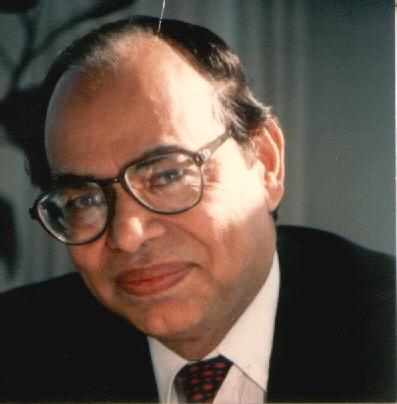
'In the ultimate analysis, human destiny is a choice, and not a chance' – that was the belief of Mahbub ul Haq, whether in his personal life, professional career or development philosophy. It might have been by chance that he was born to middle-class parents; saw, as a teenager, the turmoil and massacre associated with the Partition of the subcontinent; and grew up at a time when the newly independent nations were quite vulnerable on all fronts. But he never let chance dictate his choices. He passionately advocated 'equality of life chances'; he totally rejected sectarianism, bigotry and social hatred; and he was absolutely committed to peace, security and human well-being. In every aspect of life, Mahbub chose a destiny and did not surrender to chance. And that might have been the reason why he not only pioneered the notion of human development, but also championed it throughout his life.
The concept of human development starts with the premise that people are the real wealth of a nation. The basic objective of development is to create an enabling environment for people to enjoy a long, healthy and creative life. Human development is simply defined as a process of enlarging choices. The ultimate objective of development is not to create more wealth or to achieve higher growth, but to enhance this range of choices for every human being. Human development is both a process and an outcome. It is concerned with the process through which choices are enlarged, but it also focuses on the outcome of enhanced choices.
With regard to the notion of human development, Mahbub used to stress three fundamental points. First, human choices are enlarged when people acquire more capabilities and enjoy more opportunities to use those capabilities. Human development reflects a balance between the two, and if there is a mismatch between them, human frustration may result. Second, according to the concept of human development, economic growth is just a means, albeit an important one, and not the ultimate goal of development. Income makes an important contribution if its benefits are translated into people's lives, but the growth of income is not an end in itself. The focus of development must be people. Third, human development, by concentrating on choices, implies that people must influence the process that shapes their lives. They must participate in various decision-making processes, in the implementation of those decisions, and in their monitoring.
In the ultimate analysis, human development is development of the people, development for the people, and development by the people. Development of the people refers to the building of human capabilities through human resource development. Development for the people implies that the benefits of growth must be translated into the lives of people. And development by the people emphasises that people must participate actively to influence the processes that shape their lives.
The publication of the first Human Development Report by the United Nations Development Programme (UNDP), under Mahbub's leadership, in 1990 was a modest attempt to present the human development paradigm to the world. With the introduction of the concept of human development, the construction of a composite measure for it, and a discussion of the relevant policy implications, the Human Development Report simply changed the way people looked at development and dealt with it.
Mahbub was aware that all the quantitative information about human development and its various indicators constituted what may be termed human development accounting. But he firmly believed that this accounting must have a focus dimension, in addition to a breadth dimension. He convinced himself that no matter how good the breadth dimension of human development accounting was, with all the tables, indicators and data, there was a need for a summary measure of it in the form of a composite index. Otherwise, the dominance of GNP could not be broken: people would look at the breadth dimension of human development accounting respectfully, but when it came to using a summary measure of development, they would still go back to the unadorned GNP because it was, even though crude, convenient. His quest for such a measure – just one number, of the same level of vulgarity as GNP, but not as blind to the social aspects of human lives as GNP – led to the construction of the famous Human Development Index (HDI).
The Human Development Report 1990 has, therefore, constructed a composite index, namely the Human Development Index (HDI), on the basis of these three basic dimensions of human development. The HDI contains four variables: life expectancy at birth to represent the dimension of a long and healthy life; adult literacy rate and the combined enrolment ratio at the primary, secondary and tertiary levels to represent the knowledge dimension; and real GDP per capita (PPP$) to serve as a proxy for the resources needed for a decent standard of living.
Mahbub used to make five points about the HDI. First, the HDI is not a comprehensive measure of human development. It just focuses on the basic dimensions of human development and does not take into account a number of other important dimensions of human development. Second, it is composed of long-term human development outcomes. Thus, it does not reflect the input efforts in terms of policies, nor can it measure short-term human development achievements. Third, it is an average measure and thus masks a series of disparities and inequalities within countries. Disaggregation of the HDI in terms of gender, regions, races and ethnic groups can unmask these disparities. Fourth, income enters into the HDI not in its own right, but as a proxy for the resources needed to have a decent standard of living. Finally, the HDI cannot provide a complete picture of human development in any situation. It has to be supplemented with other useful indicators in order to provide a comprehensive view. Thus, it is human development accounting, not the HDI, which can portray the complete picture.
In the Human Development Report 1994, Mahbub introduced the notion of human security, which does not concentrate on territorial security, but rather on job security, income security, health security, environmental security, personal security and so on. It totally changed the concept of security and had ever-lasting influence on development thinking and policy.
With Mahbub's masterful use of the HDI, the Human Development Reports were able to, first, attract the attention of the world; second, motivate desirable and healthy competition among nations; third, communicate and advocate powerfully the messages of human development; fourth, monitor and evaluate development from a broader perspective; and finally, break the dominance of income as the sole measure of human well-being.
Mahbub's intellectual entrepreneurship and creative ideas continued to be reflected in successive Human Development Reports (1991–1996), the themes of which varied from public expenditure for human development to participation to economic growth for human development. Some of his ideas were related to analytical issues and some to measurement, while others were related to policy options. On analytical issues, the Human Development Report 1993 talked of the concept of jobless growth, where the economy grows through productivity gains, but without corresponding increases in jobs or the benefits of growth being translated into the lives of poor people.
In the Human Development Report 1994, Mahbub introduced the notion of human security, which does not concentrate on territorial security, but rather on job security, income security, health security, environmental security, personal security and so on. It totally changed the concept of security and had ever-lasting influence on development thinking and policy.
Mahbub was a firm believer in gender equality, and he was convinced that development, if not engendered, is endangered. His visionary thinking in this area resulted in the Human Development Report 1995 on gender equality, which not only offered a rough valuation of unpaid work by women, but also introduced two gender equality-centred composite indices: the Gender-related Development Index (GDI) and the Gender Empowerment Measure (GEM). The GDI looks at the achievements in capability building of women on the same plane as the HDI, while taking into account the inequality between women and men; the GEM, meanwhile, represents the opportunities available to women in selected economic and political arenas. Both these measures not only provided comprehensive assessments of gender inequality, but also changed the way people looked at the issue of gender.
Being a policy-driven person, Mahbub's preoccupations were always with policy implications. And he used the Human Development Reports quite effectively during the early 1990s to put forward some of his innovative policy proposals. The 20:20 proposal, which called for 20 percent of domestic resources and 20 percent of official development assistance (ODA) to be devoted to basic social services, was a major contribution to policy debate and dialogue. He revived the idea of the Tobin Tax as a means of generating resources for human development in the developing world. He also talked of using the peace dividend for human development and proposed the creation of a global fund. He was courageous enough to call for major reforms of global institutions with such proposals as an Economic Security Council, a global central bank, etc.
The intellectual enterprise known as the Human Development Reports, of which Mahbub ul Haq was the creator, has had significant impacts across various development circles through its analysis, data and policy discussions. First, the Reports initiated new policy debates and dialogues at the national level and influenced policymakers to come up with new policy strategies. Second, they encouraged the disaggregation of various human development indicators in terms of gender, regions, ethnic groups, etc. Such data clearly indicated intra-country disparities and inequalities and helped governments direct the necessary resources to formulate appropriate policies. Third, development activists, NGOs and civil society organisations have been using these Reports as advocacy documents. Fourth, a series of academic research studies were undertaken to expand the frontiers of human development in terms of analytical frameworks, indices, statistical work and policy recommendations. Fifth, the Human Development Reports have been used as reference materials in universities and academic institutions.
Mahbub's vision also prompted the production of National Human Development Reports. While in 1991 only four countries—Bangladesh, Colombia, Ghana and Pakistan—produced such reports on a pilot basis, today nearly 900 National Human Development Reports have been produced in more than 120 countries. All these national reports have become important documents for national policies and strategies, serving as repositories of innovative data and as crucial advocacy tools.
Before his premature death, Mahbub could lead only two Human Development Reports for South Asia under the Human Development Centre in Islamabad. Both these reports—one on deprivation and the other on the educational gap—boldly raised issues never before discussed in the sub-region and provided innovative policy options that had never before been proposed in those countries. But he was saddened that the countries of South Asia, rather than joining hands to fight poverty and deprivation, were engaged in self-destructive conflicts and wars.
Ideas were the prime movers of history; revolutions came thereafter—that was a major element of Mahbub's vision. He believed that the evolution of a new idea had three stages. The first stage is characterised by organised resistance; the second stage could be described as widespread and uncritical acceptance of new ideas; and the third stage is one in which there is a critical evaluation of ideas and their practical implementation.
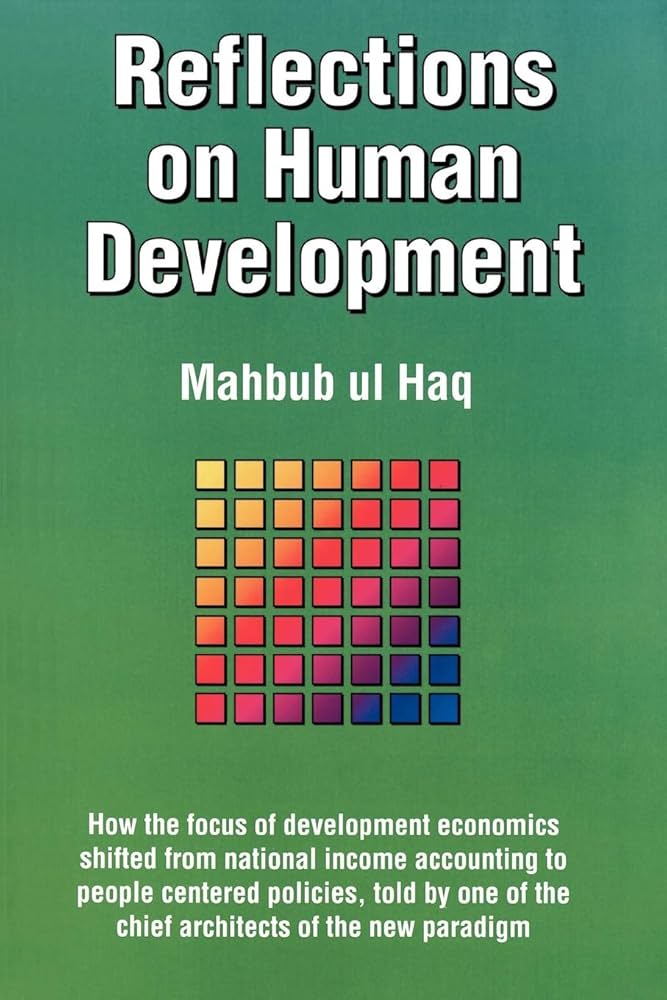
Courage was another crucial element of his vision. He often argued that what the world needed was more courageous ideas, not growing technocratic despair. He came to realise that in the intellectual world, it was often courage that was lacking, not wisdom. In his final book, Reflections on Human Development, a collection of essays published in 1995, Mahbub wrote, "Throughout the time I have been associated with the production of the Human Development Reports, I have realised that what endeared them to the world was their raw courage, their ability to state facts professionally, but honestly, and their refusal to make any intellectual compromises with institutional constraints."
Mahbub used to dream of a world where security would be reflected in the lives of people, not in the weapons of nations; where poverty would be tackled not as a mere flu, but as a cancer of the body; where gender equality would not receive a band-aid approach, but rather would be mainstreamed; where people would be empowered to guide both the state and the market, both of which, in the last analysis, must serve the interests of the people; where poor nations would get equitable access to global market opportunities, not charity; and where peace and development would co-exist. "In the decades ahead," Mahbub wrote, "it is the battle for freedom from want that will continue to challenge our most creative energies."
Hope was the centrepiece of Mahbub's vision. He admired the vision of common people, because of whose efforts and struggles the unthinkable—from the fall of the Berlin Wall to the end of apartheid in South Africa—was becoming commonplace. He saw nothing good in pessimism, and he used to say that pessimists should not be in the development business. Most people see things as they are and say, "Why?"; but Mahbub was one of those few people who dreamt of things that never were and asked, "Why not?"
With regard to the notion of human development, Mahbub used to stress three fundamental points. First, human choices are enlarged when people acquire more capabilities and enjoy more opportunities to use those capabilities. Second, according to the concept of human development, economic growth is just a means, albeit an important one, and not the ultimate goal of development. Third, human development, by concentrating on choices, implies that people must influence the process that shapes their lives. They must participate in various decision-making processes, in the implementation of those decisions, and in their monitoring.
As a person, Mahbub was a gem of a human being. He was gentle, soft-spoken and kind-hearted. But there was more to him. The human race is sometimes divided into two groups—molluscs and mammals. Molluscs are those with a hard veneer, unyielding and tough, but when one pushes through their exterior, one finds a squishy, soft, musky mess underneath. Mammals are soft, warm and yielding on the outside, but underneath lies a firm, strong backbone. Mahbub was a mammal, whose gentle appearance concealed a tenacity and strength of character that he consistently demonstrated in his personal and professional life.
In life, Mahbub valued knowledge, wisdom and honesty. He once said, "Honesty is a gift that only friends can give to friends." In the dedication to his last book, Reflections on Human Development, he wrote: "To Toneema and Farhan, let knowledge be your sword and wisdom be your shield." This can be the best gift from a father.
Mahbub was a fighter and he loved challenges. His two favourite poems were "Do I Dare?" by T. S. Eliot and "The Road Not Taken" by Robert Frost. Through his ideas and thoughts, he constantly dared to disturb the world and loved to take the less travelled road. This was partly because such paths represented more challenging options, and partly because they would lead to viable options for humanity.
Mahbub was very fond of poetry. He himself translated the works of Faiz Ahmed Faiz, the famous Pakistani poet. Mahbub's translated book, An Elusive Dawn, was highly admired by critics, including the poet himself, who found the quality of Mahbub's renderings satisfying.
In his personal life, Mahbub was extremely loving, caring and graceful. To him, Bani, his wife, was a constant intellectual companion and an integral part of what he had accomplished in his life. He was very fond of and proud of his children—Toneema and Farhan. And to his numerous friends, he was a pillar of strength, whose grace and consideration they all enjoyed.
Mahbub ul Haq passed away nearly 30 years ago, on July 16, 1998. For a long time, Mahbub used to have a plaque in his office that said, "It is too late to agree with me, because I have already changed my mind." For the world, even after nearly 30 years since his death, it may still be too early to appreciate him, because it has not yet fully grasped the greatness of his personality, the vastness of his ideas, and the enormity of his vision.
Dr Selim Jahan is the former Director of the Human Development Report Office under the United Nations Development Programme and lead author of the Human Development Report.
Send your articles for Slow Reads to [email protected]. Check out our submission guidelines for details.
Beyond groundwater: Rethinking Barind's water crisis

What would make Dhaka a good city?
How Chattogram can end its recurring waterlogging crisis
Why governments fail to communicate with Gen Z

How Bangladesh can stop the next data breach
Salinity and the unseen health burden in coastal Bangladesh

Dhaka: How a city was planned to drown
Can Bangladesh’s 250 million tree pledge succeed?
Bonolata Sen's Natore: A topographic reading