


The art of illusion losing way
Despite popularity magic shows steadily decreasing for 'various reasons’
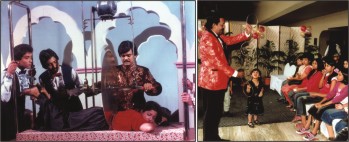
Jewel Aich performing his most popular and stunning work of slicing woman's body at a show and magician Ulfat Kabir entertaining children. COURTESY: ANWAR HOSSAIN
A pin-drop silence descends in the dark shadowy auditorium. Hundreds of audience are waiting in suspense with pouncing hearts. At the centre of the stage is a young woman trapped in a box waiting to be cut into pieces. Background music intensifies creating an ominous ambience. The illusionist appears on the scene, with sharp blades he is about to use flashing in the dim light. With a sombre expression in the face he examines the sharpness of the blades. Then, with a sleight of hand he performs the stunning work of art. He slices the woman's body into two pieces while she still smiles. The overwhelmed audience breaks the silence with rapturous applause. This is a classic depiction of magic, a form of art that was an integral part of Bangladesh's culture. Jewel Aich, the king of illusion, explains the present status of magic in Bangladesh. “There used to be quite a number of stage shows in the city and elsewhere in the country,” he recalled the days in 1970s and '80s. “However, the number of shows has dropped off in recent times. There are various reasons behind it.” Jewel attributes the fall to the recent incidents of terror attacks on cinema, jatra and other cultural activities in Bangladesh. He pointed out that in Bangladesh it is quite difficult to choose magic as a profession in the first place. “There are not many people who would encourage their children to learn magic instead of taking a steady career path. There are social acceptance of magic but not enough to take it as a profession.” Jewel said although there are a lot of room for newcomers to join the profession but there are not many natural talents in this field. “A magician requires a lot of study and research because it follows scientific methods. It also involves huge expense for apparatus.” “But the reality is one has to think about his stomach first, not his heart. This causes a major setback for the art of magic to develop in Bangladesh,” he explained. “We cannot expect quality magic to grow as there is no institute to tutor or train magicians. The magicians of today are all self-taught,” Jewel said. He said it is only possible with profound passion and dedication. “When we first started it was beyond our belief that we would be able to persist with the profession. But look at me now -- magic is the only thing I have in my life. The audience is also more enthusiastic these days,” said the great magician. Jewel noted names of several other magicians who left it all to pursue their dream. Magician Ulfat Kabir was involved in steel products manufacturing business. Shahen Shah used to be a banker. They both left safe career path to become entertainers on the stage. Kabir now performs with his wife Rukshana Kabir mostly for children. Prakash Shaha entertains the residents of Khulna while Kanchan bedazzles Sylhet. The art and these magicians are striving to survive in an alternative style. Magic shows in birthday parties, picnics, school functions, product promotion and launching, and performances in restaurants have become the hottest new trend in the city attracting a great number of audience, keeping the art alive. Ultaf Kabir said, “Magic shows for children in birthdays or picnics were once popular among the foreigners only. Now it is as important as a birthday cake among a segment of Dhaka dwellers.” “Once only performed by the street magicians or by the gypsies, magic has reached all the way to the homes of well-off families and to posh restaurants. This is a good sign,” he believes. “The most amazing thing about magic is that language is not a barrier for the audience. Anyone can understand the acts. So it is very easy to popularise the art,” Ulfat noted. Echoing Jewel, he said houseful public shows are now missing. Public shows have become extremely expensive in Bangladesh as there are very few places to buy necessary props, apparatus and books in the country. “We have to bring them from abroad or sometimes we make them by ourselves. But we don't have any experts to help out with that either. This process increases the cost of tickets for general audience,” Ulfat said. He said only a few prop stores in Dhaka are the source of package courses for interested apprentices. These stores often offer 30 to 40 magic tricks for Tk 300 or more. Both the magicians are however optimistic about the future. The situation can be improved if sponsors come forward, they said. They stressed the need for state's involvement in increasing appreciation for magic.
 For all latest news, follow The Daily Star's Google News channel.
Comments