How the banned film Satluj reopened the darkest wound in Punjab's history

Punjab, in north-west India along the border with Pakistan, is the one Indian state where Sikhs, a religious minority nationally, form the majority of the population.
For roughly a decade, from the early 1980s to the mid-1990s, it was also the site of one of independent India's bloodiest internal conflicts.
A section of Punjab's Sikhs wanted a separate country of their own, to be called Khalistan, a demand rooted in decades-old grievances over political autonomy, the sharing of river waters with neighbouring states, and the place of Sikh identity within India's federal structure.
By the early 1980s, this demand had hardened into an armed insurgency, led in its most radical phase by the preacher Jarnail Singh Bhindranwale, who took shelter with armed followers inside the Golden Temple in Amritsar, the holiest site in Sikhism.
In June 1984, the Indian Army stormed the temple to flush the militants out in an operation named Blue Star, which killed hundreds and badly damaged the shrine.
Four months later, Prime Minister Indira Gandhi was shot dead by two of her own Sikh bodyguards in revenge for the raid. Her assassination set off anti-Sikh riots across India, in which thousands of Sikhs were killed, and it hardened the insurgency in Punjab rather than ending it.
To put the insurgency down, India gave its security forces, chiefly the Punjab Police, sweeping powers to detain and interrogate anyone suspected of links to the militants.
Human rights groups have long alleged that this authority was abused on an industrial scale throughout the rest of the 1980s and into the mid-1990s.
According to them, young Sikh men were picked up, killed without trial, and their bodies secretly cremated and logged as unidentified, so that no family could ever formally establish what had happened to a son, brother or husband.
The man who forced India to confront this was a bank employee turned human rights activist. His name was Jaswant Singh Khalra.
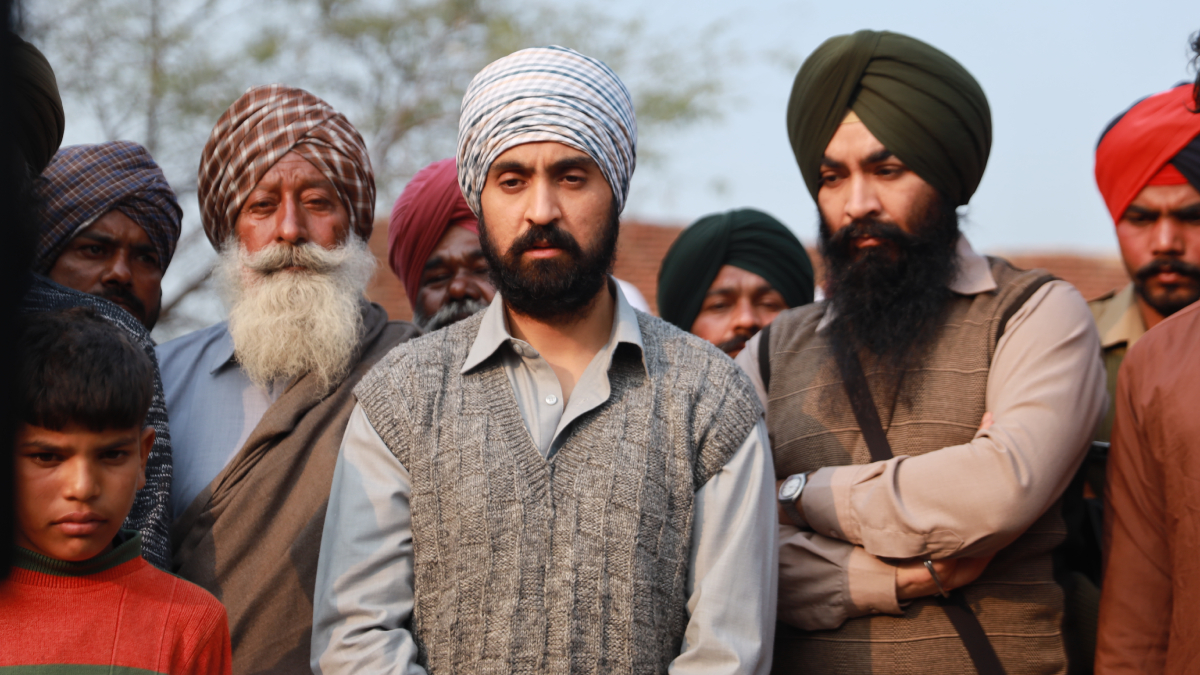
He worked at a bank in Amritsar and, in the early 1990s, while trying to trace a friend who had gone missing, he began examining the city's municipal cremation records.
What he found was staggering: evidence that police in his own district alone had secretly cremated thousands of unidentified bodies. He came to believe the true toll across Punjab ran into the tens of thousands, and he travelled to Canada and Britain to warn that the disappearances were policy, not accident.
In September 1995, he was abducted from outside his home in Amritsar by Punjab Police personnel and was never seen again.
A decade later, in 2005, an Indian court convicted six police officers of his abduction and murder. When the case went to appeal in 2007, the Punjab and Haryana High Court acquitted one officer but increased the sentences of the remaining five to life imprisonment, a verdict that India's Supreme Court upheld in 2011 in a judgment that was startlingly blunt about the conduct of the state's own police force.
This is the story that a new Hindi-Punjabi film, Satluj, set out to tell, and it is the reason the film has spent the past fortnight at the centre of one of India's sharpest political rows.
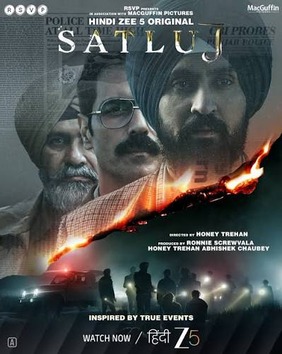
Directed by Honey Trehan and starring Diljit Dosanjh, the Punjabi singer and actor who has in recent years become one of the biggest live performers in the world, filling stadiums from Vancouver to New York, the film was completed in 2022.
It first went to India's Central Board of Film Certification, the government body that must clear every film before its cinema release, under the title Ghallughara, a word that Sikh history reserves for its worst historical massacres.
The board rejected the title. The makers switched to Punjab '95, a reference to the year of Khalra's disappearance; the board rejected that too, along with Khalra's own name in the script, any mention of the state of Punjab, and eventually anything that read as documented history rather than fiction.
The objections grew from 21 to 127 over nearly three years, and in June this year the filmmakers gave up on a cinema release altogether, choosing instead to stream the film directly under a third and final title, Satluj, named after the river into which Khalra's body was allegedly thrown.
Streaming releases in India do not require the censor board's approval, at least for now.
So, Satluj went up on the platform ZEE5 on 3 July, in what the director says was its uncut form. It lasted less than 48 hours.
On 5 July, the Union Ministry of Information and Broadcasting had it pulled, citing security grounds under India's information technology law. A review committee set up afterwards concluded that the film's account of the period was unbalanced and posed a threat to the country's sovereignty.
The ban did not make the film disappear. Within days, Sikh temples and village halls across Punjab, and gurdwaras as far away as Delhi, Jammu, London, New York and Toronto, had turned themselves into makeshift cinemas screening downloaded copies. Dosanjh said afterwards that he had expected a ban, just not so quickly, and that a story people have already watched cannot be unwatched.
That, more than any legal argument, is why Satluj has remained alive as an issue even while it remains officially unavailable.
None of this would be worth much attention outside India if it were only a story about a banned film. It has become something larger: a rehearsal for how Punjab will fight its next state election, due in 2027, and a test of which of its parties is willing to own the ugliest parts of its own recent history.
Much of the story's force comes from the fact that Khalra's findings were later borne out by official investigations and upheld by India's courts: first by the CBI, then by the trial court, the Punjab and Haryana High Court, and finally the Supreme Court.
That is what makes the government's own committee's finding that the film is one-sided difficult to defend without disputing India's own legal record.
It is also why a senior minister from the ruling Bharatiya Janata Party (BJP), Ravneet Singh Bittu, questioning Khalra's estimate of 25,000 disappeared people, drew a rare public correction from a colleague in his own party, former chairman of the National Minorities Commission Iqbal Singh Lalpura, who pointed out that the figure had already been verified by the national human rights body.
Why any of this should matter for an election still seven months away has a fairly precise answer: Punjab's politics of memory are not dormant. In 2024, in elections to India's national parliament, two candidates campaigning largely on unresolved questions of Sikh identity and historical justice won seats from Punjab, one of them contesting from jail.
One of the two, Sarabjeet Singh Khalsa, happens to be the son of one of the two bodyguards who killed Indira Gandhi in 1984.
By an unrelated coincidence of names, the minister now leading the attack on Satluj's casualty figures, Ravneet Singh Bittu, is the grandson of a different man altogether named Beant Singh, the Congress politician who served as Punjab's chief minister through the mid-1990s crackdown before being assassinated by militants in 1995.
Two men who share a surname and nothing else are each carrying a fragment of the history this film has reopened, and three decades on they sit on opposite sides of the argument it has produced.
Each of Punjab's parties has read the moment according to where it costs least.
The Shiromani Akali Dal has the most straightforward claim: the Supreme Court identified Jaswant Singh Khalra as general secretary of its Human Rights Wing, and party president Sukhbir Singh Badal said the SAD would screen Satluj in every village in Punjab, describing it as a record of atrocities under Congress rule.
That claim is not without competition: a more radical Khalistani movement, led by MP Amritpal Singh, contesting from jail, has organised its own screenings just as quickly and gone further by promising money for a memorial to Khalra, chasing the same emotional constituency the Akalis once had to themselves.
The Congress, whose own governments in Delhi and Punjab presided over both Blue Star and the crackdown Khalra documented, has the least comfortable position of all, and its state leaders have mostly confined themselves to criticising how the film was removed rather than discussing what it shows.
The party governing Punjab today, the Aam Aadmi Party (AAP), may have gained the most from the episode, and at a convenient moment: Chief Minister Bhagwant Mann had been fighting an unrelated row with Sikhism's highest religious authority, the Akal Takht, and the Satluj controversy has pushed that off the front pages while allowing the party to criticise both the federal government for the ban and the Akali Dal for a screening campaign it calls opportunistic.
It is the BJP, which governs India nationally, whose position looks the least settled. Its Punjab unit has called the issue highly sensitive and pushed for a review, a softer line aimed at not alienating Sikh voters whom it has spent years courting.
A senior minister from the same party has instead gone on the attack, questioning the film's credibility and accusing it of ignoring the Hindu civilians, police personnel and public servants who were also killed during the years of militancy, a grievance with a real historical basis even if his language went further than his own party seemed comfortable with.
This split should be read less as confusion than as calculation: if the harder line consolidates Hindu votes for the BJP while pushing Sikh votes towards the more radical camp rather than back to the Akali Dal, the BJP gains from a split it never had to cause directly.
Layered on top of all this is a kind of authority that no party can match. While Sikhism's highest religious body, the Akal Takht, has endorsed the film's message, the Shiromani Gurdwara Parbandhak Committee, the organisation that manages Punjab's major gurdwaras, marched from the Golden Temple to demand the film's restoration.
The dispute has now also split into two separate court cases. One of them is seeking to have the film restored on free speech grounds, while the other is asking the same court to shut down the very village screenings that the first case is defending, on the grounds that they threaten public order.
Even so, it would be a mistake to assume the loudest reaction guarantees an electoral one.
Khalra's own widow, Paramjit Kaur Khalra, contested and lost a parliamentary seat from Punjab's most Sikh identity-driven constituency not once but twice, in 1999 and again in 2019, which is a reasonable warning against assuming that admiration for a cause converts neatly into votes. Punjab's elections still turn largely on farm debt, unemployment and the state's drug crisis, not on cinema, however powerful.
What Satluj has achieved is not a guaranteed result in 2027 but something arguably more consequential for now: it has forced every major party in the state to say, in public, where it stands on a chapter of its own history that each of them had spent decades hoping never to be asked about again.
Jannatul Naym Pieal is a Dhaka-based writer, researcher and journalist. He can be reached at [email protected].
Send your articles for Slow Reads to [email protected]. Check out our submission guidelines for details.

Modern Islam has always been a 'secular' entity

What the 2026 World Cup reveals about racism in football

How Kolkata shops preserve the memories of East Bengal
How Roman Jakobson changed modern thought
Football as freedom: From colonial Bengal to Bangladesh
The forgotten South Asian soldiers of the First World War
How Dhaka lost its green and water: Revisiting the first master plan of the city
Bengal’s forgotten connections with Nazi Germany
Muzharul Islam and his spaces of belonging