


Taxidermy: Preserving life through art, science

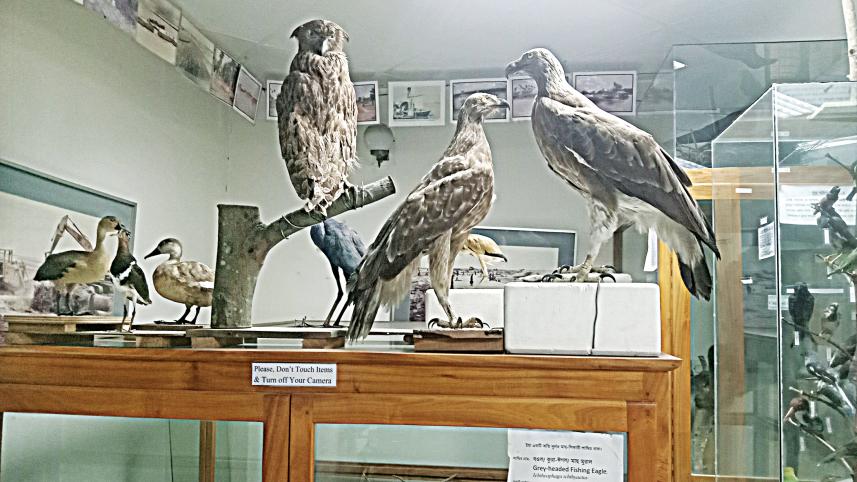
Inside the Jamuna Bridge Regional Museum in Tangail's Bhuapur, a child was staring at a stuffed owl, mesmerised, as he wondered if it was a real bird.
"Ma, is it real? Why doesn't it move?" the child asked his mother.

"It is real, but it's not alive anymore. It's been preserved, much like a mummy you read about in books, remember?" his mother replied.
"But it looks so … alive…," the child murmured, still in awe.
At this museum, a unique world of quiet unfolds, as if frozen in time, with numerous specimens of wildlife, including some species that have already become extinct in the country, preserved through the art of taxidermy.
These stuffed animals are no wax figurines or artificial replicas, but real creatures, long deceased. Yet, they appear strikingly vivid, as if they still harbour life within them.
Jewel Rana, the museum's curator and one of Bangladesh's very few trained taxidermists, is the man behind nearly every preserved specimen at the museum.
What is taxidermy?
The term "Taxidermy" is derived from the Greek words taxis (arrangement) and derma (skin), referring to the scientific process of preserving an animal's skin and stuffing it to resemble a lifelike figure.
According to Jewel, taxidermy is as much an art as it is a science. It requires anatomical knowledge, surgical precision, and a deep artistic sense.
"Every animal has its own language of posture and presence. It takes an artist's eyes and a scientist's knowledge of anatomy to sculpt an animal's face based on its actual skull, preserve its body, replicate the expression in their eyes, and align each feather or strand of hair meticulously," he said.
Talking to this correspondent, Jewel explained that the process of preserving an animal specimen through taxidermy begins with identifying the animal's cause of death and analysing its age, anatomy, and bone structure.
"The skin is then carefully removed, disinfected, and preserved using salt and chemicals. A body frame is built using cotton, foam, resin, glue, clay, and colouring agents, in such a way that it replicates the animal's natural features and posture as closely as possible," he said.
For larger animals, the process can cost anywhere from Tk 80,000 to Tk 1 lakh.
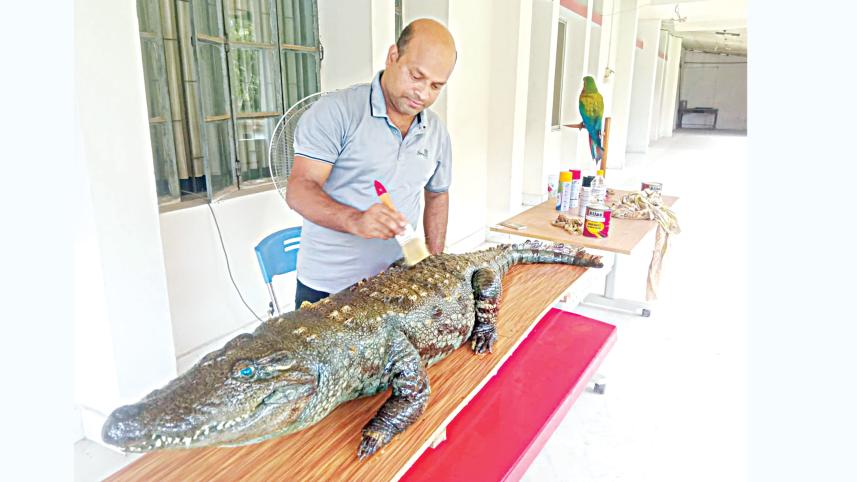
In each taxidermy project, extreme precision, care, and attention to detail are necessary. Jewel uses an array of tools including pliers, brushes, hammers, scalpels, and other surgical instruments to work on each project.
"I always begin work after taking a rabies vaccine and using proper disinfectants. Once the animal's skin is removed, the remaining carcass is buried to prevent any environmental harm," he added.
Building a biodiversity archive from scratch
After Jewel Rana joined the museum in 2010 as an assistant curator, he embarked on his journey as a taxidermist under the guidance of then curator Ananda Kumar Das.
 For all latest news, follow The Daily Star's Google News channel.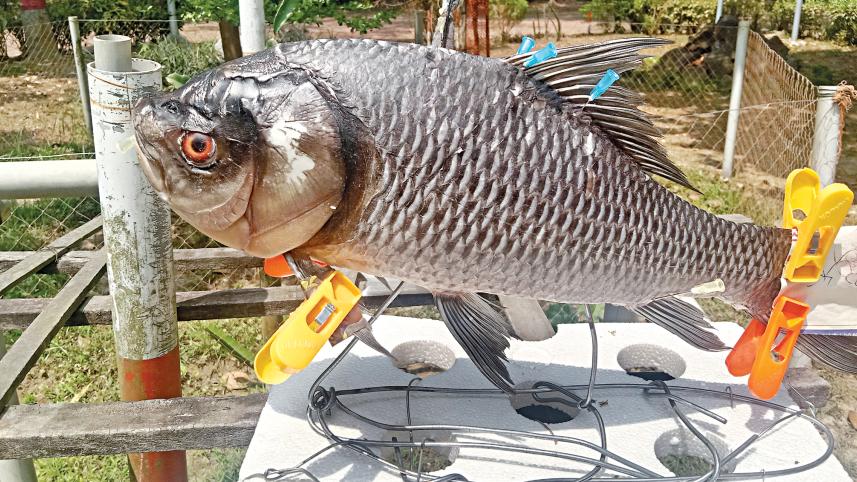
In 2013, he completed a short course in taxidermy at Dhaka University's Department of Zoology, where he trained under experts including Prof Bidhan Chandra Das, Dr Shawkat Imam Khan, and Md Delowar Hossain. A year later, he was promoted to curator of the museum.
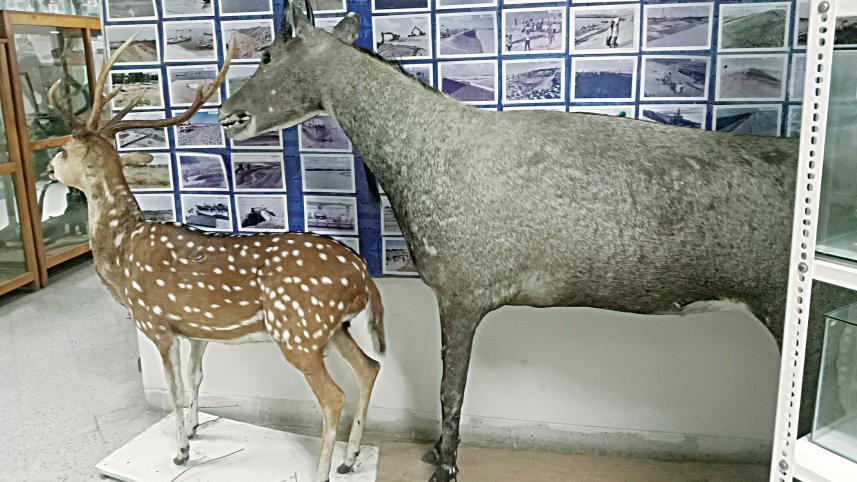
Jewel is credited as the first person in the country to successfully preserve both a nilgai (Boselaphus tragocamelus), the largest species of Asian antelope that has become extinct in Bangladesh since the 1940s, and a saltwater crocodile (Crocodylus porosus) through taxidermy.
The nilgai, believed to have crossed the Indian border and entered Bangladesh in 2019, was found dead in Panchagarh. It took Jewel four days and around Tk 1 lakh to complete the preservation of this rare specimen.
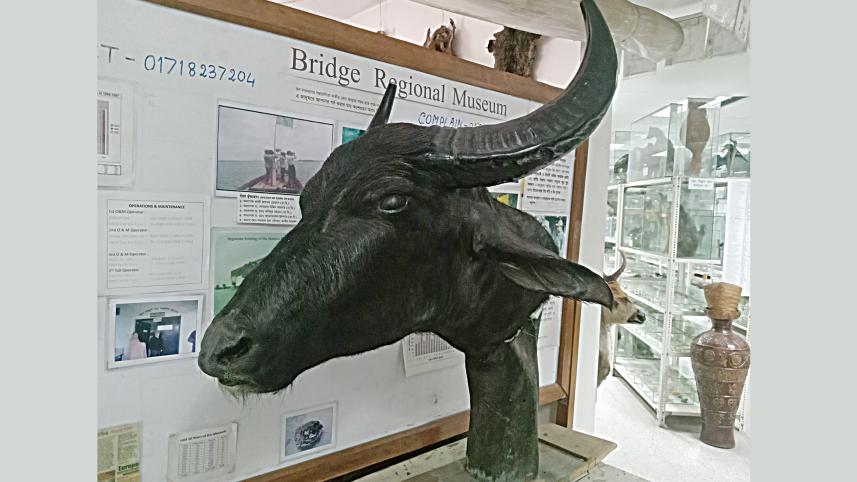
In a country where the practice remains largely unknown and undervalued, Jewel has single-handedly preserved over 500 animal specimens for educational and research purposes at the museum.
The collection includes 138 species of birds, nine amphibians, 33 mammals, 32 reptiles, and 275 freshwater and marine fish species.
Among the museum's most delicate items are the 66 specimens of bird nests, including those of munia, sunbird, and tailorbird. The nests are collected after falling from trees, either naturally or during storms, and are then treated with chemicals to prevent decay.
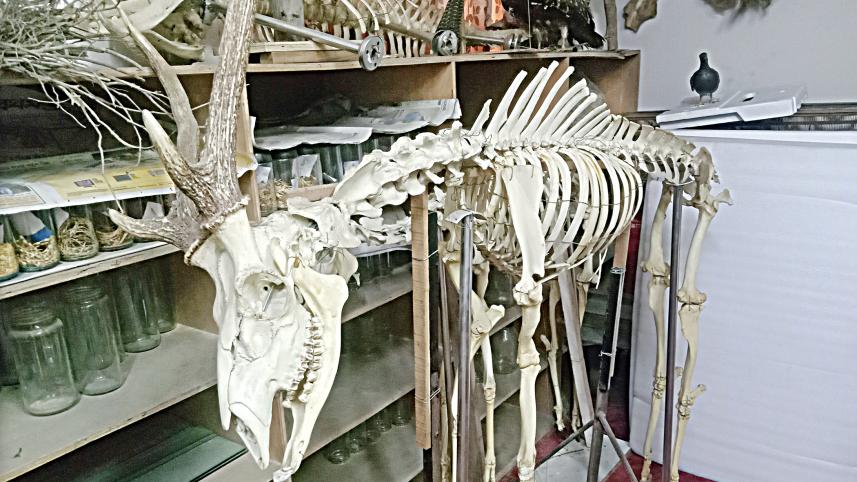
Working with such fragile specimens requires extreme caution. Jewel often posts a handwritten sign near his workstation that reads: "If you pull, the rope breaks; if you don't pull, the thread holds," – in a poetic reminder of how delicate the job really is.
Delicate items like butterfly wings and insect exoskeletons are handled with tweezers, under magnifying lenses, and worked on with scientific precision.
"Even a sneeze can ruin hours of work," Jewel noted.
The museum also displays preserved bird nests, insects, animal skeletons, cultural artefacts, and over 800 photographs related to biodiversity, as well as those depicting the history of the construction of the Jamuna Bridge.
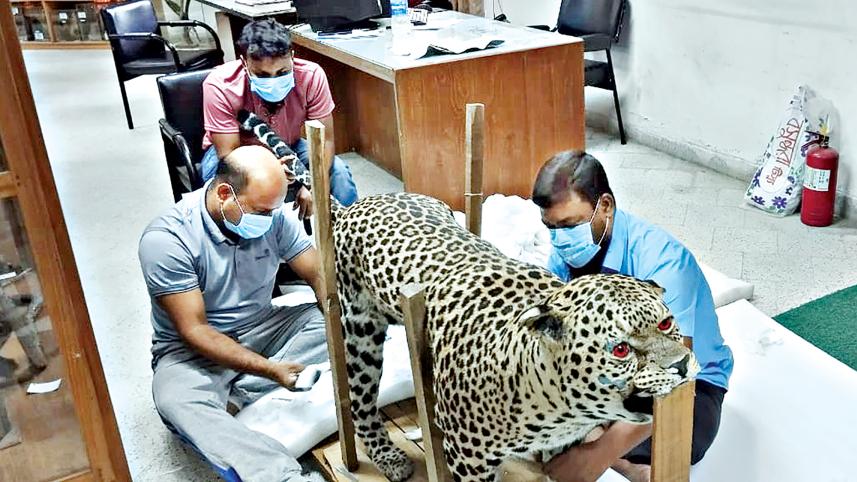
Jewel is affiliated with the Bangladesh Biodiversity Conservation Federation, which consists of over 200 environment-focused volunteer groups across the country. This network plays a vital role in locating and transporting dead animals -- often victims of road accidents, electrocution, or natural disasters.
Thanks to these volunteers, the museum has collected and preserved an array of rare species, including jungle cats, fishing cats, pangolins, numerous snakes, owls, and migratory birds. The volunteers often transport the animals themselves or send word to the museum, ensuring timely preservation.
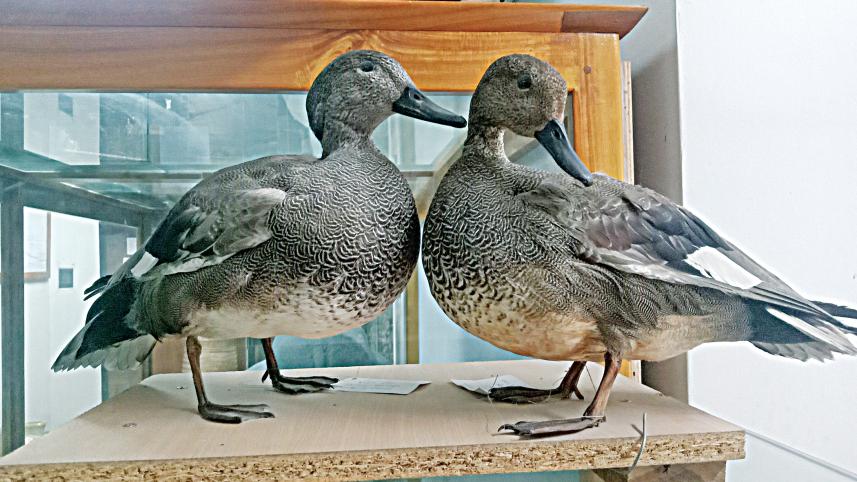
Unexplored realm with possibilities
Despite the importance of taxidermy in research and education, there are only three formally trained taxidermists in Bangladesh at present.
In contrast, countries like Germany and the Netherlands hold international taxidermy competitions, offer university courses, and have stores selling stuffed specimens.
Some people even preserve their deceased pets as mementos – a practice that may seem somewhat odd here but reflects a broader cultural acceptance of taxidermy abroad.
Jewel believes taxidermy deserves institutional recognition in Bangladesh. "If we can develop training programmes and offer professional support, this could become a new vocational field," he opined.
"These preserved animals are not mere showpieces. They serve as educational tools for students, researchers, and nature lovers. Many of the specimens here are used in school demonstrations, college-level zoology classes, and biodiversity research work," Jewel noted.
Jewel frequently collaborates with the Forest Department, the National Zoo, and academic institutions.
He is also mentoring young students, especially those from zoology departments of different universities, to carry forward this knowledge.
Jewel aspires to establish a full-fledged taxidermy training centre in Bangladesh someday.
"Each animal preserved through taxidermy tells a story – not just of death, but of life, loss, and learning. Through a taxidermist's hands, the dead seem to speak again -- educating the living about the beauty and fragility of the natural world," he said.
Comments