



Luxury Living: Bangladesh Finally Has a Place for Its Finest
16 April 2026, 00:00 AM
Supplements
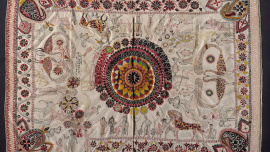
The Finest Things in Bangladesh Have Always Existed in Private
16 April 2026, 00:00 AM
Supplements

Planning your first global trip?
30 June 2026, 12:41 PM
Star Travels

Hill or sea? Home, I said
30 June 2026, 11:48 AM
Star Travels
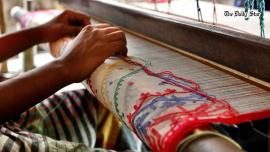
What Bengal Made and Let Others Claim
6 July 2026, 17:52 PM
Supplements

10 no-nonsense lesson for your first trek
30 June 2026, 14:22 PM
Star Travels

Breaking the Blank Wall
24 June 2026, 14:11 PM
Your Property Guru
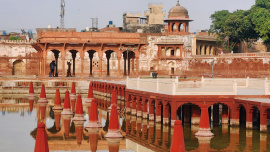
Secrets of Ancient Waterproofing
24 June 2026, 14:02 PM
Your Property Guru

Walking the hidden paths of Morocco
30 June 2026, 00:54 AM
Star Travels

Making homes smarter with home pods
24 June 2026, 00:43 AM
Your Property Guru
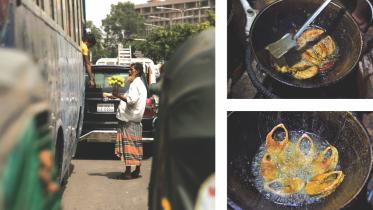
Eating down memory lane
Ever since I was young, I have frequently travelled from Dhaka to Rangpur, and the majority of these times, our family had to use the ferry boats at Aricha to cross the Padma and enter the country's northern regions. This was true throughout the 70s and 80s and also the first half of the 90s. The ferry crossings were quite tedious, at times risky, and extremely time-consuming. It usually took two to three hours
23 February 2018, 18:00 PM

Reimagining urban nodes in Dhaka
Dhaka is an intense city. If you find yourself in Gulistan or Farmgate, you understand what urban intensity is. These are examples of extreme urban nodes.
21 February 2018, 18:00 PM

Imagining a future Bangladesh
Tomorrow's Bangladesh is already here. Achievements and progress in all fields—from manufacturing to cricket, and from architectural excellence to social indicators—open up new prospects and promises for Bangladesh. PricewaterhouseCoopers, in its global economic projection for 2050, estimates that Bangladesh can potentially become the world's 28th largest economy by 2030, surpassing countries like Australia, Spain, South Africa, and Malaysia in economic growth.
21 February 2018, 18:00 PM
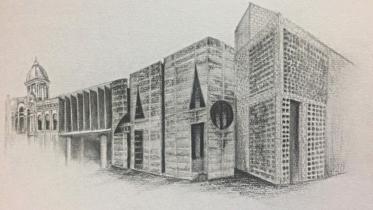
Does architecture define a "new" Bangladesh?
The architectural scene in Bangladesh has been thriving with a “new” energy over the past two decades or so. Bangladeshi architects have been experimenting with form, material, aesthetics, and, most importantly, the idea of how architecture relates to history, society, and the land.
21 February 2018, 18:00 PM

Dhaka's transport sector: any sight of a bigger picture?
A city of over 14 million, roughly 400 years of history, rapidly rising incomes and mass migration patterns that seems unsustainable to outsiders—yet somehow Dhaka survives against insurmountable odds.
21 February 2018, 18:00 PM

Mega projects and our hopes and concerns
Recently, two facts drew our attention in the context of our overall national economic development—the first one is that our growth rate is now well over 7 percent and is one of the highest in the world at present.
21 February 2018, 18:00 PM
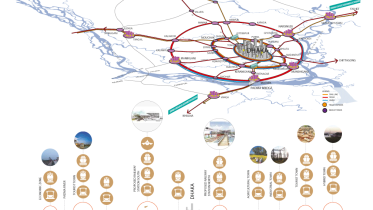
Dhaka Nexus - A Networks of Towns
Dhaka is “growing” in its own happy rhythm, spurred on every now and then by fragmentary planning initiatives. This “growth” is neither relieving pressures at the centres nor creating a decent urban development for the city and its regions. We propose a “Dhaka Nexus” linking the core city with a greater region. Dhaka Nexus is a new network of liveable towns and settlements based on improved transportation and economic opportunities to facilitate their
21 February 2018, 18:00 PM

Dhaka Circular Light Rail (LRT)
In this city with 15 million people, movement of the private cars always gets priority in planning and development. Government has realised that only increasing roads cannot pull this city out of the current transportation crisis. In response, constructions of MRT 6 and BRT 3 have already started with some others in the pipeline. Our analysis shows that Dhaka needs more public transport besides the ongoing
21 February 2018, 18:00 PM

Framing a shared urban vision
Bangladesh can become the world's 28th largest economy by 2030, according to PwC. Goldman Sachs has already listed the country as one the "Next 11" high potential economies of the 21st century.
21 February 2018, 18:00 PM
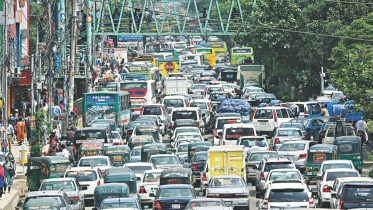
Urbanisation trends and sustainable transport
Our future is destined to be urban as urbanisation in developing countries is a defining feature of the 21st century. It is the most significant demographic transformation in our century because it restructures national economies and reshapes the lives of billions of people.
21 February 2018, 18:00 PM
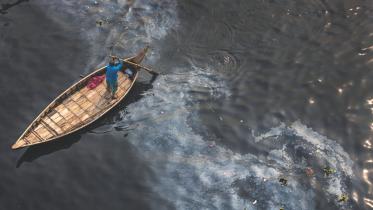
Our wetlands and a sustainable urban future
Bangladesh is one of the fastest growing urbanising countries of the world. By 2025, 50 percent of Bangladesh is supposed to be urbanised. Cities are growing rapidly. By 2050 the number of city dwellers is supposed to increase by 66 percent (from 4 billion in 2016 to 6.3 billion in 2050).
21 February 2018, 18:00 PM
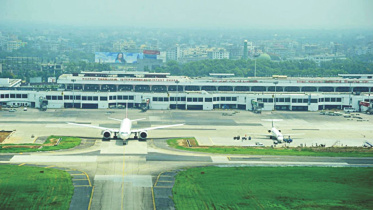
Civil aviation authority and infrastructure development
To an air traveller, an airport gives the first impression of a country. It is a picture that promises the offer of what a first-time visitor may expect in the country. The aviation authority, thus, can play the crucial role of promoting a country to the outsiders.
21 February 2018, 18:00 PM
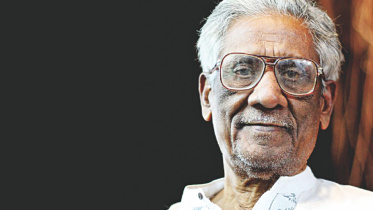
"Quality literary works often go unnoticed"
Given your long-term teaching experience, how would you evaluate the education system of Bangladesh? When we were children, our Balyashikkha book would start with Bangla alphabets (au, aa, ka, kha). But nowadays the very first book for children starts with sentences and the alphabets come at the end of the book. This is a major fault in our primary education system.
20 February 2018, 18:00 PM

The language question in 17th-century Bengal
According to received wisdom, Bangla language was just fine until the fateful emergence of Fort William College. The pundits and the Sahibs of this college on the eastern bank of Hooghly River fiercely mauled, mutilated, and marred our mother tongue beyond recognition. Word had been married to thought and the literate had been immersed in the popular until this event drew an iron curtain of alienation.
20 February 2018, 18:00 PM
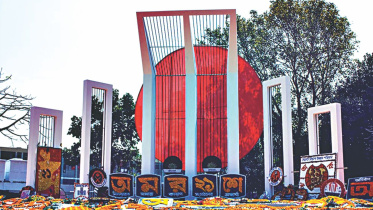
Amago Bhasha
RACIAL, religious, national, tribal, and ethnic lines dissolve on February 21. Unlike independence days, religious holidays, cultural festivals, or birthdays of national figures, International Mother Language Day celebrates something the whole world can appreciate: our right to use our native tongue. Whether we speak a national language sanctioned by the government or a local language spoken by only an
20 February 2018, 18:00 PM
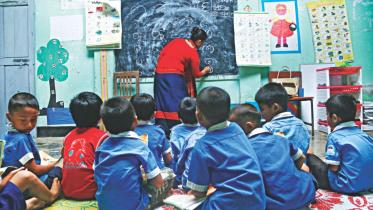
Learning in the mother tongue
Whenever we talk about the state of education in Bangladesh, the age-old debate about English versus Bangla medium re-emerges with regard to quality of teaching, affordability, imparting knowledge about Bengali culture, etc. But while many of the broader concerns have merit, the less obvious aspects of the current education system that deserve some serious thinking are often overlooked. The importance of the mother tongue in education is one of them.
20 February 2018, 18:00 PM

Shahidullah, a linguist and language activist
By the time Muhammad Shahidullah was old enough to begin his secondary education, he already knew five languages. Besides his mother tongue of Bangla, he not only learnt Urdu, Persian and Arabic—perceived to be the languages of Muslims—but he also became proficient in Sanskrit, the primary liturgical language of Hinduism.
20 February 2018, 18:00 PM
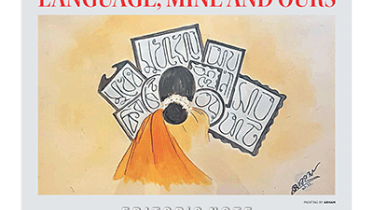
Language, mine and ours
The lyrics of the famous song by Abdul Latif, Ora Amar Mukher Bhasha Kaira Nitey Chay, speak much more about the significance of one's mother tongue than many articles put together can.
20 February 2018, 18:00 PM

FOREIGN POLICY OF THE STATE OF KUWAIT
The cardinal principle on which the foreign policy of Kuwait is based had been enunciated by the late Amir of the State of Kuwait
19 February 2018, 18:10 PM
Education in Kuwait
The State of Kuwait is located in the Arabian Gulf and has a population of 26,46,314 people. Considering the strategic location of
19 February 2018, 18:00 PM