


Transfer market that refused to wait for World Cup

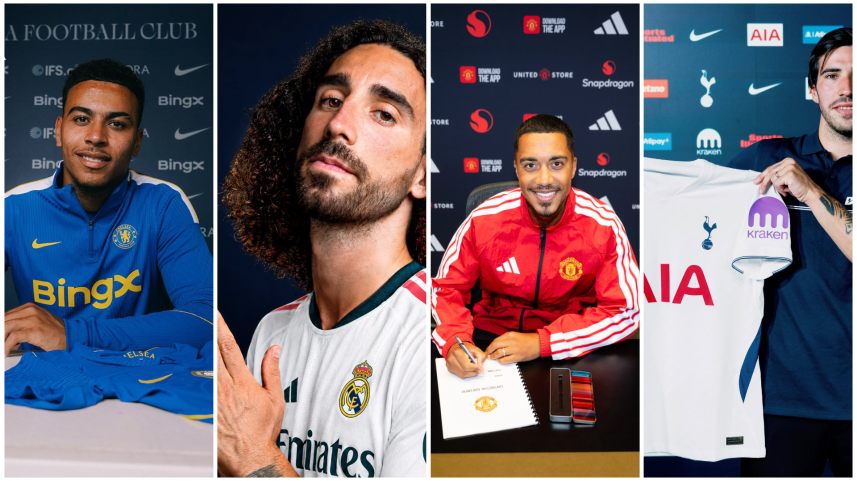
For over a month, football’s attention turned towards national pride, with 48 countries chasing the biggest prize in the sport. Yet behind the flags, an entirely different competition was unfolding, with Europe’s richest clubs racing to secure their targets before the World Cup could reshape the market.
Four days after the marquee event kicked off, Spanish powerhouse Real Madrid announced the signing of Marc Cucurella, a key member of eventual champions Spain. Two days later came Bernardo Silva, and Ibrahima Konate a day after.

The biggest transfer stories of the summer no longer waited for the North American edition to finish. They reflected months, sometimes years, of recruitment planning already in motion.
For generations, the World Cup served as football’s most influential shop window. A brilliant tournament could transform a career overnight. Mesut Ozil in 2010 and James Rodriguez in the following edition became defining examples, earning moves to Madrid after outstanding performances. Clubs watched, assessed and reacted.
Cristiano Ronaldo’s move to Juventus before the 2018 World Cup had reached its conclusion hinted that the rhythm of the market might be changing, but the Portuguese was already one of the game’s biggest stars.
This summer confirmed that shift. Outstanding international performances could reinforce existing opinions, but they rarely created them. And even as the tournament entered its decisive stages, Madrid’s work continued in the background, announcing Denzel Dumfries on July 5.
The sequence mattered. None of the moves appeared to be reactions to breakout World Cup performances.
Tottenham Hotspur approached the summer through a similar lens. Roberto De Zerbi had wanted his squad assembled before pre-season, leading to Spurs breaking their transfer record to sign Sandro Tonali from Newcastle United for £92.5 million while also adding Mateus Fernandes and Jan Paul van Hecke, valuing every extra training session before August under a new tactical framework.
If Madrid and Tottenham demonstrated the value of planning, Manchester City and fellow English heavyweights Chelsea showed why waiting has become increasingly difficult. City’s staggering £116 million move for Elliot Anderson was finalised in Kansas, where the midfielder completed his medical while still with England’s squad. Chelsea, though, reached the same conclusion from a different angle.
Morgan Rogers had attracted strong interest from Premier League winners Arsenal, who had tracked the Aston Villa forward extensively but were unwilling to meet Villa’s valuation. Chelsea moved decisively, avoiding a potential bidding war and agreeing a British record £117 million deal. In an era of intense competition for elite talent, hesitation carries its own cost.
Manchester United strengthened their midfield by signing Andrey Santos and activating Youri Tielemans' release clause after the Ederson deal collapsed.
This was not simply an English trend, though.
Spanish champions Barcelona moved for England forward Anthony Gordon. AC Milan handed new head coach Ruben Amorim a marquee striker in Portugal’s Gonçalo Ramos, while German giants Bayern Munich completed a move for Morocco’s Ismael Saibari during the group stage.
Across Europe, the transfer market no longer paused for the "greatest show on earth". It simply continued around it.
That evolution has been years in the making. Elite recruitment departments now spend months building detailed cases for potential signings. Financial realities have accelerated the process.
Profitability and Sustainability Rules, together with June 30 accounting deadlines, encourage clubs to complete major business before the financial year closes.
The football calendar has become just as influential. Managers increasingly want new signings through the door from the first day of pre-season, while players returning from deep World Cup runs require mandatory rest before rejoining their clubs.
Completing deals early is no longer simply efficient. It is a competitive advantage.
Rodriguez’s move after the 2014 World Cup symbolised football’s old transfer trend. Twelve years later, that cycle had changed.
The World Cup remains football’s biggest stage. It just isn’t the shop window it used to be.
 For all latest news, follow The Daily Star's Google News channel.
Comments