Why Bangladesh must invest in community-led early childhood education
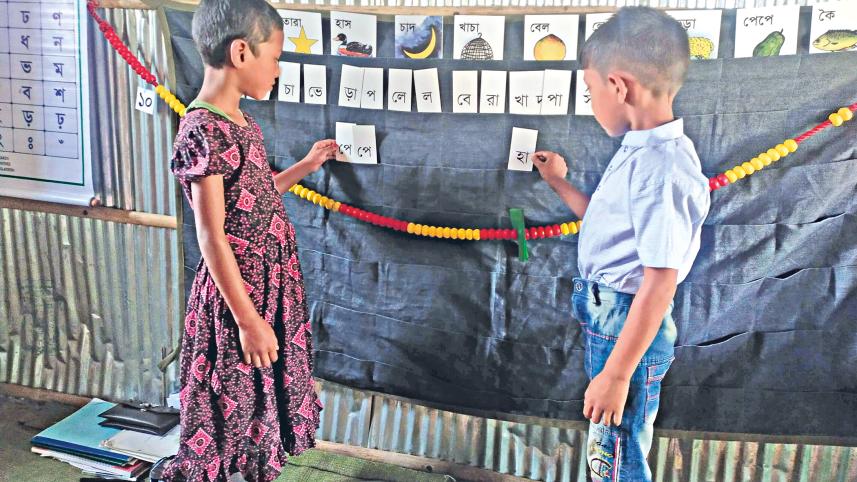
5-year-old Partha Roy proudly held up a picture card of a duck and turned to his classmates. "Have I chosen the right one?" he asked. A chorus of excited voices answered, "Yes!" Moments later, he assembled the letters to spell the word himself and was rewarded with another round of applause. There were no textbooks, exercise books or private tutors, only laughter, encouragement and the joy of learning.
Partha is one of thousands of children whose first experience of education has come through a Kajoli Early Childhood Learning Centre in rural Bangladesh. His confidence illustrates what every child deserves: the opportunity to discover that learning is enjoyable rather than intimidating. That simple moment captures the essence of an educational innovation that deserves far greater national attention.
Bangladesh has made remarkable progress in expanding access to primary education. Today, almost every child enrols in school, thanks to sustained efforts by government and non-government organisations. The new Government has also signalled its commitment to strengthening the education sector further. Yet enrolment alone does not guarantee learning. Too many children begin primary school without the basic literacy, numeracy and social skills needed to succeed. As a result, many struggle from the outset, contributing to poor learning outcomes, grade repetition and, ultimately, school dropout.
If Bangladesh is serious about improving educational quality and building the skilled human capital needed for the future, it should make far greater strategic investment in early childhood education, particularly for children from disadvantaged communities. Experience in Bangladesh and around the world shows that the greatest returns in education come not from remedial interventions later in life but from giving children a strong foundation before they enter primary school.
One of Bangladesh's most successful yet least recognised innovations in this field is the Kajoli Model of Early Childhood Learning. Developed by Research Initiatives, Bangladesh (RIB) through participatory action research that began in 2002, the Model demonstrates that quality early childhood education can be delivered effectively, affordably and sustainably when communities themselves become the driving force. The research was made possible by generous financial support from the Royal Dutch Government.
Unlike other privately run kindergarten-type pre-schools, often beyond the reach of disadvantaged families, the Kajoli Model is founded on a simple yet transformative principle: learning should be joyful, accessible and community-owned. Children learn best when education is fun, engaging and free from fear. Rather than being compelled to attend, they should look forward to coming to the centre each day. Designed to operate at little or no cost, the Model enables communities to establish and sustain centres largely through their own efforts. Kajoli centres are not schools in the conventional sense but community learning spaces where children prepare academically, socially and emotionally for primary school while developing a lifelong love of learning.
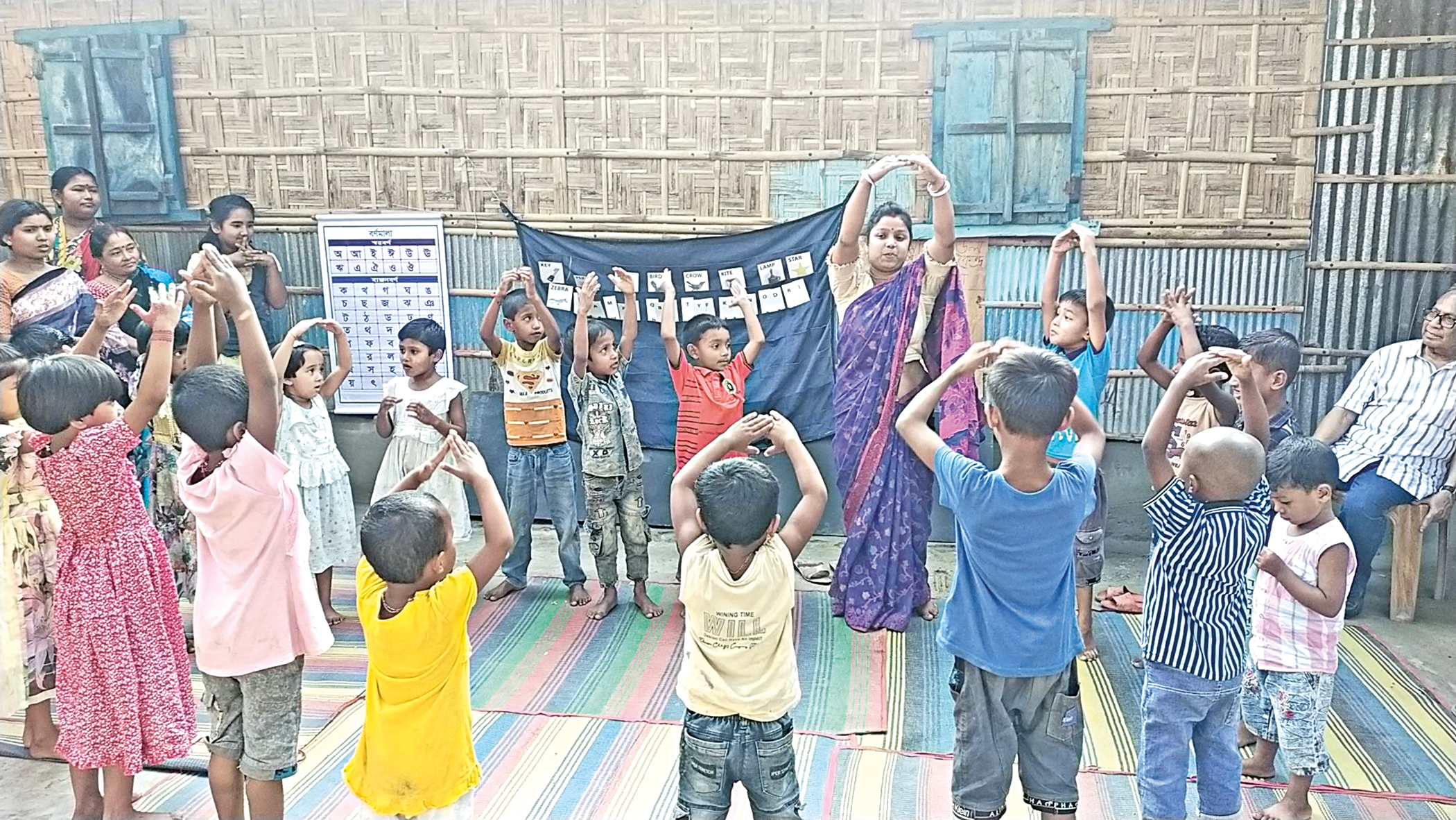
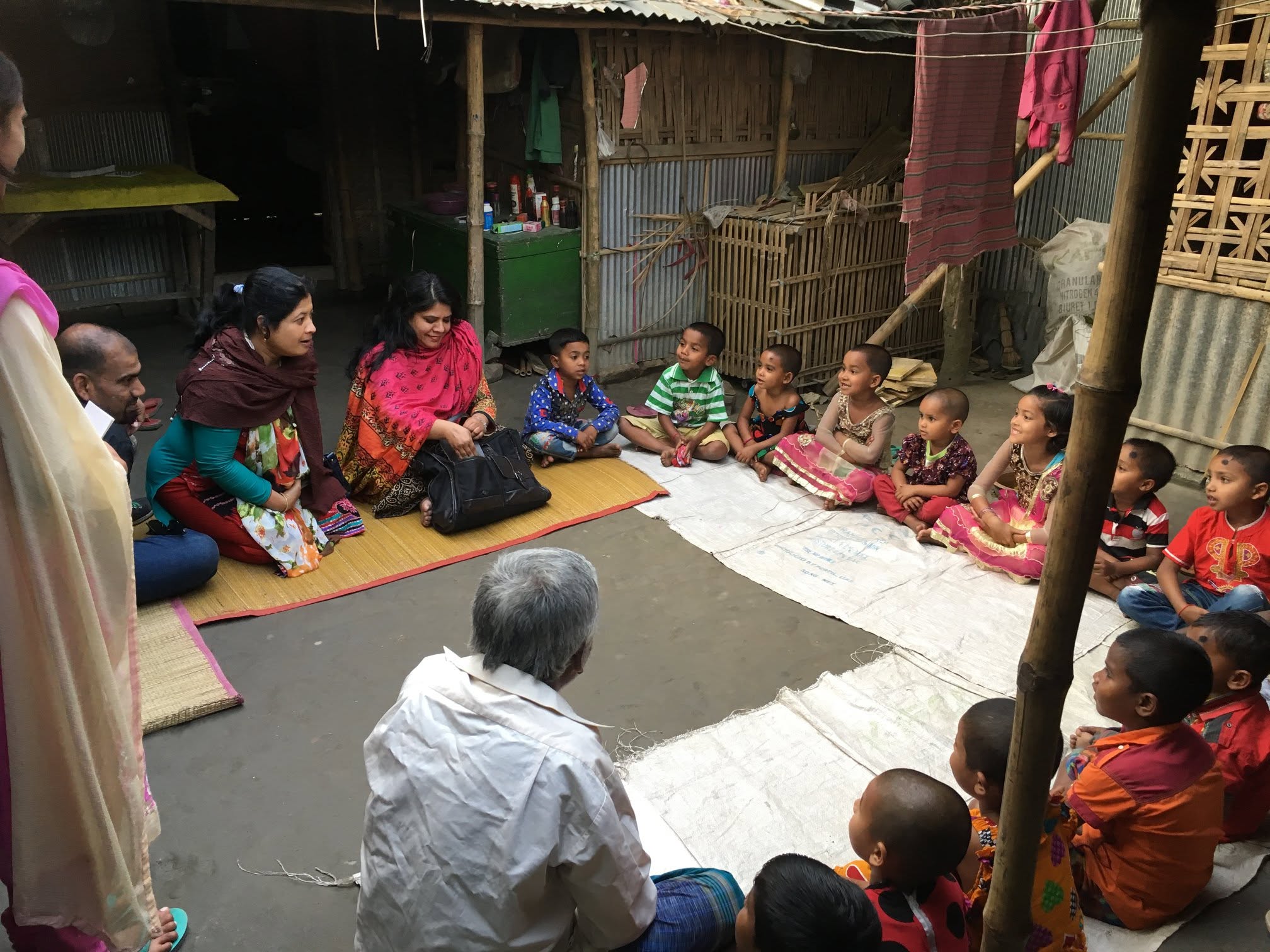
Children aged 4 and 5 learn through games, storytelling, songs and movement rather than rote memorisation. Using specially designed pocket boards and picture cards instead of textbooks, they learn Bengali, English and basic mathematics through Ganitmala, an innovative hands-on learning tool. Further details on the Kajoli method and its centres are available on RIB's website, rib-bangladesh.org, and on kajoliecl.org. They come to the centres empty-handed, without books, paper or pencils, but leave equipped with the foundations of literacy and numeracy.
The results have been consistently encouraging. Teachers in government primary schools report that Kajoli graduates adapt quickly, possess stronger literacy and numeracy skills, and participate more confidently in classroom activities than many of their peers. Their ease with English is particularly impressive. What begins as play gradually develops into reading, writing, counting, communication and self-confidence.
The Kajoli Model's greatest innovation, however, lies not only in its teaching methods but also in its organisation.
Kajoli centres are established and managed by local communities, particularly where government primary schools are not nearby. Parents provide classroom space, contribute according to their means towards teachers' honorariam and help manage the centres. Local women, some with basic formal education, receive practical training and become teachers. Mothers organise nutritious midday meals each school day through a rotational system, while local volunteers, or 'champions', mobilise community support. RIB provides technical guidance, learning materials, teacher training and coordination, but ownership remains firmly with the community.
Perhaps the Model's most distinctive feature is that it was never designed to depend on donor funding. From the outset, its objective was to demonstrate that communities themselves could organise and sustain quality early childhood education with modest technical support. External assistance strengthens the Model but does not define it. This strong sense of local ownership has enabled many Kajoli centres to continue operating long after similar initiatives, funded externally, have disappeared.
Over the past two decades, more than 150,000 children have benefited from Kajoli centres across Bangladesh. Before the COVID-19 pandemic, around 250 centres operated nationwide. Although many closed during the pandemic, around 70 such centres remain active today, and fresh requests to help open Kajoli centres elsewhere continue to arrive.
The Kajoli Model addresses several persistent challenges simultaneously: improving school readiness, reducing educational inequality, strengthening parental engagement, empowering rural women as educators, and fostering community responsibility for children's learning. As the Government continues to strengthen the formal pre-primary education system, community-led initiatives such as the Kajoli Model can complement these efforts by preparing young children, particularly those from disadvantaged families and living at a distance from government school, for a successful transition to local primary school. In this way, local communities, supported by the wider society, become active partners in ensuring that every child enters school ready to learn.
To provide a stronger institutional foundation for sustaining and expanding this proven approach, RIB welcomes collaboration with individuals, civic organisations, and any other entity, foreign or local, willing to join hands to augment the existing mechanism for coordinating support for Kajoli centres. Such support is intended not to replace community ownership but to strengthen it by coordinating teacher training, developing and providing improved learning materials, monitoring quality, promoting peer learning among centres, and maintaining an ongoing research mechanism.
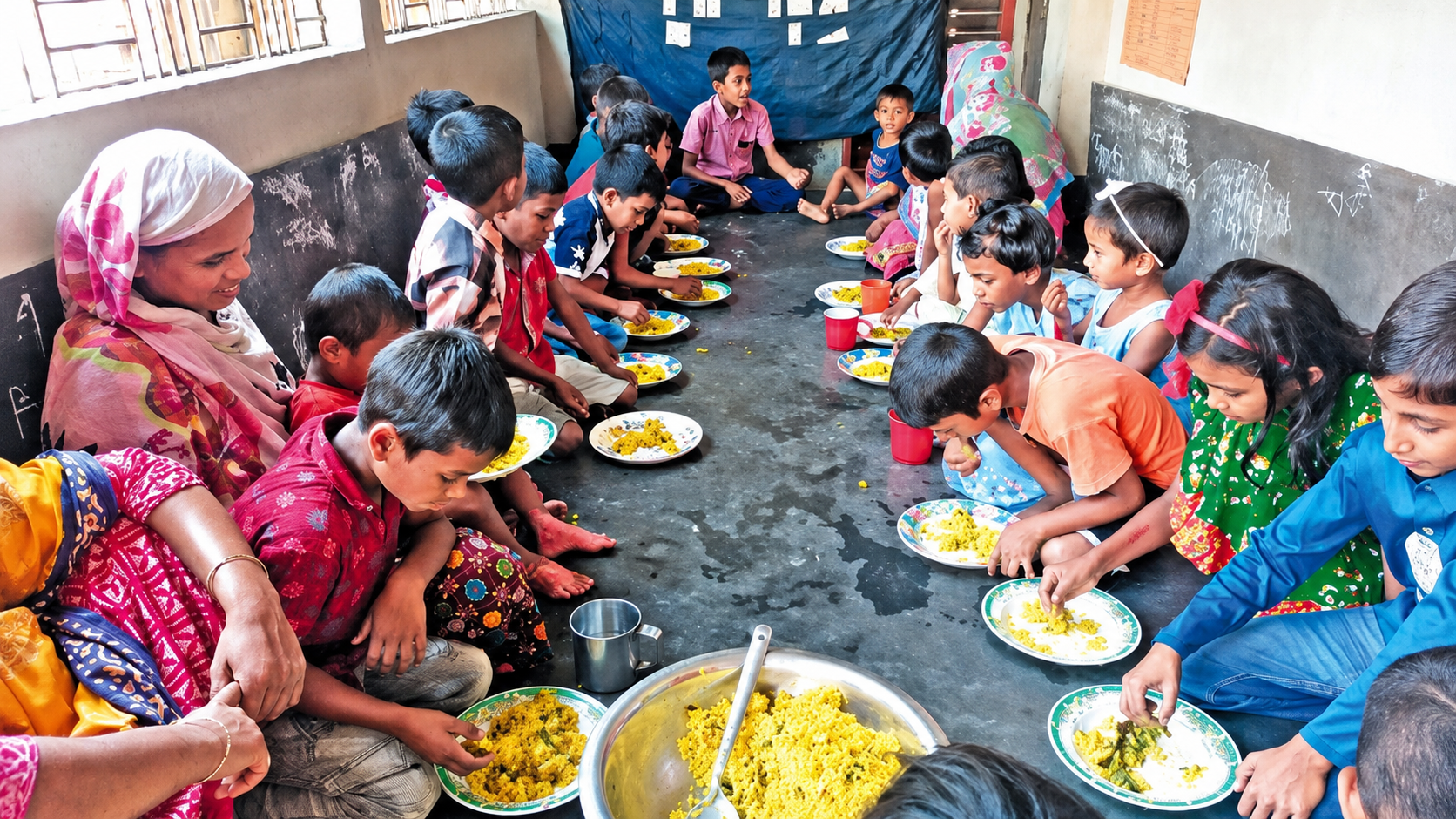
The Kajoli Model has grown over the years through the initiative of local community champions who approached RIB for technical support in establishing Kajoli centres in their own communities. Building on that experience, a stronger institutional framework would help ensure that more communities can benefit from the Model while preserving the principles of community ownership and self-reliance that have been central to its success.
Providing technical support while leaving the operation of centres firmly in the community's hands helps preserve the principles that have made the Kajoli Model successful for more than two decades. The only Government assistance that some centres have enjoyed in the past is the provision of Vulnerable Group Feeding (VGF) cards under its safety net programmes. It helped indigent mothers in many communities use the ration to provide midday meals without taxing their own resources.
The Kajoli Model has demonstrated that quality early childhood education does not require expensive buildings or large recurrent budgets. What it does require is trust in communities, effective technical support, and a commitment to ensuring that every child begins school ready to learn. These lessons should guide how Bangladesh supports and expands early learning initiatives.
While direct government support for Kajoli centres and similar community initiatives may foster dependency and undermine self-reliance, public recognition and appreciation of community efforts can strengthen local resolve and encourage others to follow suit. Individuals and organisations interested in establishing Kajoli centres in their own communities can also undertake to initiate and provide support in ways that reinforce, rather than weaken, community ownership.
Enhancing education is not the responsibility of the Government alone. Throughout the region, citizens have a long tradition of contributing to education. That spirit of partnership should continue, with Government and communities working hand in hand — so that every child, like Partha, discovers that school can begin not with fear but with joy.
Dr Shamsul Bari is a former senior official of the United Nations (UN) and the founding Chairman of Research Initiatives, Bangladesh (RIB). He can be reached at: [email protected]
Send your articles for Slow Reads to [email protected]. Check out our submission guidelines for details.
The moral architecture of Bangladesh’s parliament

Why Bangladesh innovates but rarely builds global companies
Beyond groundwater: Rethinking Barind's water crisis

The gods that we build: AI and the future of moral authority
Remembering Mahbub ul Haq: A pioneer of human development ideas

What would make Dhaka a good city?
How Chattogram can end its recurring waterlogging crisis
Why governments fail to communicate with Gen Z

How Bangladesh can stop the next data breach