


Why Bangladesh's population planning must factor in climate-driven mobility

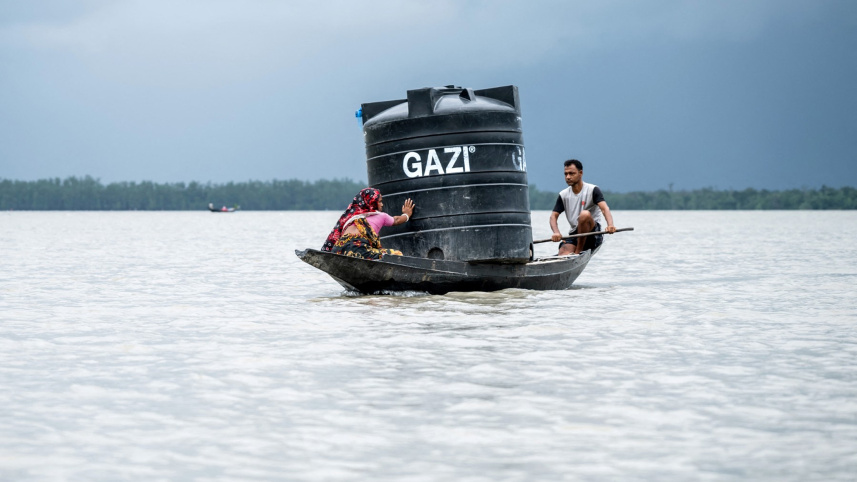
Climate change is not just transforming Bangladesh’s landscape; it’s gradually reshaping where people live, work, and build their futures. Nearly 1.99 crore people in Bangladesh could become internal climate migrants by 2050, making climate-driven mobility one of the country’s most consequential demographic changes in the coming decades. However, the more fundamental question is not how many people may move but whether the country is preparing for the demographic changes already unfolding.
Over the past decade, the conversation on climate mobility has undergone a significant shift in Bangladesh as well as around the world. International policy discussions have increasingly adopted the broader concept of climate mobility, recognising that climate change influences not only permanent migration but also temporary movement, seasonal mobility, planned relocation and even decisions to remain where people are. As evidence accumulated, a more nuanced understanding began to emerge: climate change rarely acts alone. It interacts with livelihoods, employment opportunities, environmental degradation, and social conditions to influence whether people stay, move temporarily or settle elsewhere. The conversation has therefore evolved from viewing climate mobility primarily as a humanitarian challenge to recognising it as an issue of adaptation, development and long-term planning. Increasingly, the focus is on responding to population movement after it occurs as well as anticipating how climate change may gradually reshape future population distribution.

This shift in thinking has important implications for how governments plan for the future. Population planning these days goes beyond fertility, mortality, age structure, and population size. It is now focusing on how populations are distributed, how those patterns change over time, and what those changes mean for development planning. When climate change gradually reshapes population patterns, it also changes the assumptions on which planning decisions are made. Climate-driven mobility therefore should not be viewed simply as a migration issue. It is becoming a demographic planning challenge that shapes urban development, infrastructure, public investment and local governance. The challenge is no longer only to manage population movement but to anticipate changing population patterns. Otherwise, today’s planning decisions could become tomorrow’s planning gaps.
Bangladesh is not starting from zero in integrating climate-driven mobility into its planning and policy landscape. Over the past decades, climate-driven mobility has been reflected in several national policies and planning instruments, including the National Adaptation Plan (2023-2050), Bangladesh Delta Plan 2100, National Urban Sector Policy, National Strategy on Internal Displacement, and most recently, the Population Policy 2025. These policies demonstrate that the country recognises climate-driven mobility as an important consideration for national planning. What remains less developed, however, is a strong planning framework supported by institutional practice that systematically connects these discussions through a long-term population planning lens.
That gap becomes clearer when these policies are viewed together. The National Adaptation Plan addresses climate-driven mobility mainly through climate resilience, with a strong focus on climate-resilient cities and local adaptation. The National Strategy on Internal Displacement (2021) highlights preventing displacement, protecting affected communities and improving relocation. The Population Policy 2025 reflects the country’s changing demographic context; however, it gives little explicit attention to how climate-driven mobility may reshape future population distribution and planning. Each of the policies addresses an important part of the challenge. Yet, none of these systematically connects climate-driven demographic change with long-term population planning. As climate change continues to reshape where people live, future decisions on housing, education, healthcare, transport, employment and other government services will depend on anticipating those shifts. Without that shift, future public investment may increasingly follow yesterday’s population pattern, rather than tomorrow’s realities.
The next step, therefore, is not necessarily to create another standalone policy but to strengthen governance practice by connecting existing planning processes. Climate-driven mobility sits at the intersection of climate adaptation, population planning, urban development, social protection and local governance, but these issues are often planned separately. When transport networks are expanded, housing programmes designed or health facilities are planned, they should consider where climate-driven population growth is likely to occur rather than where populations live today. Bringing climate and demographic projections together in major development planning would help to ensure that future investments are aligned with the population realities at the time. In many respects, the challenge is less about creating new policies than enabling existing institutions to work using shared demographic evidence.
Meeting this challenge will require more than recognising climate mobility as an emerging policy issue. It will require building the evidence, knowledge and analytical capacity needed to anticipate demographic change before it becomes a planning crisis. That begins with strengthening research, data systems and population projections capable of capturing how climate change is reshaping human mobility across different regions of the country. Climate-driven mobility is increasingly becoming another important demographic variable that long-term planning can no longer afford to overlook.
Evidence alone, however, will not change planning outcomes unless it becomes part of routine governance practice. Climate and demographic information should inform national investment decisions, regional development strategies, and local government service planning. Rather than creating another standalone institution or policy, Bangladesh should strengthen how existing planning, climate, and population institutions work together, enabling them to plan on the same evidence and towards the same demographic future.
The question, therefore, is no longer whether climate change will influence where people live. The influence is already evident. The real challenge is whether Bangladesh’s planning system can evolve quickly enough to anticipate and respond to that demographic transformation. Looking ahead, climate-driven mobility needs to be understood not only as a long-term population planning challenge that informs how the country plans its cities, services, infrastructure and future investments. The next frontier of climate governance in Bangladesh may therefore lie in equipping its planning system to anticipate the country’s changing population geography.
Muhammad Muktadirul Islam Khan is principal researcher and head of consultants at the Sustainability Action Learning Lab. He can be reached at [email protected].
Views expressed in this article are the author's own.
Follow The Daily Star Opinion on Facebook for the latest opinions, commentaries, and analyses by experts and professionals. To contribute your article or letter to The Daily Star Opinion, see our guidelines for submission.
 For all latest news, follow The Daily Star's Google News channel.
Comments