


Tortured in Al-Badr camp in presence of Mir Quasem
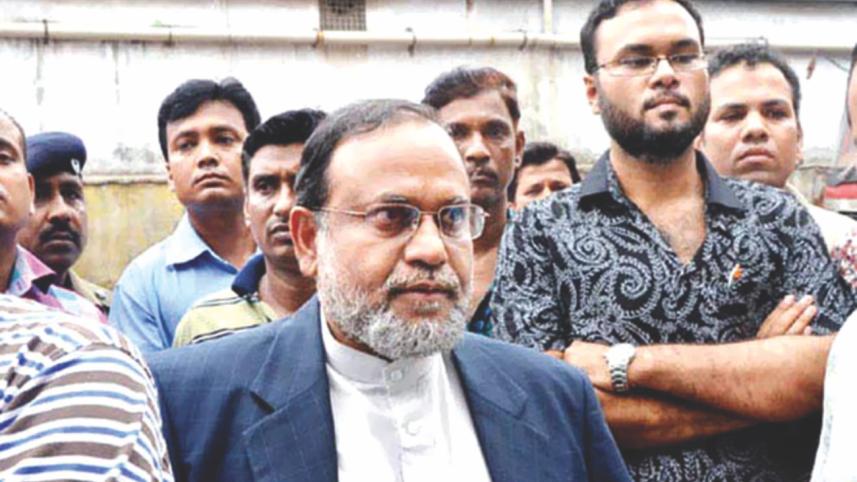
A prosecution witness yesterday testified that he was tortured at an Al-Badr camp in Chittagong in presence of Jamaat-e-Islami leader Mir Quasem Ali during the Liberation War.
Sanaullah Chowdhury, the second prosecution witness in Quasem's case, told the International Crimes Tribunal-2 that Quasem even interrogated him during his 12-day captivity at that camp in the city's Dalim Hotel.
The 67-year-old witness said bodies of four to five captives, who were tortured to death at the camp, were dumped into the Karnaphuli river in the last part of the nine-month long war in 1971.
On December 11 last year, Syed Mohammad Amran, a freedom fighter who endured torture for 16 days at the same camp, testified that four to five detainees were killed inside the Quasem-controlled camp.
Quasem, a member of Jamaat's central executive council, is facing 14 charges for his alleged involvement in crimes against humanity committed in Chittagong during the war.
Quasem was the general secretary of Islami Chhatra Sangha, the then student wing of Jamaat. According to the prosecution documents, Chhatra Sangha was later turned into Al-Badr, an auxiliary force of the Pakistani army, in 1971.
Sanaullah in his testimony said he used to work as an office assistant of Chittagong Deputy Commissioner's office and live in a rented house.
On the evening of November 27, 1971, there was a knock on the door when he was gossiping with his brother-in-law Habibur Rahman and neighbours Zafar Ahmed and Ilias, said Sanaullah.
As soon as he opened the door, seven to eight armed people stormed into the house, the witness added.
The armed men searched the house, blindfolded him, Habibur and Ilias, and boarded them into a jeep, said Sanaullah, adding, "From their [armed men] conversation, I realised that we were taken to Dalim Hotel."
Sanaullah said he and Habibur were confined to a room on the first floor where he had managed to see some other captives through the blindfold. But he did not know the whereabouts of Ilias, he added.
The witness further said he had found Shah Alam, Tuntu Sen and Ranjit Das inside the room. "Some of them were writhing on the floor."
At one stage, he was taken to a second-floor room and Al-Badr men started to interrogate him, said Sanaullah, adding that he had seen Jahangir and some others in the room.
After some time, a man was kicked into the room and he was crying. The man was advocate Safiul Alam, who was known to him, added the witness.
The next day, a boy, who endured severe torture, was brought to their room.
"Someone told Al-Badr men pointing to that boy 'he is not dead yet, throw him in so that the captives understand the consequence of not telling the truth'. Then they [Al-Badr men] left the boy inside our room," said Sanaullah.
"Advocate Safiul Alam told me that he [who gave the order] was Mir Quasem Ali, commander of [Al] Badr force," said Sanaullah, adding that the boy, whose name was Jasim, died later.
On November 29, Swapan, who worked at the Al-Badr camp, informed them that four to five captives including Jasim, Tuntu Sen and Ranjit Das were killed and their bodies were dumped into the Karnaphuli river.
"Swapan also said those who were taken out of the camp never returned. I also observed similar facts," the witness said, adding, "While I was in confinement, captives were tortured in different rooms and Mir Quasem Ali, on several occasions, was present."
"Mir Quasem Ali also interrogated me at Dalim Hotel," added Sanaullah.
On December 9, he was released upon giving an undertaking that he would provide information about freedom fighters, said Sanaullah as he identified Quasem Ali at the dock yesterday.
The three-member tribunal led by Justice Obaidul Hassan with members Justice Md Mozibur Rahman Miah and Justice Md Shahinur Islam adjourned the proceeding until January 23 when Sanaullah would face cross-examination.
Earlier in the day, defence counsel Mizanul Islam completed cross-examination of Syed Mohammad Amran, first prosecution witness in the case.

 For all latest news, follow The Daily Star's Google News channel.
Comments