


A campus ecosystem that cares
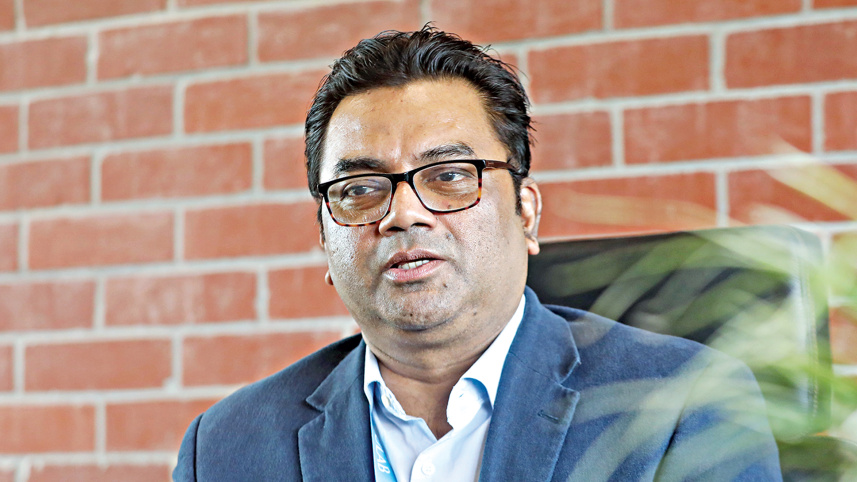
Professor Shamsad Mortuza,
PhD Vice Chancellor of the University of Liberal Arts Bangladesh (ULAB)

Sustainability is more than recycling or a token glass bottle; it is a mindset you practise. It also means access. Nearly 90 percent of our students are on financial aid, many first-generation learners, because we feel a duty to give back. As I say, ULAB begins with ‘U’: you matter.
As universities move into permanent homes built for a changing world, they are rethinking how space, sustainability and technology come together to shape graduates who can stay human in the age of the machine. Professor Shamsad Mortuza, PhD, Vice Chancellor of the University of Liberal Arts Bangladesh (ULAB), speaks with The Daily Star.
The Daily Star (TDS): What was the philosophy behind ULAB’s permanent campus, and how does its design reflect the university’s vision?
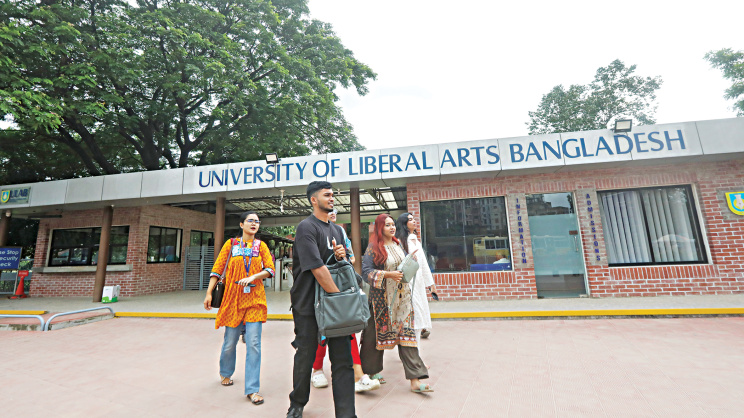
Prof. Shamsad Mortuza (SM): When the UGC required universities to move to their own campuses, our board of trustees generously gave us nine acres, and we treated every detail as a choice. We used red bricks to blend with the nearby Intellectual Martyrs’ Memorial, and architect Kashif Chowdhury’s blocks and circles give form to the liberal arts and sustainability we have pursued from day one. Bringing thousands of students into a neighbourhood changes its ecosystem, so part of our responsibility is to redress the wrongs our presence creates.
TDS: How have your classrooms, labs and libraries evolved for 21st-century learning?
SM: ULAB has been forward-looking from the very beginning. When COVID arrived, we shifted online without losing a single second due to our digital infrastructure. We are now moving into smart classrooms with digital displays, and our library, connected through BDREN, offers AI-powered search alongside Scopus, JSTOR and Turnitin. Just as important, our Center for Teaching and Learning recently trained faculty to use AI ethically, because keeping teachers’ current matters as much as the technology.
TDS: What facilities and centres support research and innovation?
SM: We run around nine research centres, each with its own labs, and are building a dedicated innovation lab led by faculty recruited from abroad, including an entrepreneur from KTH Stockholm. A signature programme is our Center for Critical and Qualitative Studies, which fact-checks for Meta and puts students and faculty to work against misinformation. Other centres, for sustainable development and entrepreneurship, run public-policy and democracy projects with international partners.
TDS: How does ULAB connect students to industries and keep learning hands-on?
SM: Our MBA, EMBA and Master’s in Communication are designed with the industry in mind, and for undergraduates we bring that world in through guest lecturers, visiting professionals and alumni. Liberal education is about active learning, not a ‘sage on a stage’ delivering one-way lectures. Students earn their grades through projects and fieldwork, and by competing against peers from other universities, which is how they honestly benchmark themselves. A university exists to create that ecosystem, and we are co-travellers on the student’s journey.
TDS: Beyond the classroom, how do students live out the university’s commitment to sustainability?
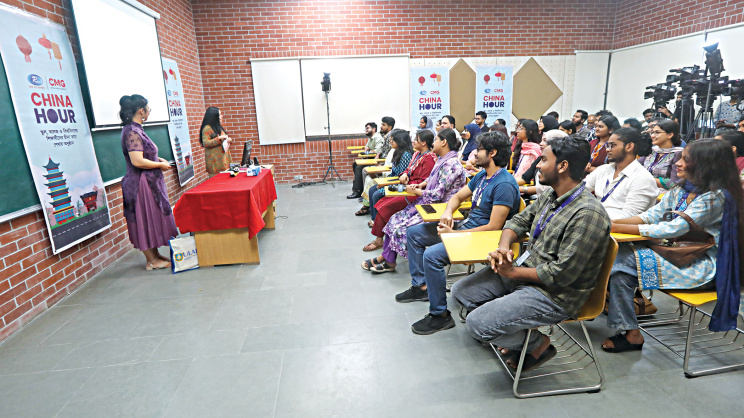
SM: If you come to ULAB, you can breathe. It is an oasis in a concrete jungle, and hardly a minute passes without a student taking a selfie, which tells me they feel the campus is theirs. On Earth Day we mapped the campus with GIS to plant scientifically, students grow organic gardens through the sustainability club, and they look after the campus strays as fellow ULABians. Yet sustainability is more than recycling or a token glass bottle; it is a mindset you practise. It also means access. Nearly 90 percent of our students are on financial aid, many first-generation learners, because we feel a duty to give back. As I say, ULAB begins with ‘U’: you matter.
TDS: How does the campus support student wellbeing, inclusivity and accessibility?
SM: This is a green building designed with the SDGs in mind, so there are ramps and lifts throughout and a step-free rear entrance that lets students with disabilities move seamlessly into classrooms. For mental health, our student affairs office holds regular sessions with psychosocial counsellors, and we keep trained doctors on hand, even over weekends. A daycare centre for parents on campus is on the way, and our MOUs with NGOs let students reach outside professionals in confidence when they would rather not open up to our own staff.
TDS: For parents and students weighing their options, what should they look for, and how does ULAB prepare graduates for the future?
SM: This generation often arrives more fluent in technology than their teachers, so our job is to add perspective and to bridge generations, readying them for the world beyond the screen with the soft skills and human agency a machine cannot replace. I tell parents to look for room to think: we cap classes at 40 in open, spacious rooms where a teacher and student can actually bond. Even small choices are intentional such as chalk instead of markers with toxic chemicals, green boards and red bricks for a quiet national pride — because we want graduates who are locally rooted yet globally connected.
Interview conducted by Rumman Kalam. The writer is the Editor of Commercial Supplements at The Daily Star.
 For all latest news, follow The Daily Star's Google News channel.
Comments