


Bridging the Digital Divide with
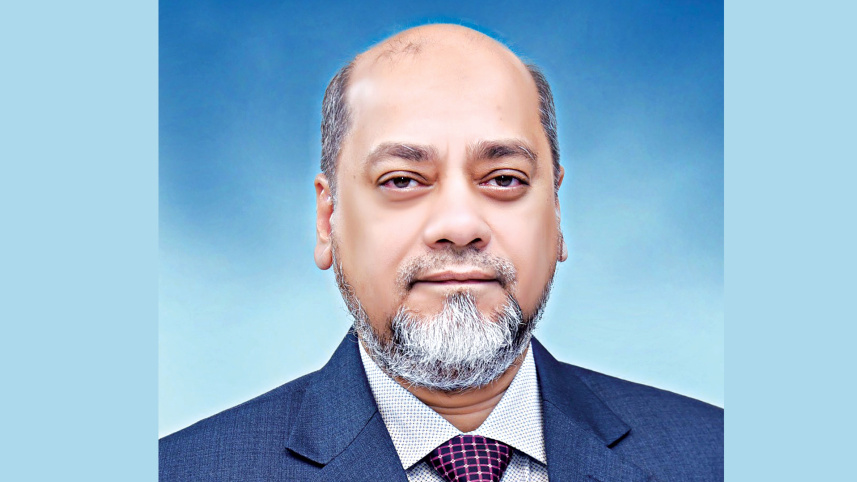
Mohammad Ali
Managing Director and CEO
Pubali Bank PLC.

We need systematic institutional recognition. We should introduce national-level awards for local digital products like BEFTN, RTGS, NPSB, Taka Pay, and Bangla QR. This would highly encourage the merchants to adopt Bangla QR.
The interoperable Bangla QR standard is reshaping retail payments, reducing massive cash management overheads for commercial banks. Mohammad Ali, Managing Director and CEO of Pubali Bank PLC, discusses the strategic landscape of Bangladesh’s transition toward a digital economy. He explores how laying the groundwork for a secure, multi-layered digital financial ecosystem.
The Daily Star (TDS): How is the introduction of Bangla QR shaping Bangladesh’s transition toward a cashless economy, and what is its strategic significance?
Mohammad Ali (MA): To understand the significance of Bangla QR, we must first look at the merchant landscape. Historically, Bangladesh’s retail sector remained cash-dependent due to fragmented payment systems that required buyers and merchants to share the same bank. Bangla QR resolves this bottleneck through a unified, interoperable standard. By scanning a single QR code with any bank or MFS app, merchants instantly gain access to nearly 80 to 100 million active wallet users nationwide.
TDS: How does this digital payment ecosystem interact with other crucial financial segments, such as inbound remittances?
MA: Collaboration is key to building a functional ecosystem. For instance, our partnership with bKash for inbound remittances has yielded significant results. Foreign remittances are routed directly through Pubali Bank, allowing us to retain the foreign currency in our reserves, which MFS providers cannot do, and are instantly credited to the beneficiary’s bKash wallet in real-time, free of charge.
TDS: What specific strategies is Pubali Bank executing to onboard neighborhood grocery stores and small-scale retailers into this digital ecosystem?
MA: Our expansion strategy is not built around generating immediate profits from QR transaction fees, as the operational cost of onboarding often exceeds the direct revenue. Instead, our goal is to transform every onboarded merchant into a cross-selling node. Our digital merchant acquisition campaigns are focused primarily in geographic areas where Pubali Bank already has a physical presence. This phygital (physical-digital) footprint is crucial. Furthermore, we are highly enthusiastic about Bangladesh Bank’s recent circular on e-loans or automated nano-lending.
TDS: From an industry standpoint, what policy support, tax incentives, or infrastructural facilitation do you expect from the government to accelerate this momentum?
MA: We must incentivise our merchants. The government should offer tax rebates, say 10% to 25%, to merchants based on the volume of transactions they process through Bangla QR. This would act as a powerful catalyst for adoption. Additionally, the government could introduce a cashback mechanism where a portion of the merchant discount rate (MDR) or transaction charges is reimbursed to merchants through state subsidies.
 For all latest news, follow The Daily Star's Google News channel.
Comments