


Can the new Rohingya committee move repatriation beyond promises?


The formation of a national committee on the Rohingya crisis, headed by Prime Minister Tarique Rahman, is an important political signal. The 11-member committee has been asked to formulate a national strategy, determine priorities and coordinate the agencies involved in achieving swift and sustainable Rohingya repatriation. After years of fragmented diplomacy, administrative repetition and declining international attention, coordination at the highest level is necessary. However, the first task of the committee should not be to announce yet another prospective repatriation date. Instead, it should recognise why every previous attempt failed.
The primary reason the Rohingya community refused to return earlier is that Myanmar offered no credible guarantee of citizenship, physical security, freedom of movement, land rights, or return to their original communities. In 2018 and 2019, refugees selected for repatriation declined to cross the border because they feared that repatriation would merely transfer them from camps in Bangladesh to detention-like settlements or militarised villages in Myanmar.

That experience contains the most important lesson for the new committee: transportation is not repatriation. Repatriation is a political settlement. It is completed only when returnees can live safely as members of the country to which they return, not as stateless people relocated under another form of confinement. Bangladesh must certainly continue to insist that the Rohingya belong in Myanmar and that Myanmar bears the primary responsibility for creating the conditions of return. But insisting on this principle is not the same as possessing a workable strategy. The committee must distinguish clearly between what Bangladesh can control, what it can influence and what it cannot deliver on its own.
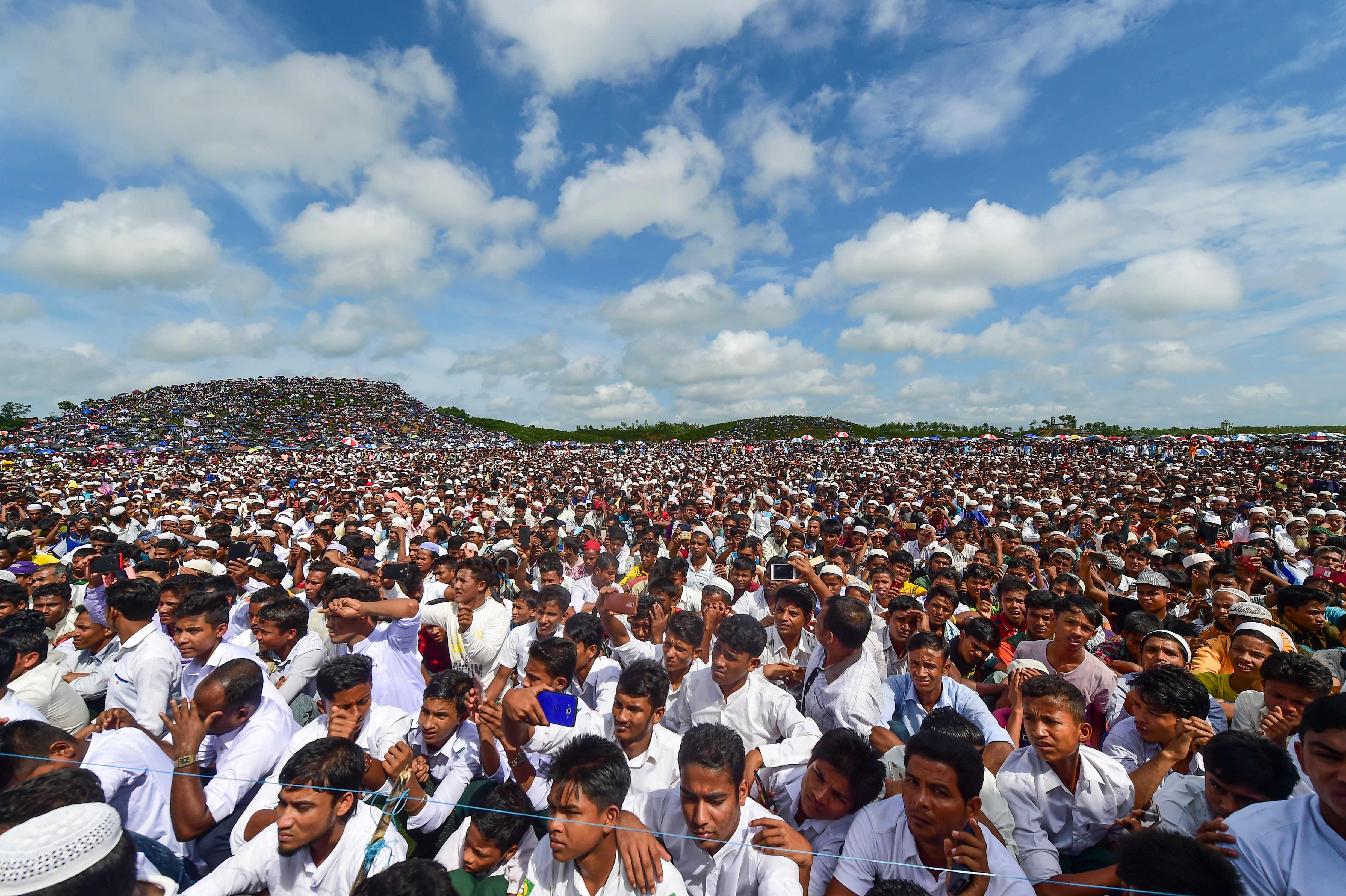
What Bangladesh can influence or do right now is improve camp governance, documentation, policing, education, border management and diplomatic coordination. It can negotiate humanitarian financing, seek international monitoring and build coalitions within the United Nations, ASEAN and the Organisation of Islamic Cooperation. It can engage China, India, Japan, the European Union and the United States more systematically.
What Bangladesh cannot do is grant citizenship inside Myanmar, restore confiscated land in Rakhine, disarm competing armed forces, or guarantee the behaviour of those controlling the territory. This distinction may sound obvious, but previous policies often blurred it. Bangladesh repeatedly presented repatriation as if sufficient diplomatic persistence could produce an outcome that depended principally on political transformation inside Myanmar. When that transformation did not occur, the process returned to lists, verification and meetings.
The announcement from Myanmar in April 2025 that 1,80,000 Rohingya had been identified as eligible for return illustrates the problem. Bangladesh had submitted approximately 8,00,000 names between 2018 and 2020. Another 70,000 remained under further review, while verification of about 5,50,000 had yet to be completed. However, even those declared “eligible” were not guaranteed citizenship, land, freedom, or protection.
Eligibility is not belonging. Indeed, the verification system reverses the moral burden. People expelled after their villages, documents and family records were destroyed are required to prove their connection to the country that denied their identity. Myanmar is then allowed to decide, person by person, who may be admitted to a homeland from which an entire community was displaced. But Bangladesh should not reject verification altogether; some form of documentation is necessary for organised return, but it must be separated from Myanmar’s power to redefine the Rohingya as recent outsiders.
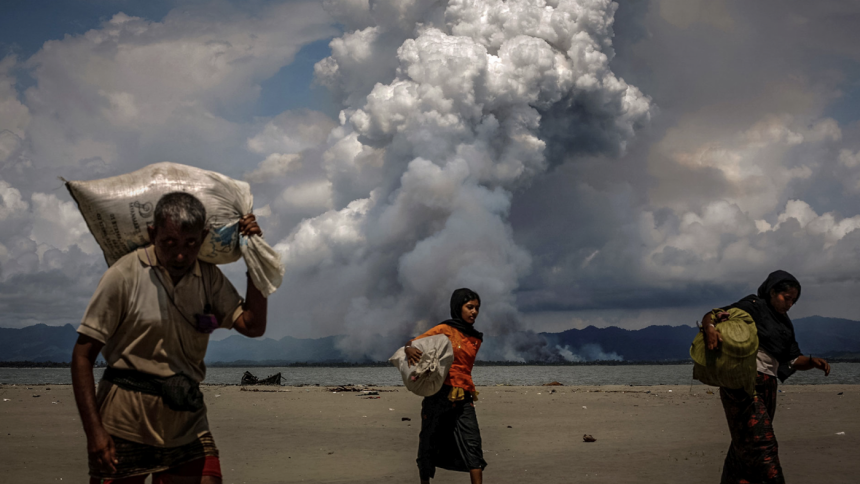
The committee should therefore replace the language of “swift repatriation” with a framework for conditional, phased and independently verifiable return. Speed may be politically attractive—it is certainly unthinkable given the current state of the civil war in Myanmar—but rapid return may, in any case, result in renewed displacement.
Before any return begins, the government should establish a public return-readiness framework. It should measure whether returnees will receive legal identity, freedom of movement, access to education and employment, protection from arbitrary arrest, restoration of land or compensation, family unity, humanitarian access and an enforceable mechanism for reporting abuse.
Each proposed return area should be assessed independently. Refugee representatives should be permitted to go and visit those sites, speak privately with people living there and report back to the camps without interference. No family should be placed on a return list without informed consent, to ensure that repatriation does not become another episode of displacement.
The composition of the national committee also deserves attention. While security agencies, police, border authorities and intelligence organisations must be involved, civilian intelligence with knowledge of Rohingya society, Rakhine politics, refugee law, humanitarian operations, regional diplomacy, education, labour markets and local tensions in Cox’s Bazar must also be included.
Besides, Rohingya participation cannot be ceremonial. The government should create a transparent consultative body representing different camps, generations, genders and areas of origin. A strategy prepared without their participation may be a national strategy about the Rohingya, but it will not be one they trust.
Bangladesh must also adjust its diplomacy to the realities inside Rakhine. Negotiating only with Myanmar’s central authorities is no longer sufficient when territorial and administrative control is fragmented. Dhaka must communicate pragmatically with the actors who exercise actual power in the places to which refugees may return. Such engagement does not necessarily constitute diplomatic recognition. Governments regularly maintain similar functional communication with non-state or de facto authorities to secure borders, humanitarian access and civilian protection. They do so to ensure that the authority making a promise can enforce it on the ground.
China should also be given concrete responsibilities rather than another general request to “help with repatriation.” Bangladesh should ask Beijing to support internationally monitored return areas, humanitarian access, infrastructure reconstruction, civilian guarantees and a reporting mechanism for violations. India should be approached through regional security interests rather than moral language alone, noting that protracted statelessness contributes to trafficking, irregular maritime migration, illicit economies and potential armed mobilisation, posing a threat to the region.
Above all, a credible national strategy must operate with two clocks. One is the diplomatic clock of eventual return. The other is the human clock of people growing up here. A Rohingya child who was five during the 2017 expulsion is entering adolescence. That child cannot be told to suspend education, skills and hope until geopolitics improves. Restricting education and livelihoods may appear to discourage permanent settlement, but prolonged despair does not produce ideal conditions for repatriation. It produces trafficking, exploitation, criminal recruitment, early marriage and dangerous maritime flight.
Bangladesh should expand regulated education, certified skills training and carefully supervised livelihood opportunities. This need not amount to permanent local integration. It is a form of risk management and preparation for eventual reconstruction in Rakhine. A deliberately uneducated population will not return as a capable rebuilding community. It will return, should it ever become possible, as another population dependent on aid.
The international community must also be further integrated into a more measurable burden-sharing framework. Bangladesh should negotiate a multi-year compact covering humanitarian financing, development support for Cox’s Bazar, resettlement for vulnerable refugees, university scholarships, family reunification and legal labour pathways. Every partner country should be asked to make specific annual commitments: how much it will contribute, how many refugees it will resettle, how many students it will admit and how many humanitarian or skilled-migration places it will provide.
Solidarity without numbers is diplomacy. Responsibility begins when it can be counted. Within its 90-day mandate, the committee should produce a public strategy, a confidential security annex, a diplomatic roadmap, a financing plan, a refugee-consultation report and a return-readiness index. It should assign responsibilities, establish deadlines and report progress quarterly.
 For all latest news, follow The Daily Star's Google News channel.
 Acknowledging that large-scale repatriation may not be immediately possible will not be defeatism. It is realism. The committee’s success should therefore not be measured by how quickly the first buses with the Rohingya reach the border. It should be measured by whether Bangladesh can create a policy that protects its national interests, preserves human security, engages the powers that matter and makes Myanmar’s responsibility impossible to evade.
Dr AKM Ahsan Ullah is professor at the Faculty of Arts and Social Science in the University of Brunei Darussalam. He can be reached at [email protected].
Views expressed in this article are the author's own.
Follow The Daily Star Opinion on Facebook for the latest opinions, commentaries, and analyses by experts and professionals. To contribute your article or letter to The Daily Star Opinion, see our guidelines for submission.
Comments