


Tall buildings must not encroach on flight paths
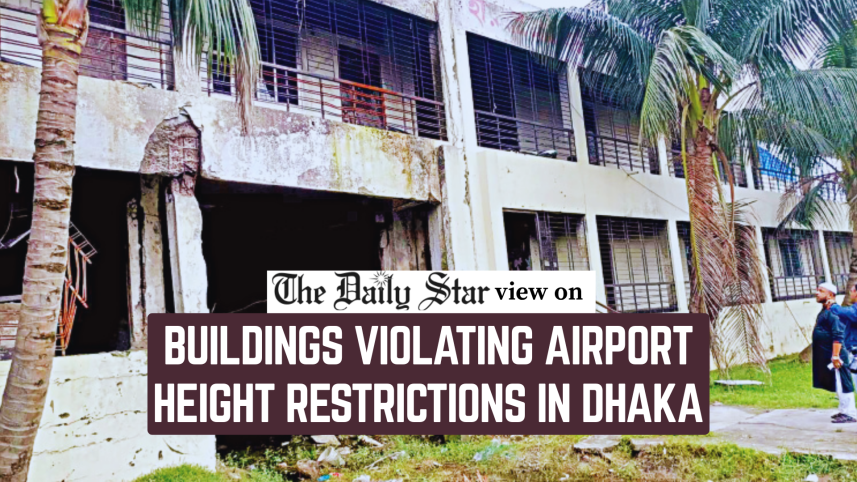
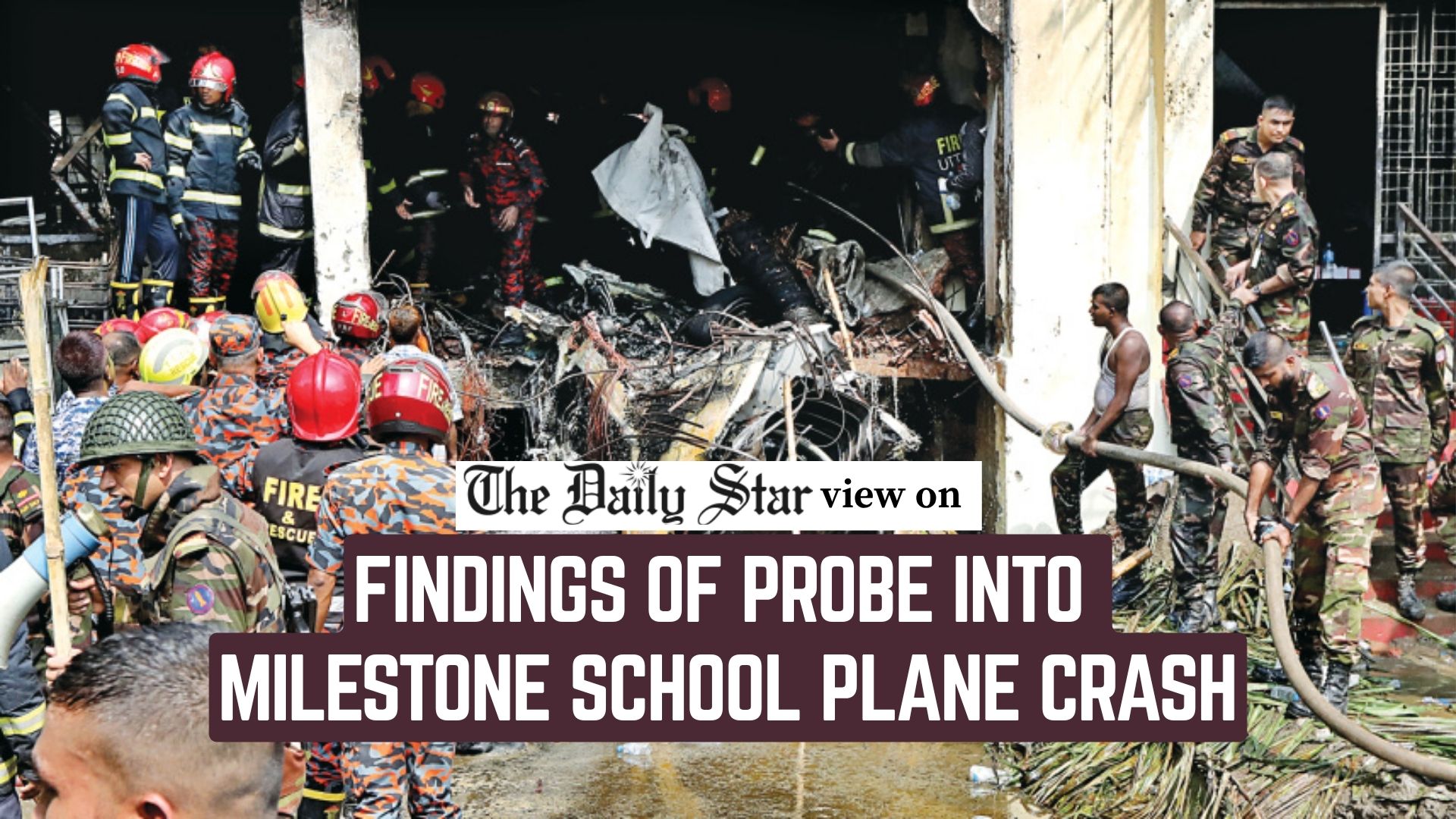
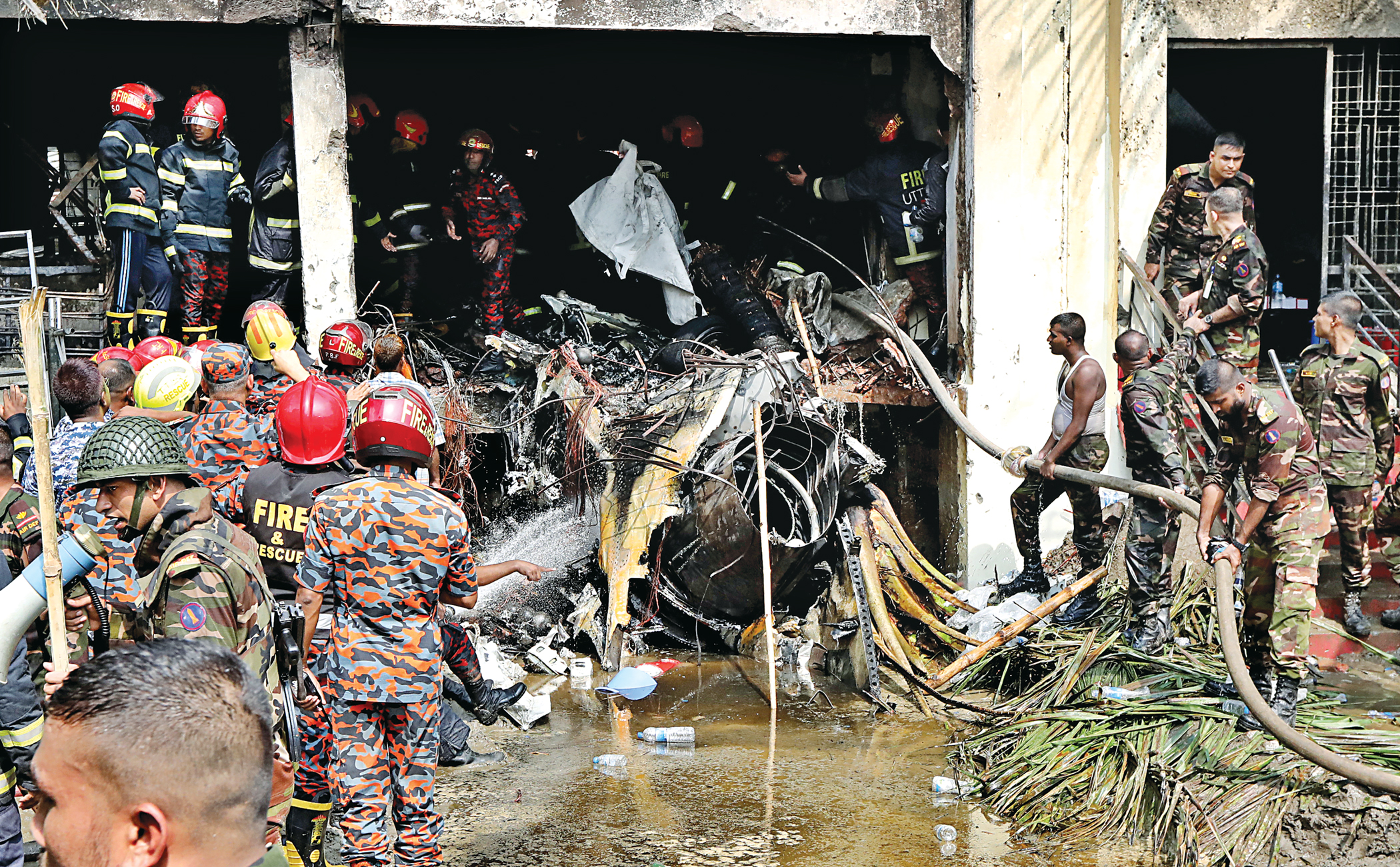
It is a sobering thought that it takes a horrific tragedy like the Milestone School and College crash for us to realise just how precariously Dhaka’s residents live. While the tragedy was mainly caused by human error, the Haider Ali building itself was in violation of the country’s building codes. But it is not the only edifice with such issues. A report in this paper reveals that at least 325 structures exceed the permitted height restrictions around Tejgaon Airport and Hazrat Shahjalal International Airport. These include mainly residential buildings, commercial establishments, government structures, hospitals, hotels and educational institutions.
So why did Rajdhani Unnayan Kartripakkha (Rajuk) allow such gross violations of the building code along the known flight paths of two airports?

Rajuk’s excuse is as pathetic as it is outrageous: the buildings were approved because originally, they complied with the height restrictions but later developers added extra floors. Does this mean Rajuk has no responsibility to follow up and monitor whether builders comply with building codes? Besides, the report cites documents in which the Civil Aviation Authority of Bangladesh had repeatedly written to Rajuk, alerting it of the violations, months before the Milestone tragedy. Rajuk was also asked to take action against three residential buildings in Kafrul as they violated the Tejgaon Airport’s airspace required for safe landing and take-off. One of 20 feet building is inside the area where no construction is allowed at all. Two of them far exceed their allowable heights. The report quotes a high CAAB official saying that over the last decade the regulator had flagged more than 640 buildings for violating airport height restrictions. What did Rajuk do about these warnings? Apparently, nothing.
The government must first hold Rajuk accountable and take action against individuals directly involved in such negligence. Developers who have violated the building codes must be punished as per the law. The government can follow examples in other countries to address the issue. CAAB must assess whether safe operational changes at the airport can be made, such as revising flight procedures or runway restrictions. If this is not possible, Rajuk must see if a few floors of buildings in the flight path can be demolished. If not, the whole building will have to be taken down, while protecting the rights of the occupants, who must be compensated and relocated and the developer should bear the cost. Developers must be required to redesign plans if they violate protected airspace. The government must ensure inspection of buildings after they have been approved. If construction has already started and the height restrictions have not been maintained, authorities can stop the work and force the developer to remove structures such as upper floors and rooftop structures.
The government’s political will is going to be tested in the way it deals with flight safety and the protection of countless lives.
 For all latest news, follow The Daily Star's Google News channel.
Comments