


Reliable energy is key to industrial growth
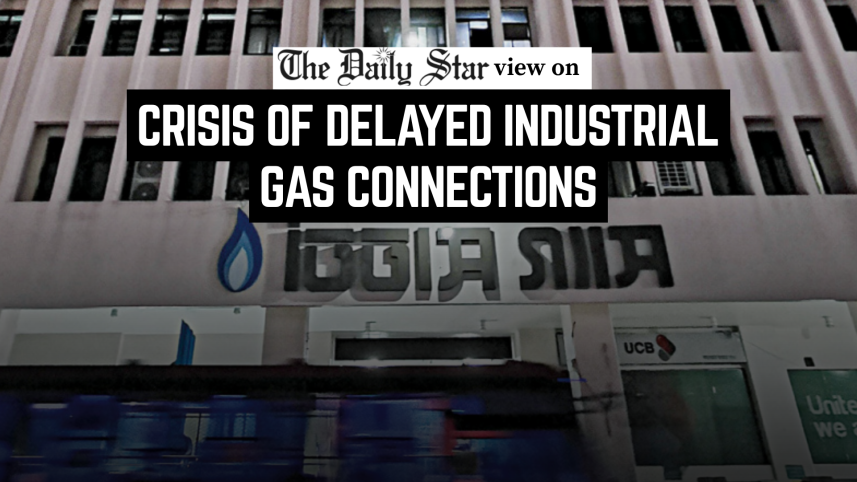
The concerns raised by business leaders over the continued delay in providing gas connections to industries that have already fulfilled all official requirements deserve urgent attention. According to Titas Gas, nearly 1,300 applications for industrial gas connections remain pending, including more than 500 for which demand notes have already been issued. Reportedly, investors have paid the required fees, completed factory construction, and are ready to begin production. But without gas, these factories remain idle while loan repayments continue to mount. At the same time, unreliable electricity and gas supplies are driving up production costs for existing industries.
Meghna Group of Industries reportedly deposited Tk 140 crore with Titas for gas connections to a steel mill and a glass factory in Cumilla Economic Zone, while spending another Tk 700 crore on various fees related to gas connections in Meghna Economic Zone. The completed factories now await gas connections. The company has warned that prolonged delays could jeopardise 65,000 jobs across its 57 industrial units. Trust Bank, meanwhile, says between Tk 7,000 crore and Tk 8,000 crore of its industrial financing remain stalled because projects cannot begin production without gas. The situation is deeply concerning, as business leaders have warned that delayed production is putting large investments at risk of loan defaults.

Even industries that already have gas connections are struggling with unreliable supply. Frequent gas shortages, voltage fluctuations, and unplanned power outages are disrupting production, increasing operating costs, and creating uncertainty across supply chains. The pharmaceutical industry, in particular, faces serious challenges, as uninterrupted electricity is essential for producing and preserving life-saving medicines. Without reliable energy, the country’s ambition to attract domestic and foreign investment will remain difficult to achieve.
Clearly, years of inadequate gas exploration and excessive dependence on imported fuel have left the country vulnerable. According to Titas, industries in its service area need 2,200 million cubic feet of gas a day, but it can supply only 1,500 million cubic feet. At present, the country imports around 30 percent of its gas demand, 95 percent of its oil, and 90 percent of its coal, exposing the economy to global price shocks and supply disruptions. The recent fire at one of the country's two floating LNG terminals, which further reduced gas supply, has once again laid bare the risks of relying heavily on import infrastructure.
The government must urgently expand domestic gas exploration and strengthen LNG import facilities. While BAPEX's exploration of 29 wells is an encouraging step, experts caution that even successful exploration will take years to produce results. It must therefore pursue every practical short-term option to increase gas supply for industries, expedite promised gas connections, and provide businesses with clear timelines. At the same time, authorities should diversify energy sources, including renewable energy, and improve coordination among energy agencies for better service. A reliable energy supply is crucial for the stable growth of industries.
 For all latest news, follow The Daily Star's Google News channel.
Comments