


What Messi meant to me as a fan
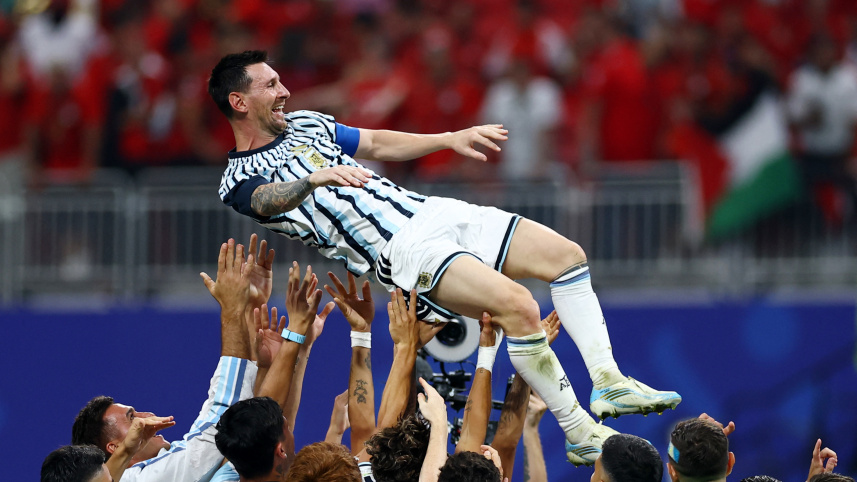
I was seven when I first heard your name, not from a match but from a number echoed like a rumour too large to be true.
91 goals in one year!

I did the maths, and it did not add up. I still cannot, honestly.
I grew up watching you like one grows up watching a favourite uncle. From a distance. Through screens that buffered at the worst times.
On nights when the football only started when the rest of the house had gone to bed. I remember shifting coaching dates around your games, fighting cousins over dinner about whether you were better than Ronaldo, a shirt two sizes too big worn until the number 10 had cracked and faded to grey.
Then, in 2014, I learned what it was like to grieve for someone I never met. I saw you pass that trophy, your eyes full of sorrow, and I vaguely perceived that greatness does not promise an end.
When you told me you were done with Argentina in 2016, I learnt something more brutal: even the best has a point where they almost stop trying to prove themselves to people who will never be satisfied. I was 12, and I felt almost betrayed, like you were obligated to keep trying. It took years to realise you owed me nothing.
I did not know, back then, what it had already cost you to be standing there at all. Somewhere in the story, you never made a show of telling, there was a boy with a hormone deficiency his childhood football club would not pay to treat, a club abroad was the only one willing to bet on a body that was not growing the way it should have.
Nobody promised that boy anything either. I think about that whenever people talk about your talent as though it arrived free.
The failures that followed were louder than that quiet cost ever was. Two Copa América finals lost, both on penalties, both against the same opponent, and an Argentine press that reached for the word “cursed” like it was owed to them.
I watched grown men decide you did not love the shirt the way Maradona had, watched people who had never represented anything larger than themselves question whether you deserved to wear it.
You said nothing back. You did not need to.
What you taught me in that silence was not really about football. It was what dignity, under that much noise, looks like continuing to show up.
You returned, quieter, older, without the theatre other players reach for when they want to be forgiven. No interview announcing a reinvention. You simply kept training and kept playing, and eventually the Maracanã happened, and the curse, whatever it was, went quiet with it.
The quiet held until Qatar, where I understood that everything before it had only been rehearsal. I remember the shootout, the disbelief on your face when it was finally, actually over, decades of waiting undone in one evening. It taught me that patience is not passive. It is the hardest work there is.
That patience is what I owe you most for: you never once let the noise decide who you were. You let the football answer, eventually, in its own time and never on demand.
And I will say something here I mean half as a joke and wholly as a compliment. People joke that the game is rigged in your favour. That no referee, no script, no universe would let a body do what yours has done on its own.
I believe them, a little.
Not because anyone has cheated. Because you are good enough that “impossible” stopped being a useful word around you a long time ago, and rigged is just what the rest of us call a gift we cannot otherwise explain.
Now you are 39, the oldest outfield player Argentina has ever sent to a World Cup, and by rights that should mean less of you, not more.
 For all latest news, follow The Daily Star's Google News channel.
 Instead, you arrived at this tournament and simply kept going, as though your legs had been saving something all these years for exactly this. I do not know how a body does this. I am not certain you do either.
Today you face Spain with a chance to defend the trophy. I do not know what will happen. Honestly, it does not matter to me anymore, because to me, you are the greatest of all time.
Vamos, Leo.


Comments