


Amani Latif on music, style, and family legacy
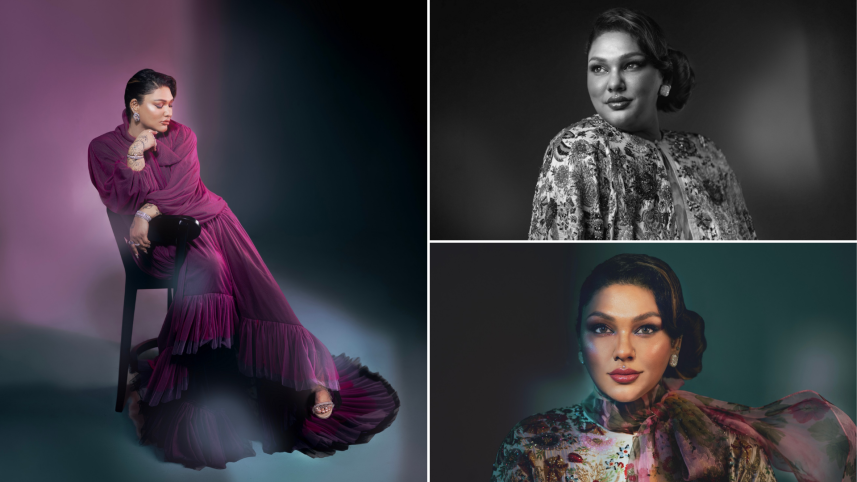
For Amani Latif, also known as Amzii Khan, home is not simply the place listed on a passport. Born in Canada and educated largely in Bangladesh, the Bangladeshi-Canadian singer, rapper, songwriter, and drum-and-bass producer spent years negotiating where she belonged.
Music eventually gave her an answer.

“My music became home for me,” she shares. “When somebody hears my sound or my song, I want them to feel like they belong. For those two or three minutes, I want them to have that sense of belonging.”
Canada formed an important part of her life, Amani says, but Bangladesh remains where her heart feels most settled. Her songs attempt to recreate that sense of grounding for listeners who may be carrying their own questions about identity.
Amani began rapping when she was around 15 or 16, at a time when hip-hop was easily misunderstood within conservative family and social settings. Rap was often associated with profanity and violence, rather than recognised as what she calls “rhythm and poetry” and a medium for speaking honestly.
The pressure initially made her retreat. She sometimes attended recording sessions without telling her family, finishing her takes quickly before returning home. Yet, she remained disciplined about her education, believing that keeping one part of her life stable would protect her freedom to pursue the other.
Her mother — fashion designer and entrepreneur Rina Latif — gradually became one of her strongest supporters. She bought her a piano and encouraged her to develop the musical ability she had shown since childhood.
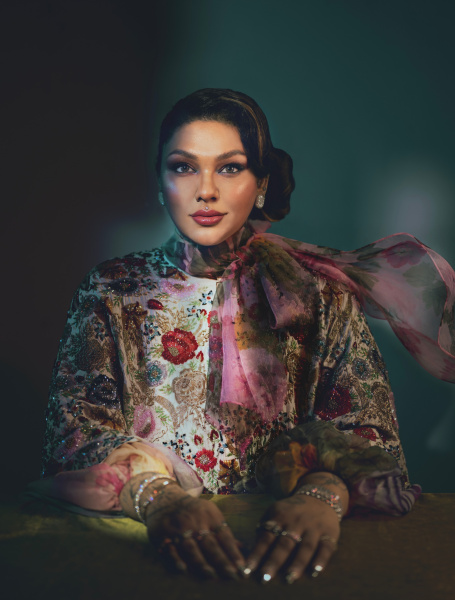
“She ran so that I could walk,” Amani recalls. “Without her, I couldn’t have done anything.”
That support helped her build an independent career without surrendering creative control.
For Amani, independence means that no label dictates her sound, image, or subject matter. But freedom also brings responsibility. “When you have too much freedom, you have to rein yourself in,” she elaborates. “You have to be very disciplined and very consistent.”
Amani does not describe music as her conventional career. She calls it her “astral realm,” a space where she can process emotions without approaching creativity as a commercial obligation. Her professional life includes work in renewable energy, behavioural intelligence, and the family fashion business, Rina Latif.
At the fashion house, the mother-daughter relationship takes a back seat to professional discipline. Latif works under her mother, manages responsibilities, and receives a salary. She helped build the brand’s e-commerce platform, directed its accompanying shoot, and took charge of its distinctive block-print section.
The arrangement has taught her three principles: “Discipline, consistency, and showing up.”
Fashion also connects Amani’s different identities. On her music covers and creative projects, she frequently wears Rina Latif designs.
“It feels like I have this invisible shield or a cloak,” she explains. “It’s like Ma is right there with me.”
Her personal style shifts between jewellery-heavy casualwear and traditional South Asian clothing. She resists maintaining a fixed aesthetic. What remains consistent is grooming, not conformity. She believes women are repeatedly told what beauty should look like, when confidence is more likely to emerge from feeling comfortable and cared for in one’s own body.
Amani has no interest in engineering songs for algorithms. She curates music for the individual listener who needs what she calls “a digital hug.” Her compositions begin with genuine experiences rather than market trends. “While people see colours, I can hear colours,” she explains. “While people see visuals, I feel them in my bones.”
Following the response to her Bengali song Dhoomketu Raani, she plans to release more work in Bangla while continuing to write in English and, occasionally, French. The multilingual direction reflects her Canadian birth and Bangladeshi centre of gravity.
“Every day I wake up and think, ‘I’m going to learn, I’m going to do better, and I’m going to make them proud,’” she says. For Amani Latif, belonging is therefore not a fixed location. It is something built repeatedly through sound, work, clothing, memory, and the courage to be heard.
 For all latest news, follow The Daily Star's Google News channel.
Photography: LenzCraft Production
In Frame: Amzii Khan
Wardrobe: Rina Latif
Jewelry: Personal / Plume Pieces
Makeup: Shohag
Hair: Sheuli
Comments