


How private universities are re-engineering the graduate
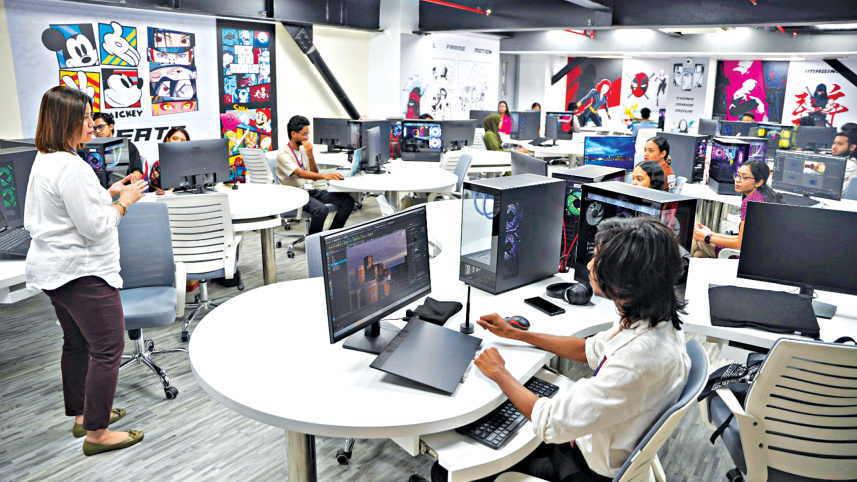
For decades, getting a seat at a public university in Bangladesh was considered the ultimate academic gold standard. However, the reality inside many of these historic institutions often tells a different story, one marked by endless session delays, insufficient laboratory facilities, and exhausting administrative hurdles just to receive a graduation certificate. For thousands of students, administrative negligence turns the dream of higher education into a test of bureaucratic endurance.
In contrast, a major change is happening inside the country’s leading private universities. Moving away from traditional, rigid ways of teaching, top-tier private institutions are using their large, modern campuses to give students a completely different experience. By combining good facilities with up-to-date courses, flexible classrooms, and clear accountability for teachers, these universities are changing what higher education looks like.

A Student-Friendly Campus Matched with a Future-Proof Syllabus
The structural shift begins with the physical environment. Walking into modern private campuses, the emphasis on utility and student well-being is immediately visible. Rather than treating facilities as an afterthought, these universities design their spaces with dedicated areas for collaborative learning, heavily equipped digital libraries, and advanced laboratory ecosystems that are constantly monitored by faculty members to ensure optimal performance.
A key differentiator in the private university model is the institutional insistence on practical application. The authorities systematically ensure that the vast majority of technical and scientific courses carry mandatory lab components. This structure ensures that students are not merely memorizing theories from outdated textbooks but are actively applying concepts under strict, hands-on guidance.
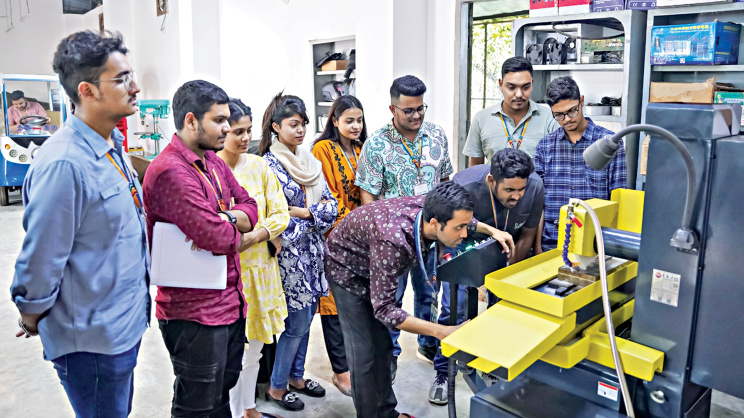
S.M Faysal, a Lecturer in the Department of Computer Science and Engineering (CSE) at Daffodil International University, points out this stark divide. Reflecting on his own academic journey and comparing it to his current teaching environment, he stated:
“As public university students, we were deprived of attending labs in important courses. But the scenario is opposite in private universities, where students have a mandatory project to perform in the lab.”
This commitment to practical learning is tightly coupled with a highly adaptive approach to curriculum design. Private universities are exceptionally agile when it comes to scrap-and-build cycles for their syllabi. Recognizing the rapid evolution of global industries, academic boards routinely introduce specialized courses tailored directly to current corporate and technological demands, saving students from the harsh post-graduation shock of adjusting to modern workplaces.
Highlighting this agility, S.M Faysal added that this year he is taking a UI and UX design (User Interface and User Experience) course, which is a completely new course designed specifically to meet immediate industry demands. By embedding these high-demand skills directly into the core modules, institutions ensure their graduates step into the job market with portfolios that matter.
Accountable Faculty and the Departure from Boring Lectures
Beyond modern labs and new textbooks, the close relationship between teachers and students plays a major part in this new way of learning. In many traditional systems, a strict hierarchy can make students feel too nervous to ask for help. Private universities have changed this by creating a system built on teacher accountability.
The main tool for this is the student evaluation process, which takes place every year. These evaluations let students give anonymous feedback on how well, how clearly, and how punctually their teachers teach. Because the university takes these reviews seriously, faculty members stay deeply focused on doing a good job in the classroom.
On top of that, these universities actively hire younger teachers who have recently graduated from good universities at home or abroad. This brings fresh, energetic teaching styles into the classrooms. These younger educators easily understand the pulse of the new generation, breaking down old barriers to make classes flexible, open, and encouraging.
Instead of just delivering long, boring lectures, teachers have the freedom to plan interesting and active lessons. Ishrat Jahan Promi, a former lecturer in Media Communication and Journalism Department at the Canadian university, explained this teaching style and shared how she connects classroom lessons with real-world jobs. She added:
“It’s my responsibility to make the classroom interesting for students and create responsibility to make them prepare for the future. Thus, we arranged a field visit to create a bridge between working place and academia. Our trip to visit Shilpakla academy to watch a documentary on liberation war narrative to the demands of peace journalism course. It’s much conventional to deliver a boring lecture and much beneficial if they watch the real experience of narrative from it, creates network with future office environment.”
By stepping outside the classroom walls to watch documentaries or go on field trips, students learn how to connect theories with real professional life.
Active Club Life Outside the Classroom
The re-engineering process does not stop when the final class bell rings. Private universities recognize that producing industry-ready professionals requires cultivating soft skills such as leadership, communication, project management, and teamwork, which are rarely developed through exams alone. Because of this, campus life outside of class is highly structured and well-supported.
To facilitate this, major private universities run comprehensive club networks, overseen by dedicated administrative teams. Unlike ad-hoc student groups that frequently dissolve due to lack of funding or structural support, these clubs operate with institutional backing, clear budgets, and faculty mentorship.
Mohammad Imran, a former student of BRAC University who is now studying for his Master’s degree in Electrical Engineering at Lamar University, remembered how helpful this system was during his undergraduate years. He shared that his university club was the BRAC University Film Club, where they used to work on making films. Talking about the support from the university, he said:
 For all latest news, follow The Daily Star's Google News channel.
 “They have a seperate team to manage all the clubs of the university so yeah authorities were very helpful mostly. They used to take on account of every teacher evaluation made by students so it was impactful. Course modules are being helpful for my studies overseas.”
As the global economy demands greater practical competence and psychological agility, the structured, accountable, and facility-rich environment of private universities ensures that Bangladeshi students are no longer left behind. They are being systematically re-engineered to lead, innovate, and excel on the global stage.
Afrina Sultana is a Master’s graduate from the University of Dhaka and a regular contributor to the commercial section of The Daily Star.
Comments