


Spain dethrone Argentina in style: Highlights and stats
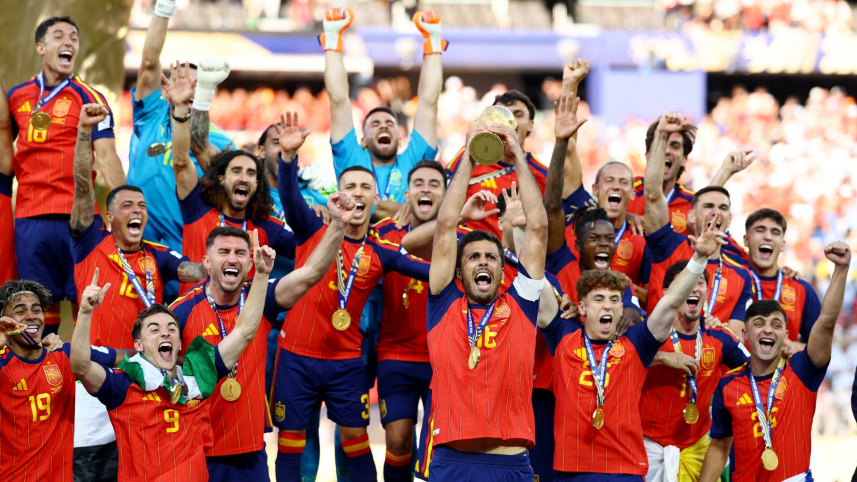
Spain produced a dominant display to beat Argentina 1-0 after extra time in the FIFA World Cup 2026 final and reclaim the title they last won in 2010 at the New York New Jersey Stadium on Monday.
After 90 minutes ended goalless despite Spain's overwhelming superiority, substitute Ferran Torres scored the decisive goal in the 106th minute to seal a deserved victory and crown Spain world champions once again.

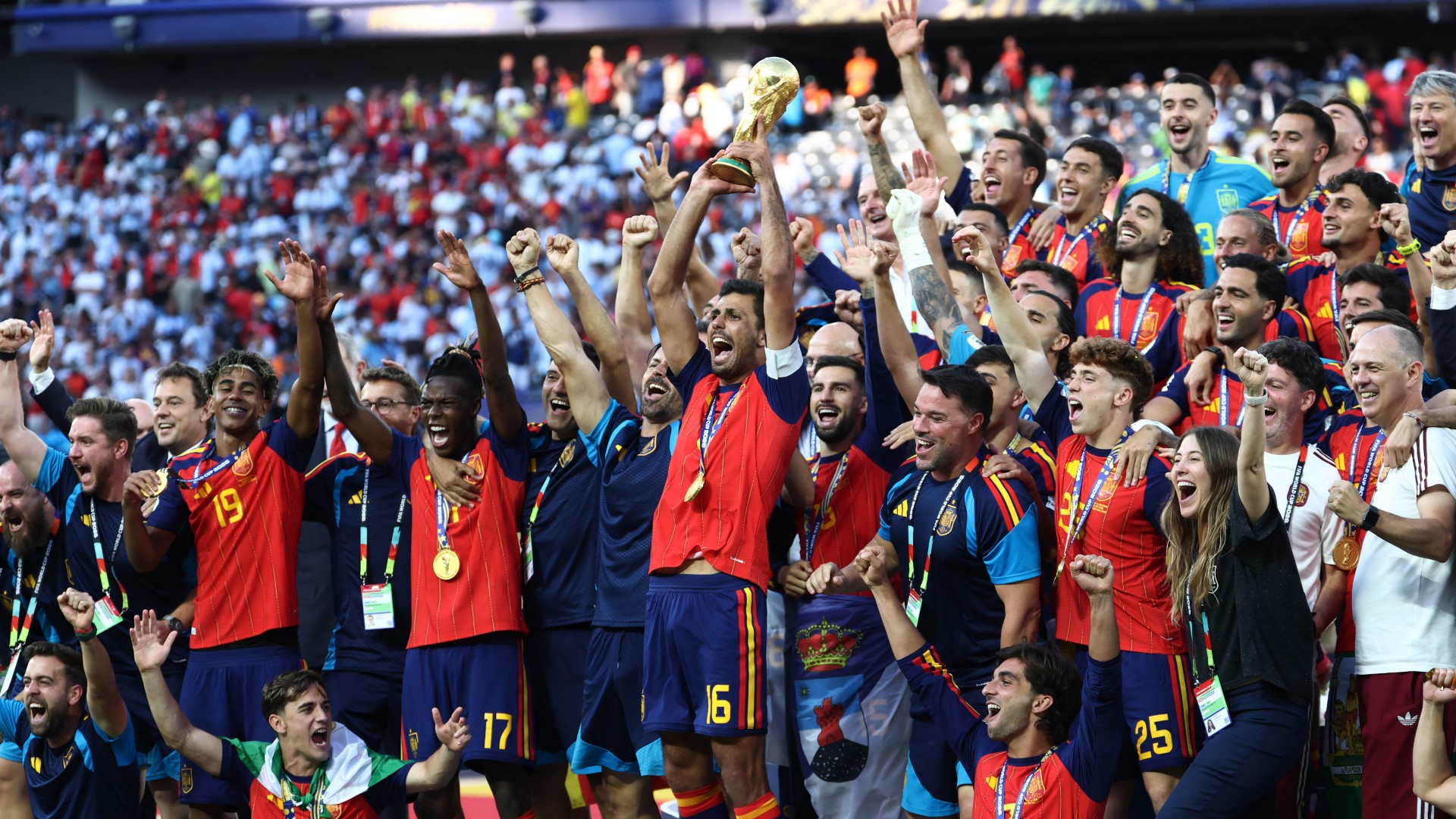
Here are the key highlights and statistics from what will be remembered as one of the most one-sided World Cup finals in history.
# Spain maintained their unbeaten record in the World Cup final. They previously played World Cup final once in 2010 which they won and now in 2026, they also won it by beating Argentina 1-0. On both occasions, they won the final in the extra time.
# Argentina join Germany to have the record of most FIFA World Cup final defeats, losing in the championship match four times. Germany earlier suffered defeats in 1966, 1982, 1986, and 2002 while Argentina lost finals in 1930, 1990, 2014 and 2026.
# Argentina are the first team in the last 60 years without a single shot in the first 90 minutes of a World Cup final.
# Argentina failed to attempt a shot on target in this game, it's the first time they failed to attempt a shot on target in a game in the FIFA World Cup since facing Germany in the 2014 World Cup final.
# Argentina attempted two shots in this game, their lowest total in a single match in the 2026 FIFA World Cup.
# Emiliano Martínez has made 11 saves, the first time a goalkeeper has made at least 10 saves in a match in the FIFA World Cup since Eloy Room for Curacao against Ecuador this World Cup (15 saves).
# Enzo Fernandez has received a red card - Argentina's first sending off in the 2026 FIFA World Cup , and their first since June 2006 against Germany.
# Spain have won their last 7 games in the FIFA World Cup, their longest winning streak in the competition (since at least 1965/1966).
# Lionel Messi at 39 years and 25 days became the oldest outfield player to ever play in a World Cup final. Sweden’s Gunnar Gren was 37 when he played against Brazil in the 1958 final. The overall record is still held by Italy goalkeeper Dino Zoff (1982) at the age of 40 years 133 days. Messi is 39.
# Paui Cubarsi (19) and Lamine Yamal became only the fourth and fifth teenager ever to appear in a World Cup final. The only teenagers to ever play in a World Cup final: Kylian Mbappe (19) in 2018, Pele (17) in 1958 and Giuseppe Bergomi in 1982. All five emerged champions as well.
# Unai Simon kept his seventh clean sheet of the tournament, the most by any goalkeeper in a single edition of the World Cup.
# Spain extended their unbeaten run in regulation time to 38 matches, with the streak stretching back to March 2024. Italy has won 37 matches in row between 2018 and 2021.
# Luis de la Fuente, who won Euro 2024, joins Helmut Schon and Vicente del Bosque to win both major tournaments over the course of their careers: Helmut Schon won the 1972 UEFA Euro and followed it by winning the 1974 FIFA World Cup with West Germany and Vicente del Bosque won the 2010 FIFA World Cup and the 2012 UEFA Euro consecutively with Spain.
# Luis de la Fuente became the first coach to win the World Cup, UEFA Nations League, and UEFA Euro. While he won the Nations League (2023) and Euro (2024) and now World Cup in 2026.
# Spain, who conceded just one goal, set a new record for the fewest goals conceded by a triumphant team. France, Italy and Spain let in two apiece en route to glory in 1998, 2006 and 2010, respectively.
# Lionel Messi became only the second player in football history to play in three World Cup finals. He reached this milestone by leading Argentina to the championship match of the 2026 FIFA World Cup. Messi joins Brazilian legend Cafu (1994, 1998, 2002) as the only men to achieve this feat. While Cafu was a substitute in one of his three finals, Messi uniquely started all of his, having reached the title match in 2014, 2022, and 2026.
 For all latest news, follow The Daily Star's Google News channel.
Comments