


Pharma industry’s next big leap

The year was 2013. The breakthrough Hepatitis C drug sofosbuvir entered the US market at about $1,000 per tablet, placing treatment beyond the reach of many patients.
Bangladesh, however, took advantage of the World Trade Organization’s TRIPS waiver for least-developed countries, allowing local manufacturers to produce generic versions of the patented medicine. The move sharply reduced prices and expanded access to treatment.

More than a decade later, pharmaceutical companies in Bangladesh say they are trying to replicate that model with a new generation of high-value medicines, including biologics, immunotherapies and treatments for rare diseases.
One recent example is cystic fibrosis treatment. Beximco Pharmaceuticals has reverse-engineered Vertex Pharmaceuticals’ Trikafta, marketed as Kaftrio in some countries, and launched a generic version in Bangladesh under the brand name Triko.
According to the company, the medicine costs about 96 percent less than the innovator product, making treatment significantly more affordable.
Bangladesh’s pharmaceutical industry now meets about 98 percent of domestic demand and exports medicines to around 166 countries, generating more than $200 million annually.
For decades, this industry built its reputation on affordable generics. But as the industry matures, local manufacturers are investing in biologics, immunotherapies and active pharmaceutical ingredient (API) production while increasingly targeting complex medicines that require advanced research, sophisticated manufacturing and stringent regulatory standards.
Companies say the shift will help expand access to advanced therapies and strengthen Bangladesh’s competitiveness in global pharmaceutical markets.
EXPANDING INTO COMPLEX MEDICINES
Eskayef Pharmaceuticals is the first and only Bangladeshi drugmaker to receive US FDA approval for its injectable manufacturing facilities and the country’s first to export complex injectable medicines to the United States.
“The export of our high-tech injectable products to the United States, building on earlier US FDA approval for oral solid products, is a proud milestone for Eskayef and Bangladesh,” said Simeen Rahman, group CEO of Transcom Ltd and managing director and CEO of Eskayef Pharmaceuticals.
“It reflects our commitment to meeting the highest global standards while providing patients worldwide with safe, effective and affordable medicines.”
Eskayef has partnered with Denmark-based Novo Nordisk since 2012, initially manufacturing human insulin vials before expanding the collaboration through a technology transfer agreement to produce modern Penfill® insulin. Rahman said every insulin cartridge manufactured by Eskayef meets Novo Nordisk’s global quality standards, while the company has supplied innovator insulin brands to Novo Nordisk’s global supply chain since 2023.
During the Covid-19 pandemic, Eskayef launched generic versions of remdesivir, molnupiravir and the nirmatrelvir-ritonavir combination, supplying the medicines in Bangladesh and 49 other countries. Rahman said the company prioritised public health over commercial considerations during the crisis.
The company also manufactures chemotherapy, targeted therapies, immunotherapies, monoclonal antibodies and other speciality medicines, and is expanding into biologics, including pembrolizumab, the active ingredient in Merck’s immunotherapy Keytruda®, for domestic and international markets. It is also the first Bangladeshi pharmaceutical company to secure both EU GMP and Brazil ANVISA accreditations for its oncology manufacturing facility.
“By making advanced oncology and biologic therapies more accessible and affordable, we aspire to give more patients hope and help build a future where quality healthcare is within everyone’s reach,” Rahman said.
ACCESS OVER PROFITS
Locally produced biologics, including pembrolizumab, are already being sold at a fraction of the price of imported alternatives, according to industry executives.
For Beximco Pharmaceuticals, the decision to develop a generic cystic fibrosis therapy was driven by patient access rather than commercial opportunity, said Chief Operating Officer Rabbur Reza.
“When a medicine exists but cannot reach the people who need it, its purpose remains unfulfilled,” he said.
 For all latest news, follow The Daily Star's Google News channel.
 The initiative began in 2022 after patient advocacy group Right to Breathe, representing families from Ecuador, South Africa, Brazil, India and the UK, asked Beximco whether it could develop a more affordable version of the treatment.
After nearly three years of research and laboratory work, the company developed its version under an internal project called “Equibreath” and completed comparisons with the innovator product. The first small-scale handover took place in June.
According to Reza, the treatment costs about $12,750 per patient annually, compared with the US list price of roughly $370,000. He said the company absorbed the research and development costs and currently sells the medicine close to cost.
“This is not charity,” he said. “It is about proving that patients have a right to access life-saving medicine.”
Mentioning that Bangladesh’s least-developed country status has enabled local manufacturers to produce patented medicines under the World Trade Organization’s TRIPS flexibilities, Reza cautioned that after the country’s graduation from LDC status, producing similar medicines without licensing or royalty agreements is expected to become more difficult.
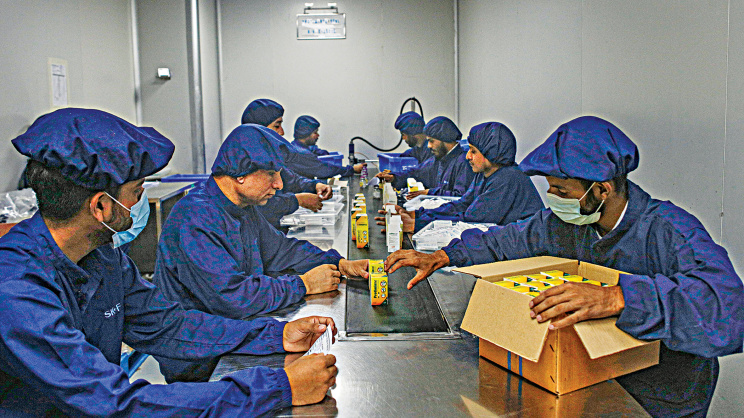
MAKING CANCER TREATMENT MORE AFFORDABLE
Local manufacturing has lowered the cost of several cancer medicines in Bangladesh, according to Beacon Pharmaceuticals.
Mahmudul Haque Pallab, the company’s director of sales and marketing, said Beacon entered the oncology segment in 2006, back when imported cancer medicines dominated the market and were unaffordable for many patients.
One of the company’s earliest locally produced chemotherapy drugs reduced the cost per dose from about Tk 7,500 to Tk 700, he said. Beacon has since expanded into targeted therapies and immunotherapies, including osimertinib for certain lung cancers.
Pallab said New Zealand amended its policy in 2023-24 to allow imports of Beacon’s generic osimertinib, describing it as a milestone for Bangladesh’s pharmaceutical industry.
According to him, immunotherapy treatments that can cost several million taka abroad are now available locally for around Tk 150,000 per cycle. Bangladesh’s annual cancer treatment market is worth about Tk 5,000 crore, with medicines accounting for roughly Tk 1,000 crore, he said, adding that local production has helped reduce treatment costs.
RESEARCH TO DRIVE THE NEXT PHASE
Bangladesh’s pharmaceutical industry’s next phase of growth will depend on sustained investment in research and development, according to Incepta Pharmaceuticals Chairman Abdul Muktadir.
He said the success of generic Hepatitis C medicines demonstrated the country’s manufacturing capabilities and that the same approach is now being applied to biologics, vaccines and other complex therapies. Incepta has spent more than a decade developing vaccines, biologic medicines and active pharmaceutical ingredients (APIs), with some projects taking up to 10 years to reach commercial production.
Producing APIs locally instead of importing them could further reduce manufacturing costs and improve the industry’s competitiveness, he said.
“Every product has its own research story,” Muktadir said. “People often think research only means discovering a new molecule. Developing these technologies and manufacturing capabilities also requires years of scientific work.”
He credited reforms following the 1982 Drug Ordinance with supporting the industry’s growth but argued that greater regulatory intervention in medicine pricing over the past decade has weakened incentives to invest in advanced products.
Several claims made by company officials, including those related to pricing, investment and the impact of government policies, could not be independently verified.
Square Pharmaceuticals also emphasised the role of long-term investment in research and manufacturing. Chief Financial Officer Zahangir Alam said the company now produces more than 1,800 dosage forms covering over 700 generic molecules, adding that locally manufactured medicines such as semaglutide and imatinib mesylate cost significantly less than imported branded alternatives.
COMPETING BEYOND GENERICS
Bangladesh’s pharmaceutical industry’s next phase will depend on expanding research, active pharmaceutical ingredient (API) production and the capacity to manufacture increasingly complex medicines, according to industry leaders.
Renata PLC Managing Director and CEO Kaiser Kabir said manufacturing excellence and cost competitiveness have underpinned the industry’s growth since the early 2000s, but competing globally now requires stronger research, clinical and regulatory capabilities.
He said Renata has invested heavily over the past decade, becoming the first company to launch 2.5mg hydrocortisone in the UK and European Union, Rivaroxaban capsules and generic Cabergoline 0.5mg in Australia, and generic Amantadine 100mg in four Nordic countries.
The company has also developed a novel central nervous system dosage form now under regulatory review in the UK and EU, and completed clinical trials for a new paediatric and geriatric formulation for leukaemia treatment. Renata also manufactures Palbociclib tablets for breast cancer and has registered 250 medicines in 70 countries, including 60 highly regulated markets.
“The road to becoming a global company is difficult, risky and expensive. But Bangladesh’s greatest strength is its young talent,” Kabir said.
Photos: Rashed Shumon



Comments