


Anti-discrimination act a must to secure rights of marginalised communities
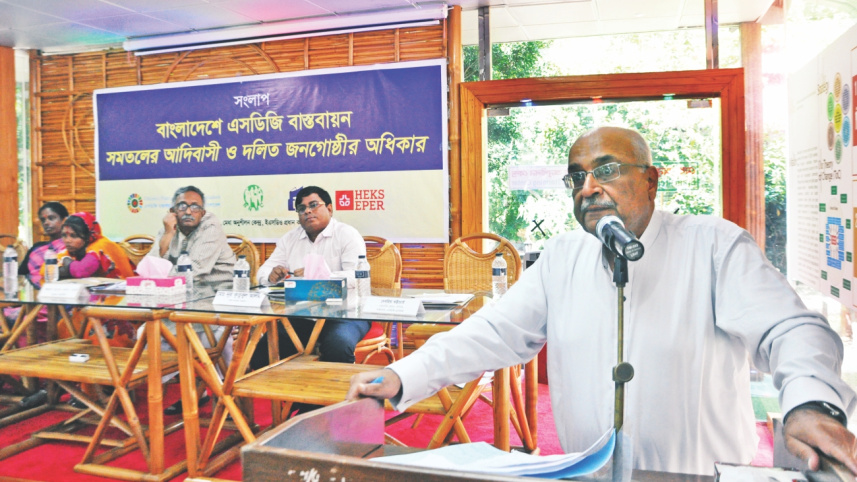
It is the high time for the government to pass an ‘Anti-Discrimination Act’ to ensure the right-based development of the plainland indigenous, Dalit and other marginalised communities, analysts said on Tuesday.
They said it is often found that these communities are not properly incorporated in various national censuses and such systematic discriminations deter the inclusion of their development priorities in the national policy frameworks.

The observations came at a dialogue titled “Rights of plain land indigenous people and Dalit in the context of the SDGs,” at the Medha Onushilon Kendra in Thakurgaon.
The event was organised jointly by HEKS/EPER, Eco Social Development Organization (ESDO), Network of Non-Mainstreamed Marginalised Communities (NNMC) and Citizen’s Platform for SDGs, Bangladesh.
The dialogue focused on the plights and neglected areas of marginalised groups’ lives and livelihood, particularly in light of SDGs, its commitment for inclusivity and perspectives of various national policies and plans.
Fazle Hossain Badsha, a lawmaker and chair of the parliamentary caucus on indigenous and minority affairs, said the draft ‘Bangladesh Indigenous Peoples’ Rights Act’ was submitted to the parliament in 2014.
This law could be a critical tool in bringing the desired change in improving the livelihoods of the indigenous and marginalised communities and securing their rights, Badsha said.
Debapriya Bhattacharya, convenor of the Citizen’s Platform, mentioned that the undocumented representation marginalised communities in various national censuses is affecting their development opportunities, as they are being deprived of adequate budgetary allocations and other amenities.
“An anti-discrimination act has become a necessity now to protect rights and social security of these people,” said Bhattacharya, who is also a distinguished fellow of the Centre for Policy Dialogue.
Md Nur Kutubul Alam, additional deputy commissioner of Thakurgaon, said the government is very attentive to the challenges of the marginalised communities, so that they are not left behind from the national development process.
Md Shahid Uz Zaman, founder executive director of ESDO and chairperson of NNMC, presided over the dialogue.
The event was also participated by government officials, development practitioners, politicians, academia, journalists and representatives from plainland indigenous and Dalit communities of Thakurgaon.
 For all latest news, follow The Daily Star's Google News channel.
Comments