


Smart campus, bigger ambitions
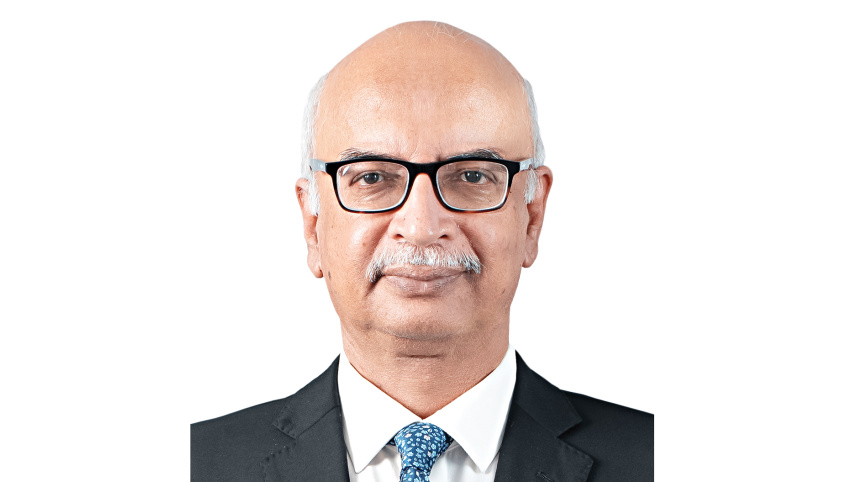
Professor M. Tamim, PhD
Vice Chancellor
Independent University, Bangladesh (IUB)

We provide comprehensive support for students with disabilities. For visually impaired students, we provide scribes during examinations. Students with ADHD or other special needs also receive individual assistance whenever necessary.
As universities increasingly adapt to the demands of the digital age, higher education institutions are investing in smart technologies, research and industry-focused learning to prepare graduates for an evolving workforce. Professor M. Tamim, PhD, Vice Chancellor of Independent University, Bangladesh (IUB), speaks with The Daily Star about the university’s digital transformation, research ecosystem, student life and efforts to equip graduates with future-ready skills.
The Daily Star (TDS): How is IUB integrating smart technology into teaching and campus life?
Prof. Dr M. Tamim (MT): The 21st century is driven by connectivity, which is reflected in our campus. We have digital classrooms, facilities for online learning and smart technology for student entry and exit. IUB is also the first university in Bangladesh to deploy Wi-Fi 7, rolled out almost a year ago, providing the latest internet technology. Our library has been extensively digitised, with around 300,000 physical and digital resources, including journal and e-book subscriptions, accessible from anywhere in the world. We are also automating our university management system with PwC, bringing payroll, HR, admission and registration fully online.
TDS: How does IUB encourage research and innovation among students?
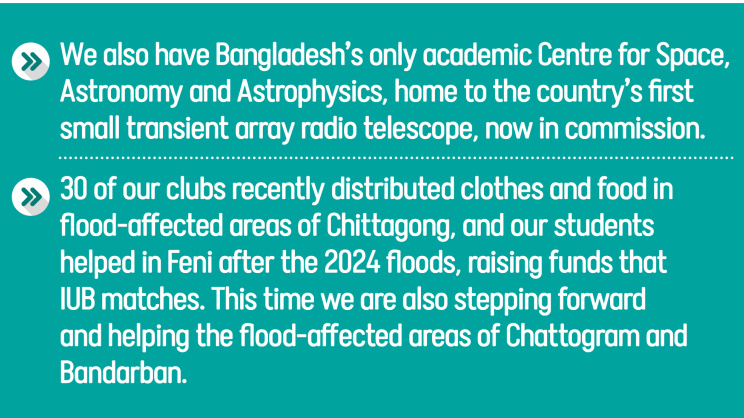
MT: Research is a major priority. Through IUB 360, we support both innovation and entrepreneurship. Our Innovation to Impact programme, developed with a Portuguese international expert, helps transform completed research into products with social value, while our Incubation programme nurtures new ideas into startups. We also have the Centre for Astronomy, Space Science, and Astrophysics (CASSA) which is Bangladesh’s only academic centre for astronomy research. We also run research centres in green technologies, photonic simulation, health policy, and climate change and development. Undergraduate students are encouraged to conduct research through our AURA grant programme, which provides seed funding across all disciplines.
TDS: Beyond academics, what opportunities does IUB offer students?
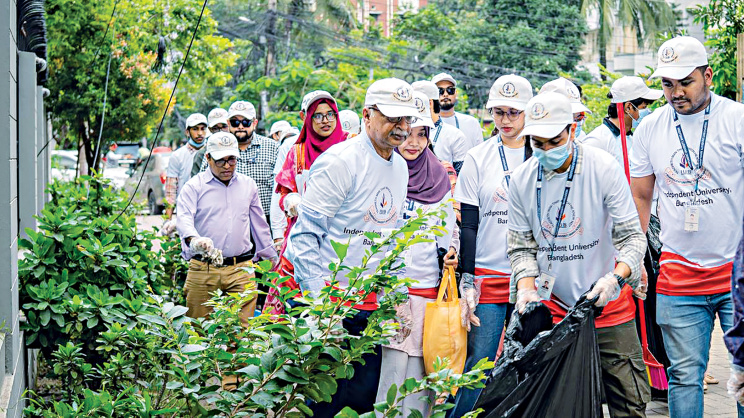
MT: We believe university life should be holistic. Students have access to sports facilities including a swimming pool, squash court, indoor sports arena and our own football field, which we once had to rent before acquiring our own land. We also have around 50 student clubs, 30 of them fully active, covering debate, dance, music, drama, environmental awareness and computing. Community engagement is equally important. 30 of our clubs recently distributed clothes and food in flood-affected areas of Chittagong, and our students helped in Feni after the 2024 floods, raising funds that IUB matches. This time we are are also stepping forward and helping the flood affected areas of Chattogram and Bandarban. Students also join neighbourhood cleanups and our Live-in-Field Experience (LFE) programme, spending two weeks in rural Bangladesh to understand local communities and develop empathy.
TDS: How does IUB ensure an inclusive learning environment for students with disabilities?
MT: Accessibility is an important part of our campus design. We have ramps in most buildings wherever possible and provide additional support depending on individual needs. For visually impaired students, we arrange scribes during examinations. We also support students with ADHD and other learning needs, including one who topped our entrance exam despite severe ADHD and now tops his class with help getting to and from lectures. Whatever support is required, whether mobility assistance, hearing aids or other accessibility measures, we strive to provide it so every student has an equal opportunity to succeed.
TDS: Sustainability is becoming an important aspect of university campuses worldwide. What initiatives has IUB undertaken in this regard?
MT: We are working towards making IUB a single-use plastic-free campus. Disposable plastic cups have been replaced with filtered drinking water dispensers, and university offices have stopped using bottled water. We also organise tree plantation programmes, including one recently led by our Rover Scouts, and promote environmental awareness among students. In addition, we are commissioning a small-scale biogas project in our kitchen to encourage recycling and renewable energy practices. Our objective is not only to reduce our environmental footprint but also to instil responsible habits among students.
TDS: How is IUB preparing graduates for the future job market?
MT: We provide communication training, interview preparation and mentorship through our Career and Placement Centre, which keeps in touch with alumni and brings back successful graduates and industry experts for seminars. We also carry out industry-academic mapping, where departments visit various industries and incorporate current tools and practices into our curriculum. Artificial intelligence and digital literacy are increasingly integrated across disciplines because these skills are becoming essential in every profession. Our goal is to produce graduates who are adaptable and industry-ready.
TDS: IUB was among the first universities in Bangladesh to introduce the Global Studies and Governance programme. Why is this discipline becoming increasingly relevant?
MT: The world today is more interconnected than ever before, and developments in global politics, including dictatorial shifts elsewhere, increasingly shape the future of individual countries. Understanding international relations, governance, democracy and economic development has therefore become essential. We introduced the Global Studies and Governance programme because we foresaw this growing influence of globalisation early on. Today, many universities are beginning to offer similar programmes, but IUB was one of the pioneers, and we remain a forerunner in that sense.
Interview Conducted by Farhan Musfique
 For all latest news, follow The Daily Star's Google News channel.
Comments