


Future facilities, expanding horizons
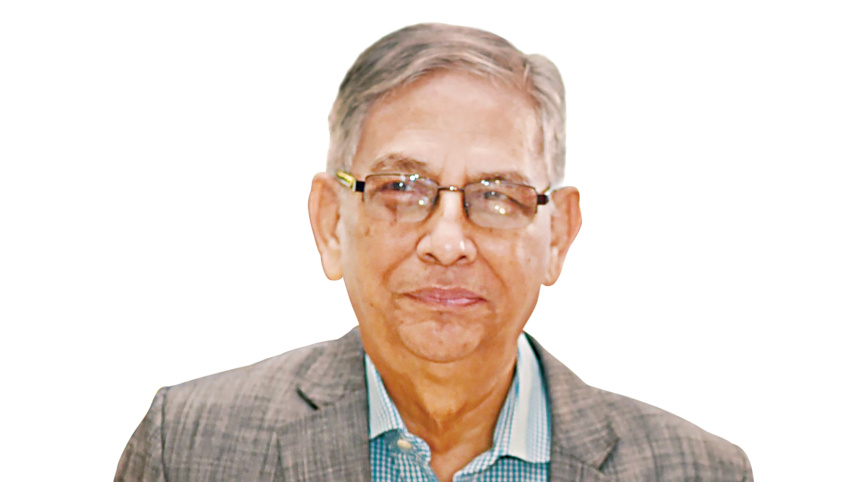
Professor Dr Mohammed Farashuddin
Chairperson, Board of Trustees and
Founding Vice Chancellor, East West University

Our philosophy is to cause social progress through top-tier education at a reasonable cost. We prioritise excellent libraries and laboratories because, for us, the budget for knowledge has no limits; the sky is the limit.
East West University (EWU) stands as a pre-eminent beacon of academic excellence in Bangladesh, dedicated to providing world-class tertiary education at the very affordable cost. Founded by Professor Dr Mohammed Farashuddin, a distinguished economist and former Governor of Bangladesh Bank, the institution emphasizes social progress and transparency. Dr Farashuddin’s visionary leadership continues to shape EWU’s commitment to molding responsible, ethical citizens and future-ready professionals for the diverse global stage.
The Daily Star (TDS): What was the core philosophy behind developing your permanent campus, and how does its physical architecture reflect your university’s long-term academic vision?
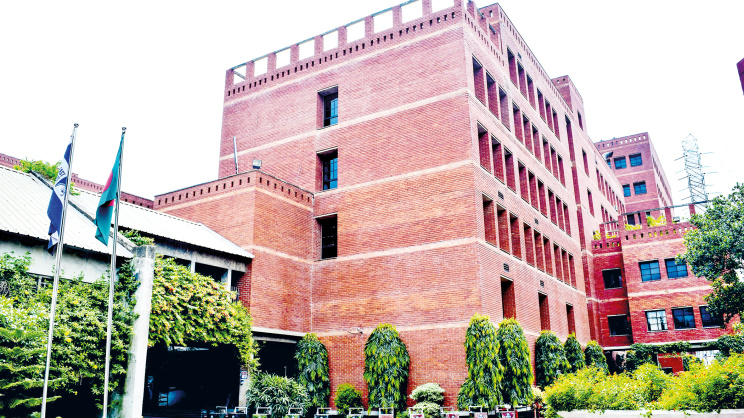
Prof. Dr Mohammed Farashuddin (MF): The core philosophy is social progress. We aim to provide top-tier tertiary education to students from diverse backgrounds, including those from rural, lower-middle-class families, at a very reasonable cost. Our architecture reflects this by fostering a functioning environment with truly excellent libraries and laboratories, maintaining a favorable 1:26 faculty-student ratio. The green, colorful campus design balances the rigors of serious education and academic excellence with visual comfort, promoting an atmosphere conducive to deep learning and overall personal growth.
TDS: How have your classrooms, labs, and libraries evolved to incorporate smart technologies and modern learning practices for 21st-century education?
MF: Our classrooms are equipped with audio-visual facilities and air-conditioning, supported by backup solar energy to ensure uninterrupted learning across the campus. We adopt a nuanced approach, encouraging technology-integrated education while ensuring social science students develop critical thinking rather than simple memorization. The library, led by highly qualified professionals, receives an unlimited budget to provide extensive physical and virtual resources. This ensures students have access to global knowledge without the financial burden of purchasing expensive textbooks individually.
TDS: What specific facilities have been established on campus to nurture student innovation and entrepreneurship?
MF: To nurture student innovation, we established an important Enterprise Center and a Center for Research and Training. We prioritize knowledge that makes students employable or self-employed entrepreneurs. While we currently facilitate various apprenticeships, we are actively advocating for a national “co-op” system where students alternate academic semesters with industrial placements. This ensures their theoretical knowledge is rigorously tested in practical situations, allowing students to verify their academic learning against real-world industrial challenges and innovations.
TDS: How does the physical layout and design of your campus facilitate closer collaboration with industries to bridge the gap between academia and the professional world?
MF: We bridge the academia-industry gap through advisory committees involving major corporate houses and industrial leaders. By revising curricula based on direct employer feedback, we address the “literate unemployment” crisis. Our focus is on transforming “bookish” graduates into practical professionals, reducing the national reliance on foreign experts. This collaborative physical and corporate academic layout ensures our graduates are prepared for the specific, evolving demands of the Bangladesh corporate sector, particularly in marketing, accounting, and finance.
TDS: A university experience extends far beyond academics. What kind of spaces have been designed to foster an active campus community?
MF: Our campus features nationally recognized badminton and basketball facilities. However, we are currently expanding to a massive 40-bigha permanent site in Aftabnagar, which will house modern gymnasiums, swimming pools, and extensive outdoor sports complexes. Currently, 22 diverse clubs—ranging from Economics to Agriculture—foster a vibrant community. These clubs organize frequent study tours to landmarks like the Muktijuddho Museum and various blue economy sites, ensuring that student life extends far beyond the classroom into engaging, healthy sports.
TDS: How does your campus infrastructure prioritise student mental health, physical well-being, and overall inclusivity ?
MF: Student well-being is paramount. We established a Social Psychology Center staffed by two full-time psychologists providing strictly confidential counseling. Faculty members are encouraged to identify students facing mental health challenges or drug-related pressures. Our rapid response team and inclusive management style ensure a stable environment; notably, the university remained peaceful during the July uprising because we prioritize looking after our children. This infrastructure ensures that every student feels safe, supported, included within the university community at all times.
TDS: What key sustainable practices, green spaces, and eco-friendly design elements have been integrated into your permanent campus to promote environmental responsibility?
MF: EWU operates as a 100% non-profit entity, reinvesting all operating surpluses into university development. Our sustainable approach includes transparent recruitment and solar energy integration. The campus design prioritizes greenery and cleanliness promoting environmental responsibility. Furthermore, I advocate for a “village semester” where students live with rural communities. This helps them understand economic mapping and environmental protection, fostering a sense of national responsibility and ensuring our permanent campus serves as a definitive role model for ecological sustainability, green practices, and future climate-resilient architecture.
TDS: How does studying in a modern, well-equipped campus environment directly influence a graduate’s career readiness and competitive edge in the job market?
MF: Our modern facilities directly impact employability; an ADB report ranked our CSE graduates second only to BUET. With a 77% employment rate, our graduates thrive in top-tier corporate roles. We provide Career Counseling, host job fairs, and invite global firms like Unilever for on-campus recruitment. These resources, combined with scholarship schemes and the unique Graduate Assistantship program, give our students a distinct competitive edge, allowing them to gain professional experience while completing their undergraduate studies.
Interview conducted by Adrin Sarwar
 For all latest news, follow The Daily Star's Google News channel.
Comments