


Remittance growth beats doomsayers
Forex reserve stands at $7.42b
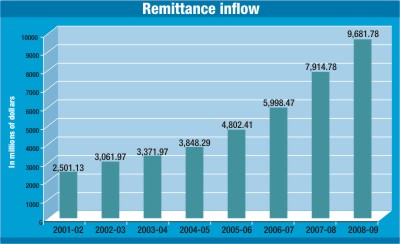
Remittance recorded a 22.32 percent growth last fiscal year compared to FY2007-08 despite downbeat projections by several donor agencies amid the ongoing global recession. However remittance figures stood at $10 billion in fiscal 2008-09, taking the foreign currency reserve to $7.42 billion yesterday. Usually remittance growth in Bangladesh hovers around 12-16 percent in a fiscal year, although the growth hit a record high at 32 percent in fiscal 2007-08. In fiscal 2008-09 remittance inflow was $9,681.78 million, while it was $7,914.78 million in fiscal 2007-08. Remittance inflow was the highest in the last 12 months in June -- $ 911.61 million -- registering a growth of 17.34 percent. Remittance was also striking in May -- $895.3 million, with a growth rate of 22.6 percent. Up to September last fiscal year, the monthly growth rate stood at 34-53 percent. Since then, remittance inflow showed downward trends and the monthly growth rate fell to 9 percent in April. According to the Bangladesh Economic Review, more than 55 lakh Bangladeshis were working abroad till April 2009. In the first five months of 2009, the number of expatriate workers fell to 2,12,332. The number was 3,77,894 in the January-May period last year. Even though the number of workers fell, a positive impact was seen in the overall remittance flow as the export of skilled manpower increased. The recession also prompted workers to remit more. The Economic Review said export of skilled manpower increased by 70 percent to 2,81,444 in 2008 from 1,65,344 in 2007. The export of semi-skilled manpower decreased by 27 percent, while low-skilled manpower export dropped by 8 percent in 2008. A recent World Bank analysis said: "Remittance has been a key driver of economic growth and poverty reduction in Bangladesh. The impact of the global financial crisis on remittance is of critical importance." In the past, global remittance flow has been stable, or even counter-cyclical, during an economic downturn in the recipient country, and resilient in the face of a slowdown in source countries, the WB said. "But the current crisis is global and the World Bank's Global Economic Outlook projects a 4.2 percent to 7.3 percent decline in remittance flows to South Asia in 2009. If exchange rates remain unfavourable, global remittance flows are likely to experience an even greater decline," it said. In Bangladesh, there is strong evidence that remittance is positively correlated with oil prices. The sharp and sustained decline in oil prices combined with the impact of the financial crisis in the banking sector is adversely affecting the construction boom in the Middle East. The WB warned that reduced growth in demand for migrant workers in the oil-rich Arab countries could eventually hurt remittance income for Bangladesh. "Together with immigration controls in destination countries, this could worsen remittance prospects," the WB said. However the Economic Review said the government would adopt a 6-point strategy to overcome the negative effect on remittance. The strategy includes formation of an expatriate bank to give loans to the expatriates at low interest rates, setting up of labour wings in Bangladesh missions abroad and steps to train workers in the country to help build skilled manpower. The government would revive 550 training institutes throughout the county in this regard and reorganise the National Skill Development Council. It will also form an inter-ministerial executive committee to monitor the activities of the council, officials said. If necessary, technology and trainers would be imported and recruited from abroad, they said.

 For all latest news, follow The Daily Star's Google News channel.
Comments