


‘algo-rhythmic-bodies’: Exhibition explores life under the algorithmic gaze
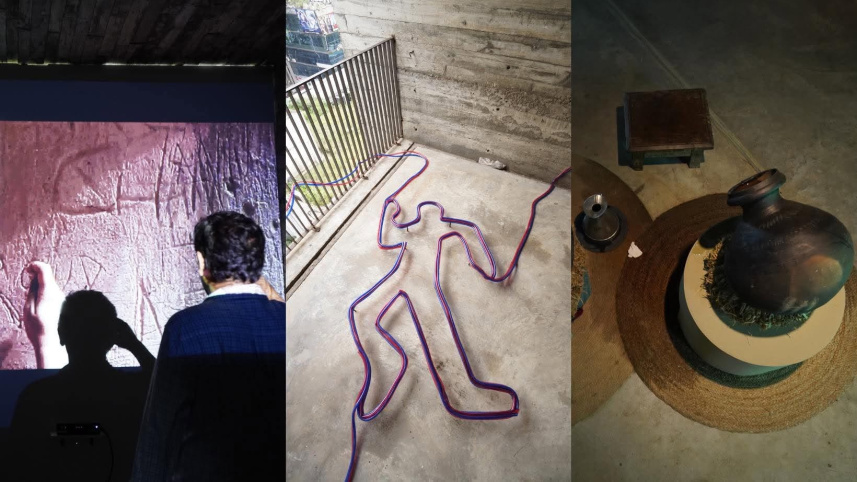
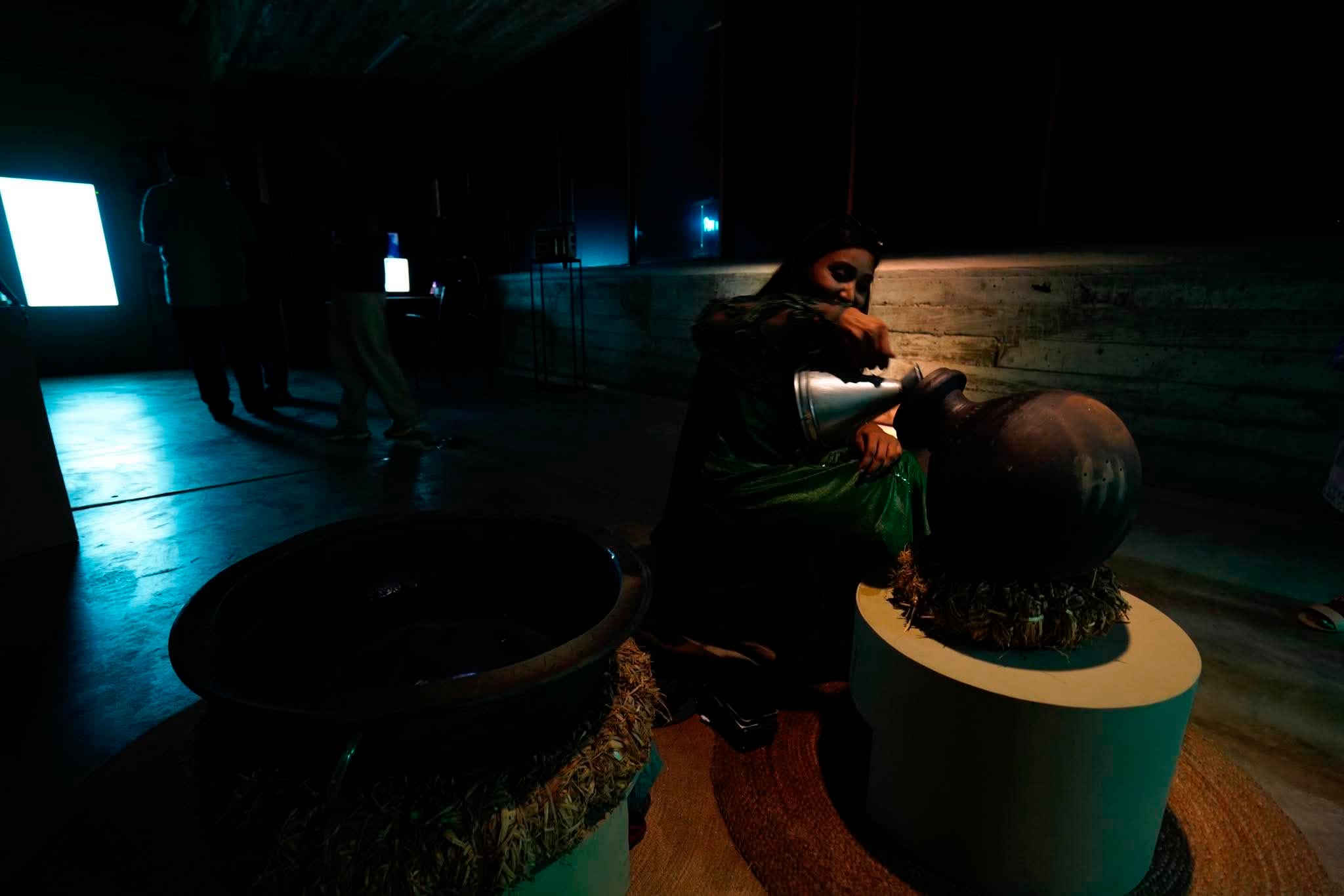
Resting gently on two rings of woven straw, side by side, a dark earthen kolshi (pot) and a wide metal vessel brimming with water lay tilted against the floor, catching the eyes of those who entered. The kolshi remained quiet until a visitor paused before it, only to reveal a voice echoing from within the dark hollow, pleading for water, but only after being spoken to first. Only then would it respond, offering fragments of its own story in exchange for the resources drawn from the earth, and the labour and cost hidden behind something as simple as a sip of water. Walid Saddam’s installation, “You Are Like Me Too”, drew a line between the physical resources we extract and consume without a second thought, and the digital ones retrieved just as invisibly by the systems we rely on every day.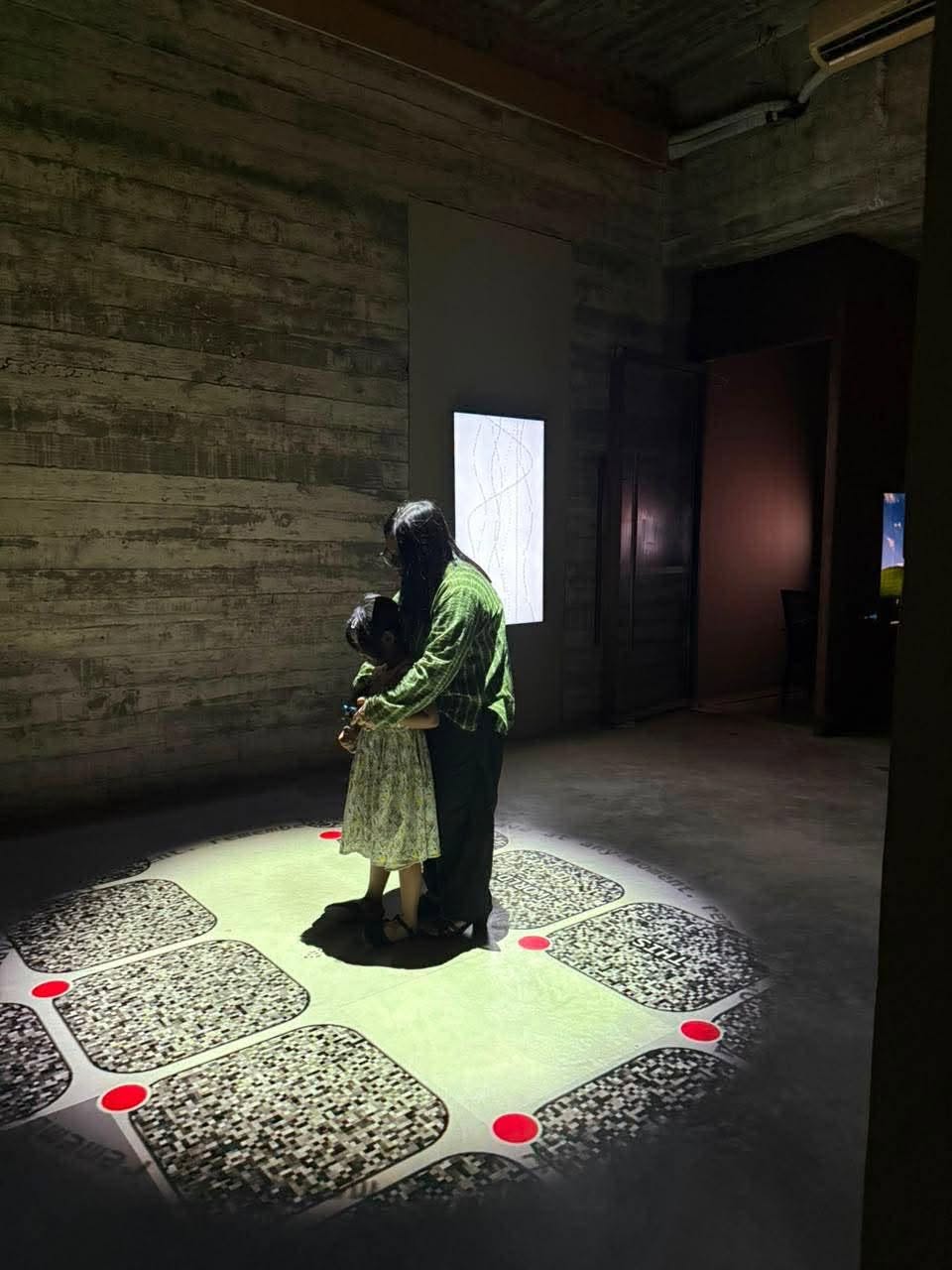
Pulling away from the kolshi’s plea, the rest of the room slowly came into focus: a VR headset resting nearby, a screen caught mid-loop, a visitor gazing with curiosity.
At “algo-rhythmic-bodies”, a transdisciplinary exhibition that ran at Bengal Shilpalay, from July 10 to July 25, it posed one simple, yet quite immediate question: what happens to the human self over time when it is constantly measured, mirrored, and reproduced by algorithms?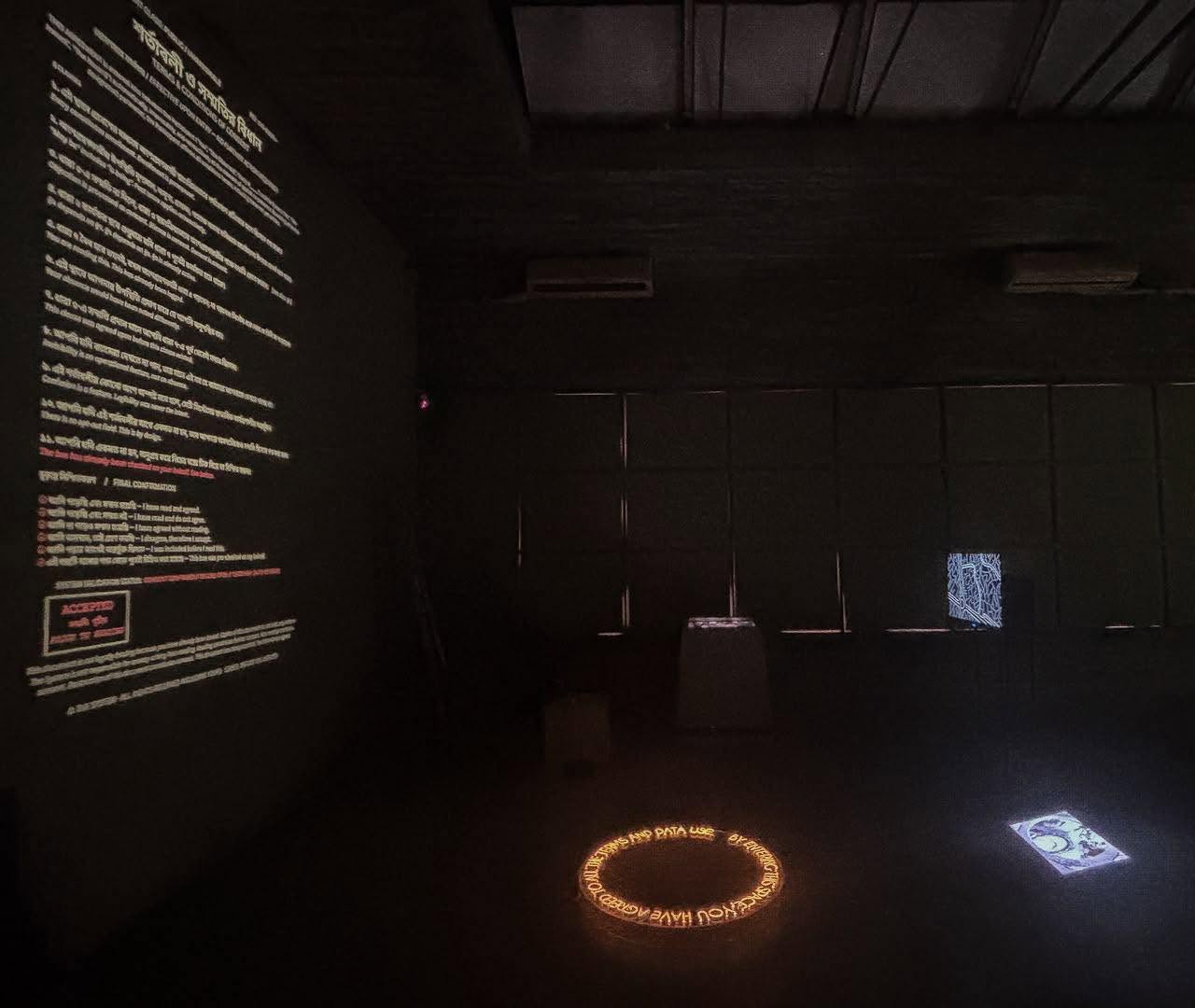
Curated by Sharmillie Rahman and Zihan Karim, the show moved through themes of surveillance, visibility, agency, and the environmental cost of the digital infrastructures running beneath modern life. The exhibition assembled a deliberately mixed group of eight practitioners — visual artists, a photographer, a sound artist, and an architect, each approaching the same question from a different angle.
“It began with a persistent thought that our lives are increasingly reduced to fleeting vignettes across reels and feeds, where representations can start to replace physical experience. That led to a question of what we become when computerised or digital logic increasingly governs our lives. The exhibition grew from that inquiry, exploring how algorithmic systems shape our identities, relationships, and bodies,” explained Sharmillie Rahman.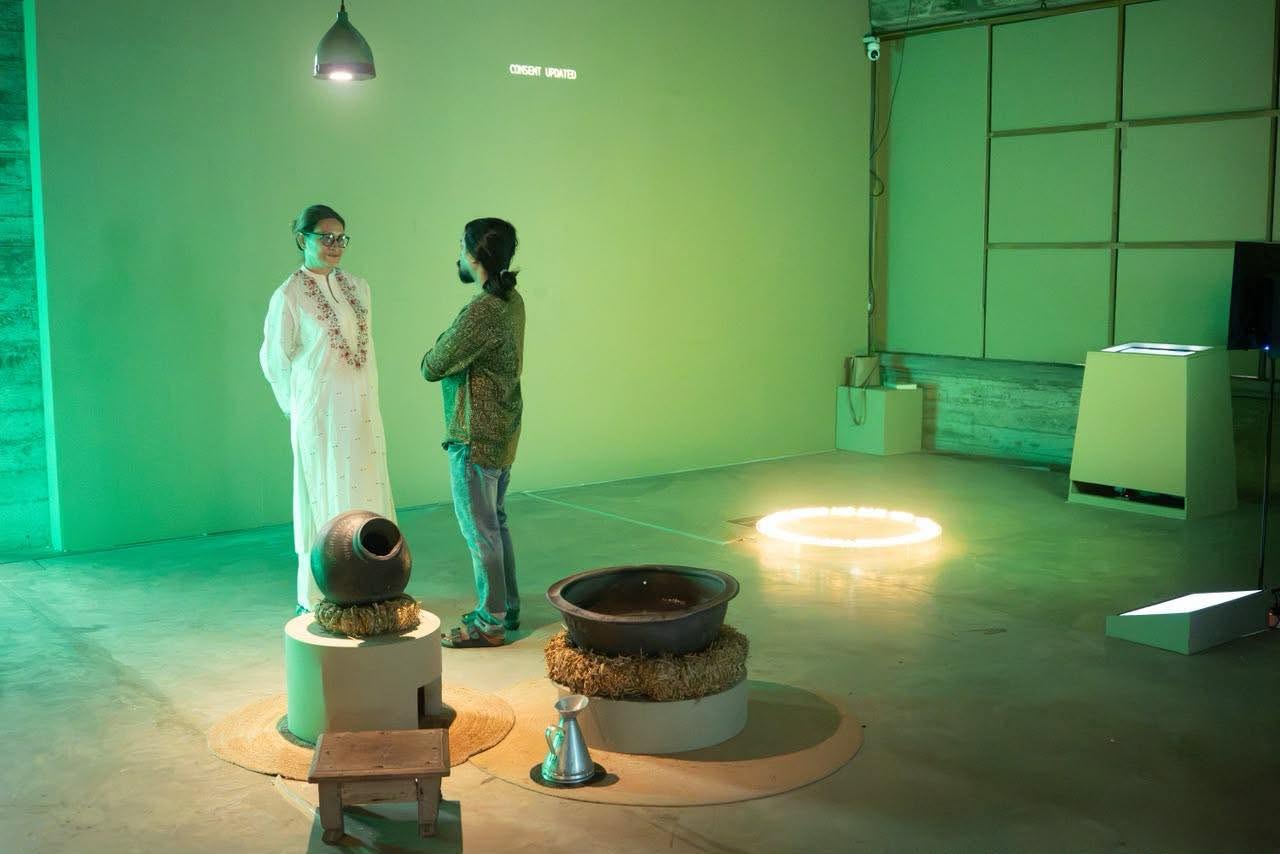
A day before the event ended, on July 24, an hour-long live electronic set spilled out onto the terrace, featuring Humayan Islam, Ananda Ahsan (aka Taraga), and Shoummo Saha, drawing many exhibition visitors into staying for longer.
The show was never designed as a single, linear story, but as a network of interlocking perspectives. Its eight projects approached our everyday entanglements with algorithmic systems from different conceptual and sensory angles, inviting visitors to move through the space non-linearly and draw their own connections and conclusions.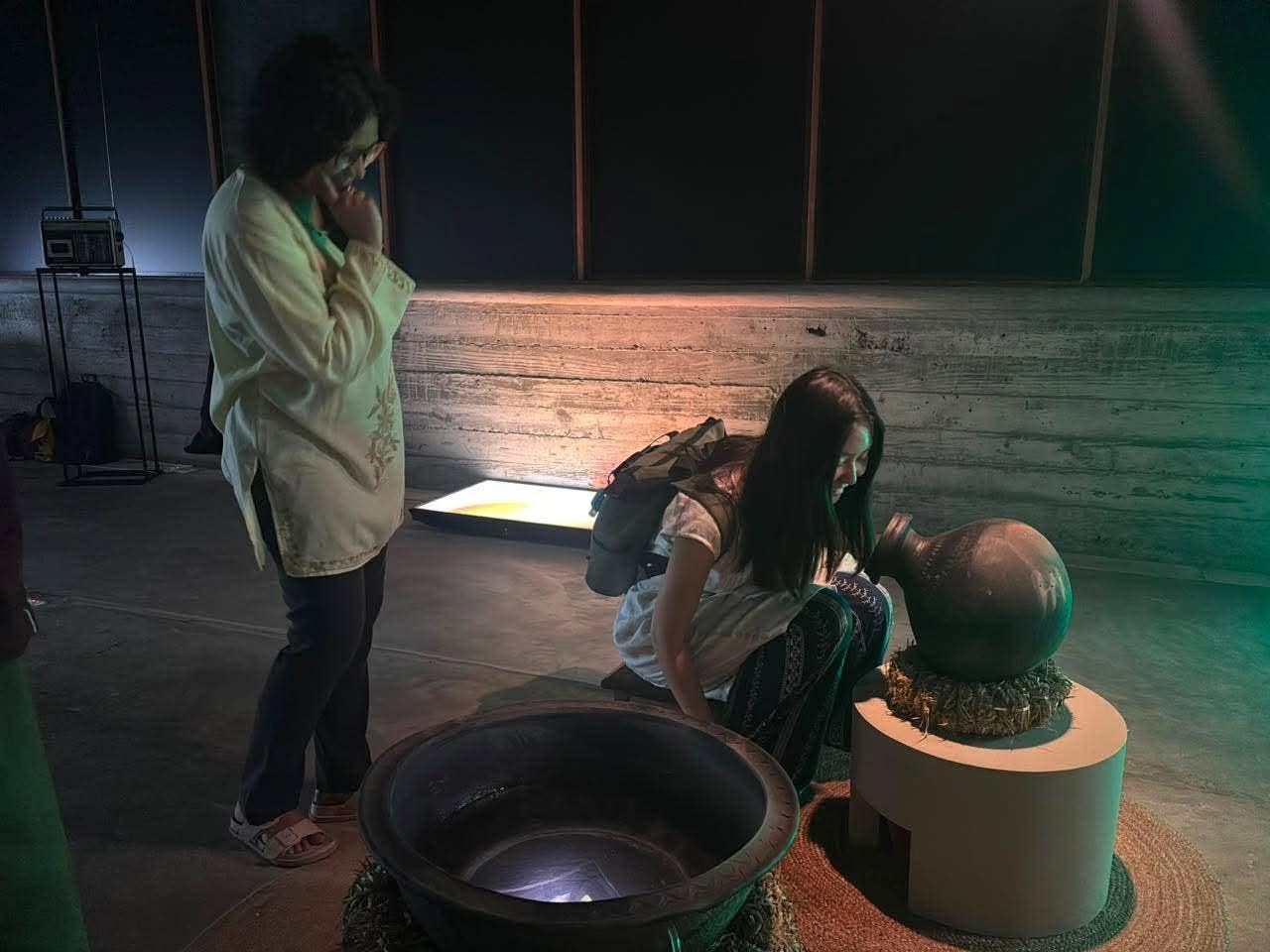
Shoummo Saha’s work, “Timbre of Life: Beyond Surveillance”, was a creation of electronic, data-driven sound, letting human movement or physical sound interrupt and disrupt algorithmic compositions. Behind it, a video projection shifted between intimate human moments, a woman gently touching her face and hair, and the traditional, organic rhythms of hands beating a festive drum, echoing the mudras of Kathak. Across the screen, a recurring vertical scanning bar moved relentlessly, mimicking the cold, persistent gaze of algorithmic tracking and surveillance. As it did, the electronic ambient score began to fracture, asserting that human presence refused to be flattened or predicted by code.
The idea grew from a personal reflection on how deeply we engage with virtual worlds. “A world that is not real, but with which we interact all the time,” said Shoummo. “The video simply shows the human gestures of the ancient, and the response by the audience is a reflection of the present.”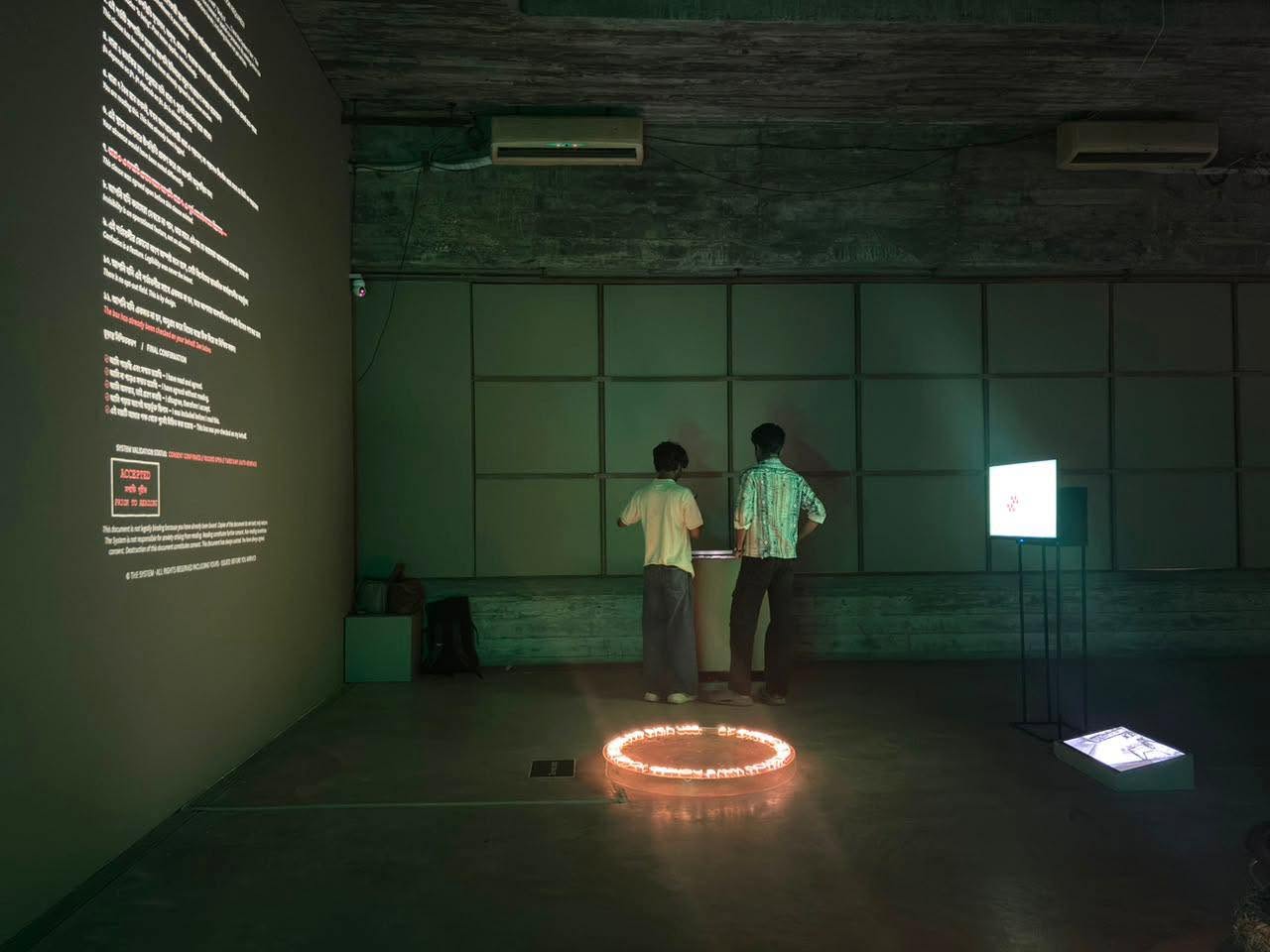
When asked how his work connects to the larger theme of the exhibition, Shoummo said, “It deals with life in complex digital realities. I just tried to portray how our gestures reach out and interact with this phenomenon we have created for ourselves.”
On the other hand, Naznin Ahmed treated digital surveillance as the new normal in her interactive installation, “Already Agreed”, a space combining live CCTV footage, recorded surveillance, a synchronised animation of how systems read our “data bodies”, a self-updating Terms & Conditions projection, and an LED sign reading “By entering this space, you have agreed to all the terms and data use.”
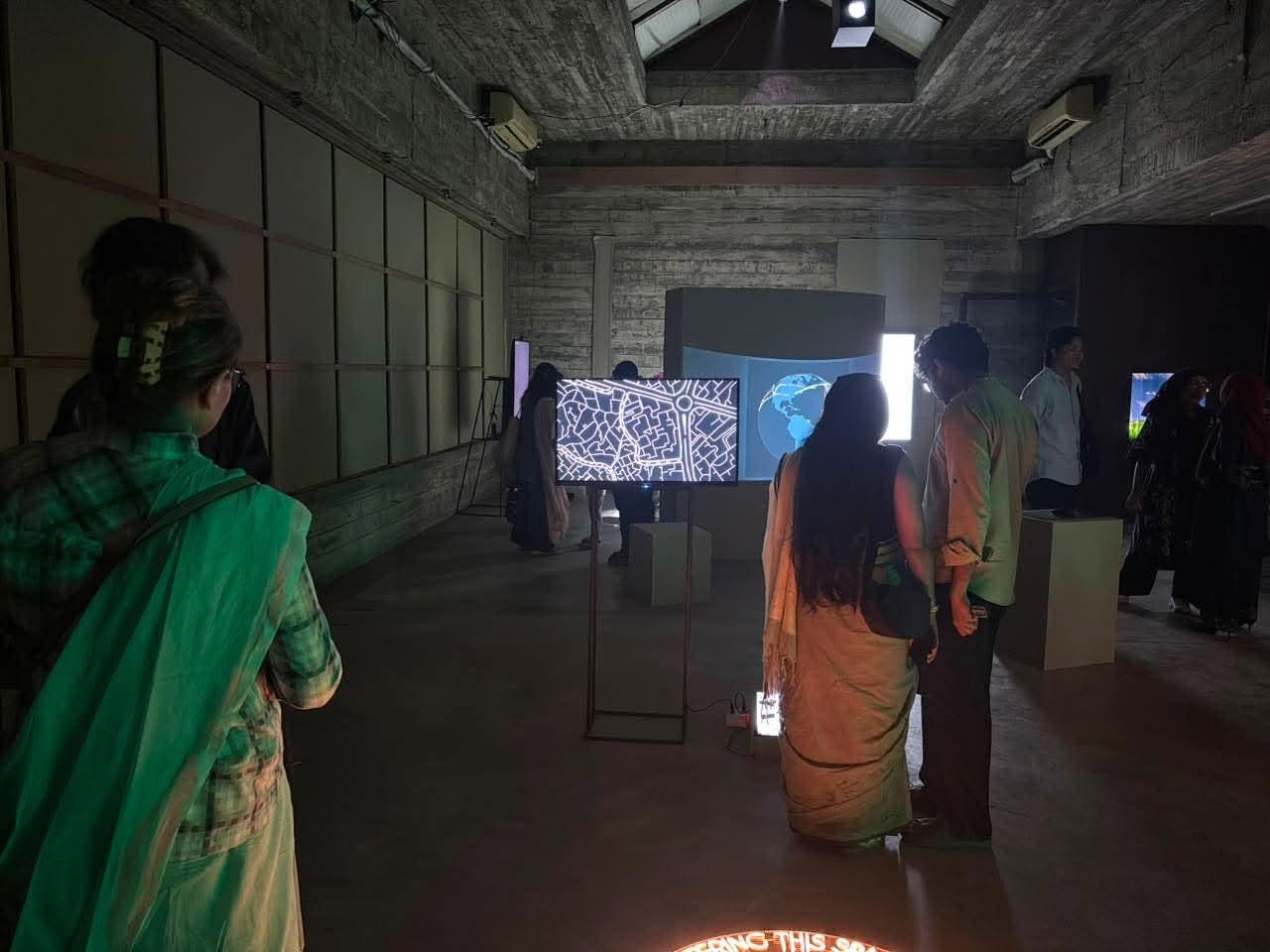
“The installation translates how digital surveillance actually works into physical space. Visitors who walk in become participants without realising it; their presence alone is treated as consent to be watched, tracked, and recorded,” said Naznin. This grew from noticing how casually we accept such agreements, alongside a broader curiosity about how digital systems sort and categorise us into targeted ads and assumptions, sometimes correctly, sometimes not.
“I designed the Terms & Conditions to resemble the confusing agreements we encounter online, constantly shifting, registering visitors’ consent before they’ve even finished reading, mirroring how digital consent works today: we agree because participation demands it, not because we understand it. I tried pulling the experience of “agreeing” out of the phone screen and into a physical room for people to feel, not just grasp intellectually, what it means to be agreed to on behalf of, rather than to agree.”

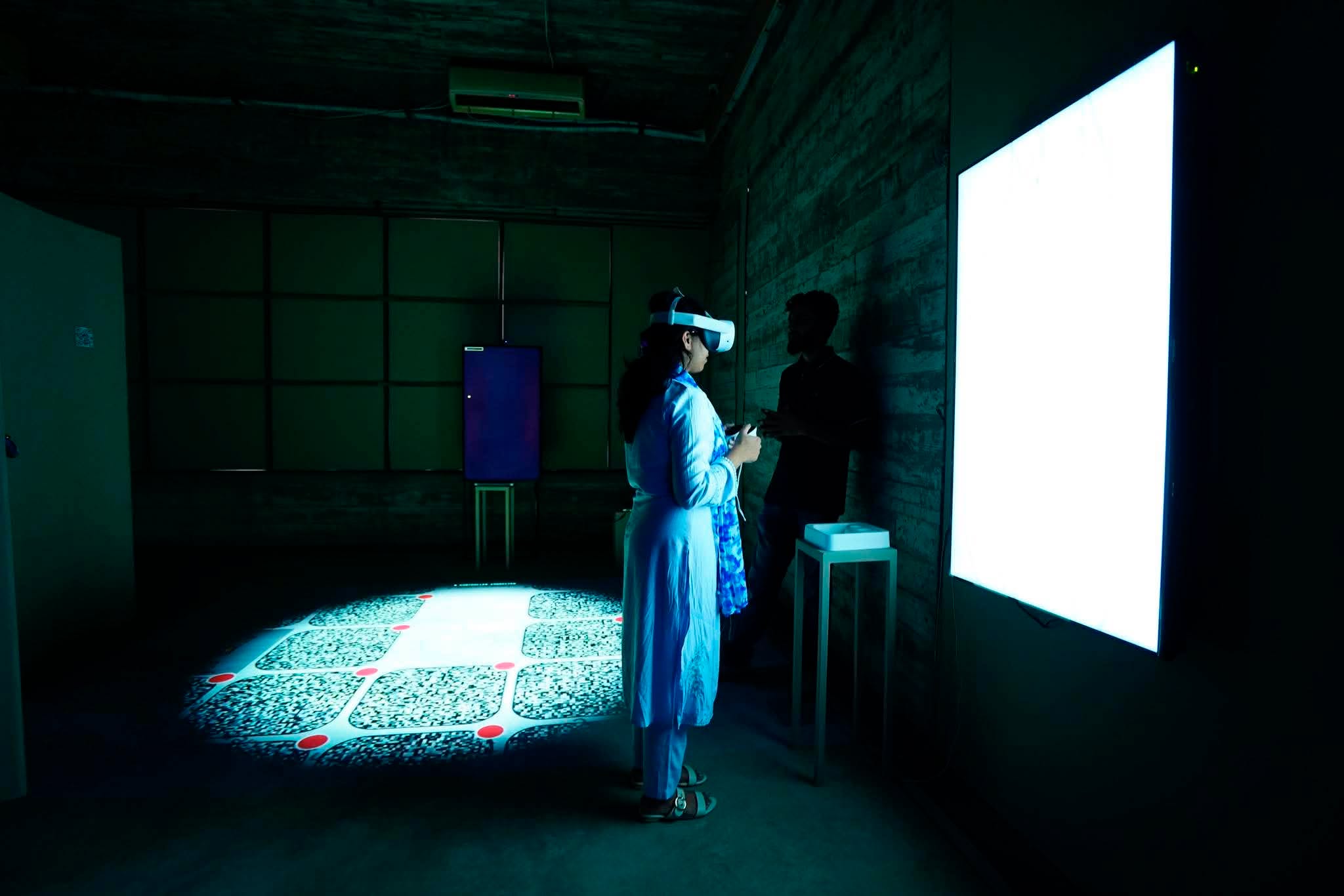
Fahim Hasin Sahan, meanwhile, turned towards what gets lost in its wake, drawing on his interest in gaming, building immersive spaces, VR, and sensor-based installations that invited people to pause and look inward instead of staying constantly plugged in. His work, “Ode to the Wonders Lost”, mourned the wonders of the analogue age, now fading in a digital one, brought to life through a mix of augmented reality, virtual reality, an interactive piece, and a video installation.
“When we were little, we asked our elders for answers. Now, with all knowledge just a Google search away, that connection is lost; where books once sparked imagination, pre-packaged digital media leaves little room for genuine amazement,” said Sahan. “Having witnessed this transition firsthand, my work recaptures seven lost analogue qualities of Wonder, Lost, Sages, Pause, Longing, Faith, and Self, evoking a sweet longing and a sense of faith in an age driven by immediate gratification and constant fact-checking.”
This connected to the exhibition’s larger theme through what algorithms take from us while capturing our attention. “Algorithms are designed so efficiently to gain our attention that we lose the ability to pause and ponder, even when we want to.”
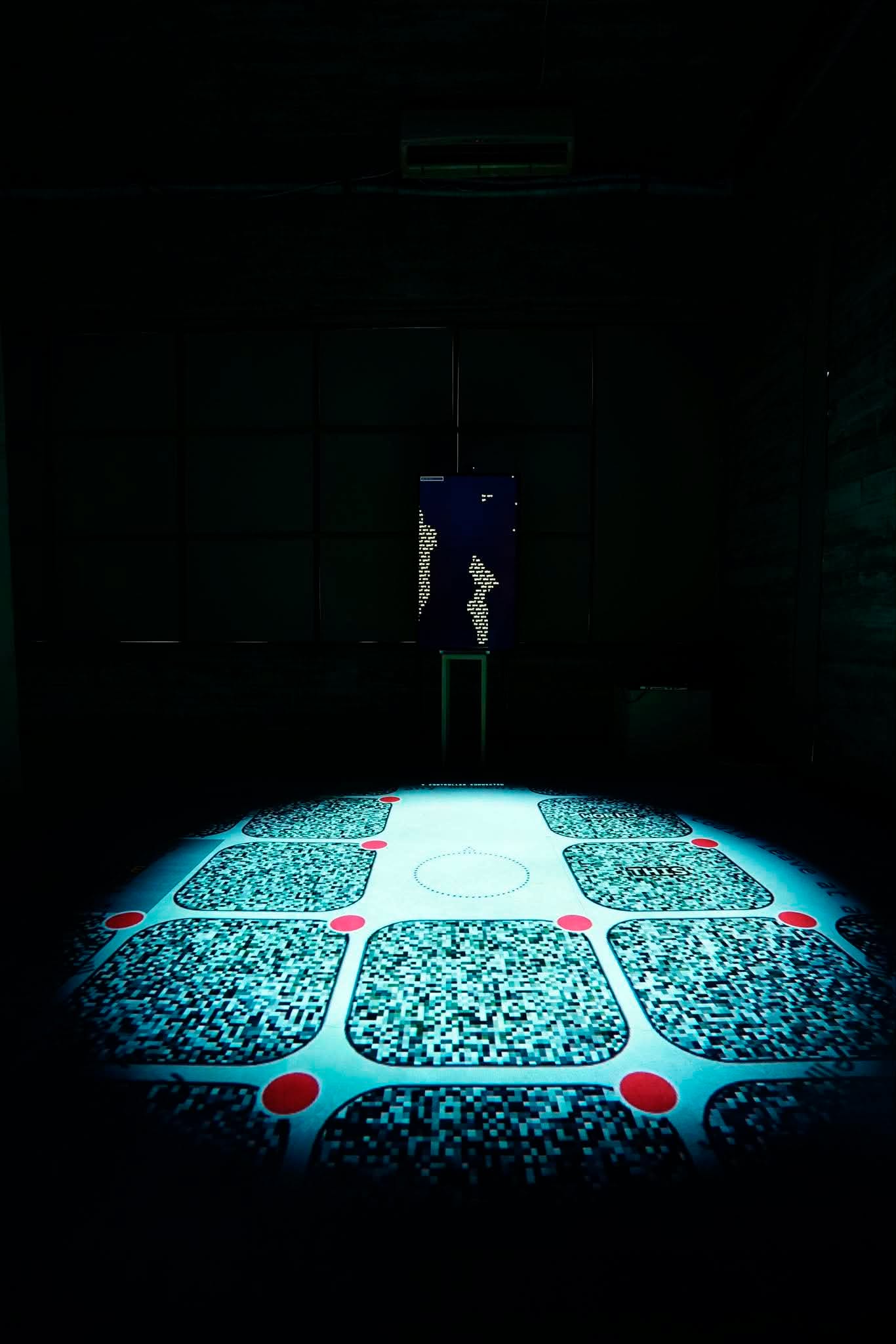
Joyantee Raina’s work pushed the question back in time, tracing the invisible systems that have regulated our bodies and behaviour for decades. Her project, “Chronic”, unfolded in three sculptural elements, including a 3D globe. Together, these elements traced two cables across time — the Old Red Line, a telegraph cable laid during British colonial rule, and its contemporary counterpart, the subsea fibre optic cable, which runs underwater along strikingly similar routes. Across all three elements, the work explained how the same authorities that once controlled colonial-era communication continued to control our data today, using the same infrastructure and the same routes.
Her work’s connection to the larger theme lay in continuity: how the control of data, first exercised through colonial infrastructure, had since expanded into digital life and algorithmic systems that now shape identity, mobility, sexual expression, reproduction, and body image.
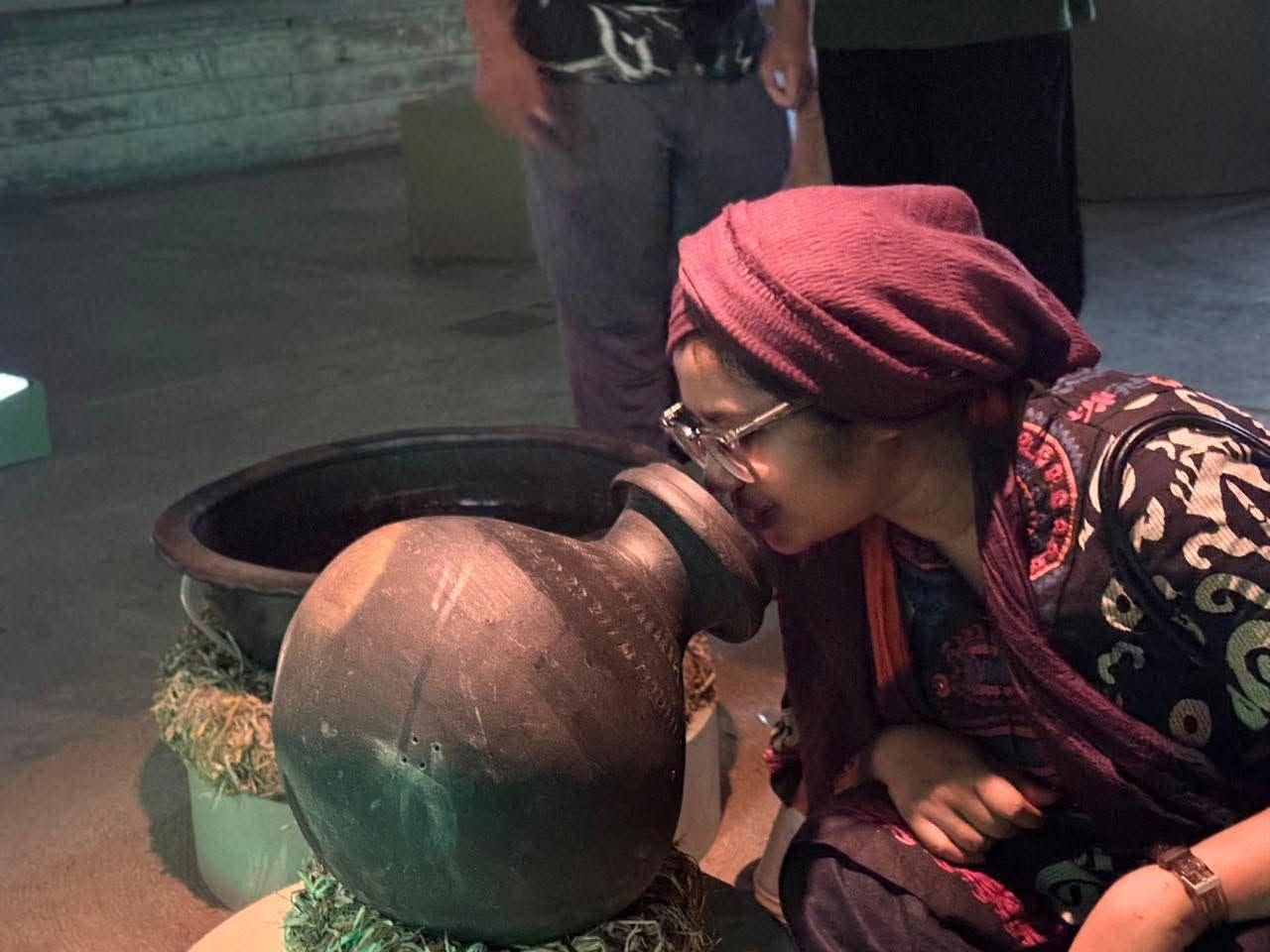
Rounding out the collection, Razib Datta traced the evolving, techno-social relationship between humans and machines; how intimacy and dependence have slowly woven themselves into our everyday use of technology. Dipti Datta, working from a research-driven practice, turned to questions of belonging, examining how the line between our private and public selves continues to blur in digitally mediated life. Sadia Marium, meanwhile, used dark humour to expose how our data is stored, sold, and reshaped into curated versions of reality by powerful, largely invisible infrastructures. And, Walid Saddam brought the conversation back down to earth, pointing to the grave environmental cost hidden behind every AI-generated image or text.
“algo-rhythmic-bodies” was supported by WOW Bangladesh in partnership with the British Council, as part of a UK-Bangladesh grant programme backing artist-led commissions across Bangladesh on themes ranging from gender equality to climate justice and technology. The project secured funding under a creative technology category built for extended reality, AI, and immersive work, bringing Bangladeshi artists into conversation with global questions about technology and the body.
If there’s one thing every artist in “algo-rhythmic-bodies” seemed to agree on, it’s that there’s no walking away untouched. One artist hoped visitors would leave wondering whether consent has become less a choice than a reflex. Another wasn’t so sure escape was even possible; she just wanted people to ask who is controlling them, and who benefits. A third artist saw it as a question of memory more than control: since change is the only constant, what we take for granted today may not last.
“Rather than offering answers, this show aims to build critical awareness and prompt audiences to rethink how agency, embodiment, and community might be reclaimed within an algorithmically governed world; these questions feel especially urgent in Bangladesh, where local experience is so often subsumed under Western-centric technological infrastructures,” said Sharmillie.
None of the eight works offered a way out. But together, they left visitors with the one thing algorithms rarely allow: a pause, and a question worth sitting with.
 For all latest news, follow The Daily Star's Google News channel.
Comments