


Myanmar denies Rohingya guilt
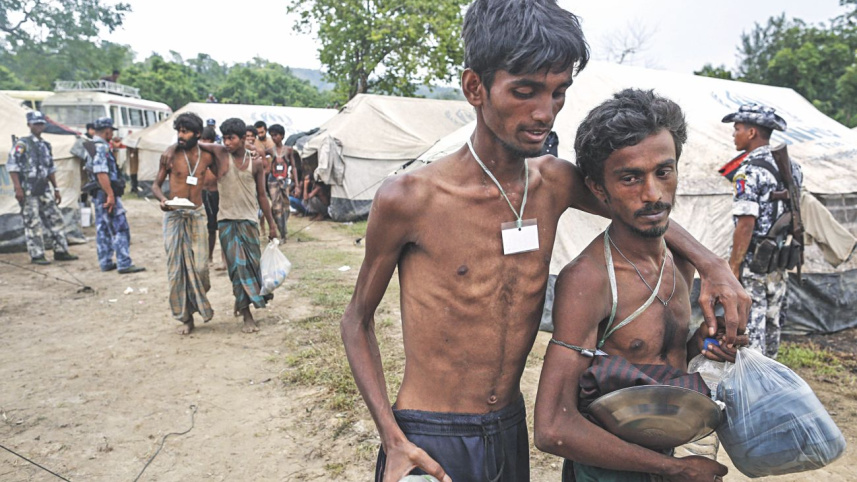
Myanmar yesterday said that persecution of its Rohingya Muslim population was not the cause of Southeast Asia's migrant crisis, a day after the United States called on the country to give full rights to the minority to help end the exodus.
President Barack Obama said this week that Myanmar needed to end discrimination against the Rohingya if it was to succeed in its transition to a democracy, as Washington upped the pressure on the country to tackle what it sees as one of the root causes of a migration that the region has struggled to cope with.

Myanmar does not recognise its 1.1 million Rohingya as citizens, rendering them effectively stateless. Almost 140,000 were displaced in deadly clashes with Buddhists in the country's western Rakhine state in 2012.
"It has been portrayed that discrimination and persecution are causing people to leave Rakhine state, but that is not true," Myanmar's Minister of Foreign Affairs Wunna Maung Lwin told diplomats and international agencies in Yangon.
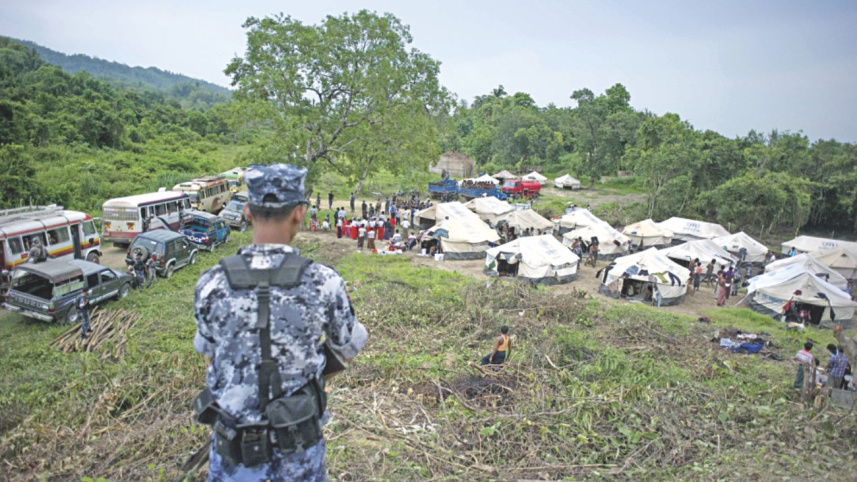
He pointed to the number of Bangladeshis on board a migrant boat that landed in May as proof that the influx of "boat people" was a regional problem linked to human trafficking.
"This incident... has shown to the region as well as the international community this is not the root cause," he said.
It was the latest denial by Myanmar of any blame for the humanitarian crisis involving more than 4,600 people who've arrived by boats in five countries.
The boat he referred to was intercepted by Myanmar's navy last month. Myanmar has said 200 of the 208 people aboard were economic migrants from Bangladesh.
But a Reuters investigation found that 150-200 Rohingya had also been aboard that boat, but were spirited away by people smugglers in the week before the navy brought it to shore.
Tareque Muhammad, deputy chief of mission at the Bangladesh embassy in Yangon, told Reuters that only 150 people from that boat had been identified and documented as Bangladeshis.
The boat is the only one that the Myanmar authorities are trying to highlight amid a flaring crisis that threatens its international commitment to shed its former Pariah status for democracy.
The denial came after the UN Security Council held its first closed-door briefing on human rights in Myanmar last week. A council diplomat inside that briefing said UN human rights chief Zeid Ra'ad Al Hussein described the Rohingya as facing institutional discrimination.
The current crisis blew up last month after a Thai crackdown on trafficking camps along its border with Malaysia made it too risky for people smugglers to land their human cargo. Smugglers abandoned boats full of migrants at sea.
Indonesia would repatriate economic migrants from Bangladesh as soon as it could, but how to handle Rohingya migrants was more complex, said Andi Rachmianto, the international security and disarmament director at the foreign ministry.
"We need to differentiate between Rohingya migrants and migrants from Bangladesh because their motivations are different," Rachmianto said.
 For all latest news, follow The Daily Star's Google News channel.
Comments