



Luxury Living: Bangladesh Finally Has a Place for Its Finest
16 April 2026, 00:00 AM
Supplements
The Finest Things in Bangladesh Have Always Existed in Private
16 April 2026, 00:00 AM
Supplements

Planning your first global trip?
30 June 2026, 12:41 PM
Star Travels

Hill or sea? Home, I said
30 June 2026, 11:48 AM
Star Travels
What Bengal Made and Let Others Claim
6 July 2026, 17:52 PM
Supplements

10 no-nonsense lesson for your first trek
30 June 2026, 14:22 PM
Star Travels

Breaking the Blank Wall
24 June 2026, 14:11 PM
Your Property Guru
Secrets of Ancient Waterproofing
24 June 2026, 14:02 PM
Your Property Guru

Walking the hidden paths of Morocco
30 June 2026, 00:54 AM
Star Travels

Making homes smarter with home pods
24 June 2026, 00:43 AM
Your Property Guru

Awarding the private sector heroes
Bangladesh is an inspiring story of economic growth and development. The country became the 35th largest economy globally from almost scratch since its independence in 1971.
26 October 2024, 18:00 PM
Hijacking History: 1971 narratives in the Awami League's reign
Writing the history of the 1971 Liberation War, the most pivotal event in the region, remains a complex task. This war continues to shape the present, deeply influencing our understanding of the past.
16 October 2024, 07:55 AM

Mediating the July massacre
It was unquestionably the duty of the mainstream media—especially during the internet blackout when people had no other source of news to turn to—to provide people with actual, factual information about their country, their people, and their government. It was only because the people “took the media into their own hands” through social media that they were able to fulfil the role of the media to inform, to educate, and to persuade.
15 October 2024, 09:10 AM
The politics of the 'clash' between Bangalees and Paharis
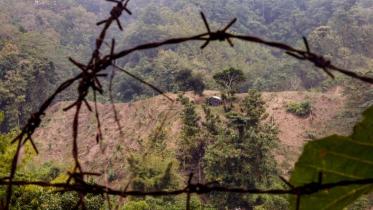
The term “Bangalee-pahari conflict” is used as a contextual term for the English “ethnic conflict.” The rhetoric of ethnic conflict or ethnic violence views ethnic identity as an immutable feature of human nature. Or, in other words, these terms create the assumption that violence along ethnic lines is “primordial” or inherent to ethnic or cultural differences. This is seriously problematic because such assumptions normalise violence. In reality, both pahari/Indigenous people and the settler Bangalees are victims of state experimentation.
14 October 2024, 11:20 AM

How we go about the Bangla Spring now will define its future
Between “July 34-36”, Bangladesh saw the explosion of a united democratic desire among people of all classes and professions. The demand for democracy was the revolutionary desire then. Following on from that, establishing meaningful democracy is going to be the true revolutionary programme now. The world is now calling it the Bangla Spring—the spring whose graffiti has adorned the walls of Dhaka.
10 October 2024, 12:23 PM
Fascism, self-censorship, and the 'new Bangladesh'
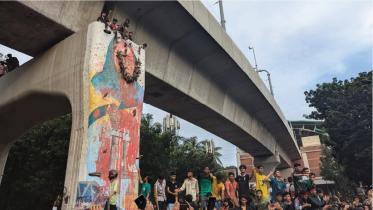
No other government in this country's political history has been labelled “fascist” with such intensity, despite similar tendencies having existed before—at times to the same extent. The current context is unique in that it reflects the 15-year-long authoritarian rule of Awami League and its trickle-down oppression. Yet, understanding fascism is crucial if we seek to avoid the rise of another such regime.
10 October 2024, 12:20 PM

Lineaments of an equitable and democratic national education policy
The reform in education must present itself, first, as a rigorous economic reform programme. Otherwise, it will necessarily remain rhetorical, hyperbolic, even hypocritical. A meaningful reform of education for social transformation cannot be implemented without an equitable and democratic economic programme to elevate the subaltern classes, to put an end to their condition of subalternity.
10 October 2024, 12:16 PM
'Legislative reforms needed to limit executive's influence over judicial decisions'
Md Masdar Hossain, retired senior district and sessions judge and a legal practitioner, talks about securing judicial independence and ways to constitutional reform in the current context of Bangladesh in an interview with Priyam Paul of The Daily Star.
10 October 2024, 12:12 PM
Students and faculty need more say in universities
To make universities more autonomous, rules and regulations must be revised so that sectarian and partisan politics are not allowed to take over. This applies first to teachers and then to students. Teachers and students need to be aware of the importance of democratic practices, but this does not mean they should be used for political purposes. Universities must focus on the smooth functioning of education and the betterment of the country, rather than serving as a platform for political parties.
10 October 2024, 12:08 PM
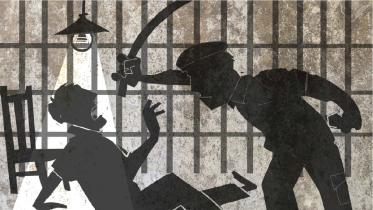
We need a human rights agenda for transition to democracy
The past 15 years have seen the most severe narrowing of civic space, heightened surveillance, intimidation, and reprisals that often led to self-censorship. Rather than accountability for these violations, officials responsible were often rewarded for their misconduct. As we move forward with several reform agendas that can be implemented within a short timeframe, it is essential to have a national conversation on what "governance anchored in human rights" should truly look like.
10 October 2024, 12:05 PM

Beyond the Shadows: Reforming surveillance practices in Bangladesh
During the July-August uprising, and in the decade leading up to it, the use of state and security agencies to surveil ordinary citizens became so ubiquitous that people self-censored on public technology platforms and migrated to private, encrypted messaging services. In response to these concerns, various civil society and industry groups are calling for the repeal of the Cyber Security Act, 2023 (CSA) and the dismantling of organisations like the National Telecommunications Monitoring Centre (NTMC) for undermining privacy and other fundamental rights.
10 October 2024, 12:03 PM
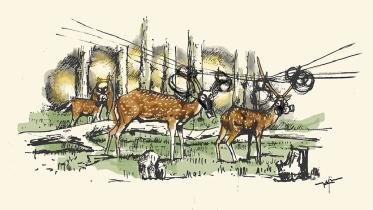
Power sector must belong to us, not conglomerates and foreign actors
With the collapse of the autocratic regime and appointment of a pro-renewable power and energy adviser, the current challenge lies in effectively implementing the goal of using renewable energy to tackle energy crises and achieve zero emissions. We must reflect on past events to understand the reasons behind the adoption of coal, oil, LNG, and nuclear power. This will enable us to clearly formulate short-term and long-term strategies to overcome the current crisis and break the vicious cycle of energy insecurity.
10 October 2024, 12:01 PM
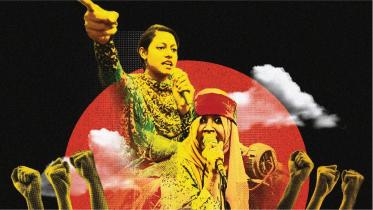
A feminist manifesto for Bangladesh
We need a feminism that embodies strong anti-capitalist critiques, one that fights against the neocolonial and neoliberal forces which make already privileged people even more privileged. We need a feminism that fights against the material obstacles experienced by all minoritised and marginalised communities. We need a feminism that is revolutionary, that is not restricted by any politics of funding, that is inseparable from grassroots struggles and resistance. What would such a feminist manifesto look like for Bangladesh?
10 October 2024, 11:58 AM
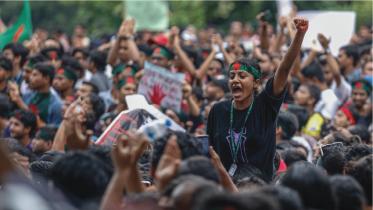
Women can no longer afford to wait in the sidelines
Following the fall of Sheikh Hasina and the establishment of the interim government, the once powerful voices of women during the revolution are missing in the public sphere. Historically, women’s rights have been deprioritised or postponed in favour of broader societal objectives. In post-revolution Bangladesh, where there have been several worrying incidents involving violence, online harassment and moral policing, we find ourselves in a position where we are having to choose between voicing our concerns, or showing patience.
10 October 2024, 11:47 AM
Fixing Bangladesh's economic woes
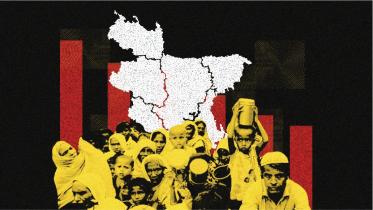
It is too soon to expect any significant economic changes, particularly as the previous government, led by Sheikh Hasina, left behind a fragile economy marked by high inflation, declining foreign exchange reserves, sluggish private investment, a growing debt burden, poor revenue collection, inefficiencies in development project implementation, and weak governance in the financial sector. Repairing the fractures within the economy will require persistent and arduous efforts over an extended period. However, the right strategies and sustained efforts can improve the economy.
10 October 2024, 07:52 AM
We Wish to Inform You: Censorship in Bangladesh (1972-2024)
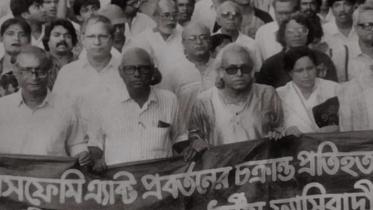
Censorship, subtle and overt, concerned with both the sacred and secular, has been a characteristic of every post-independence, civilian and military, government.
8 October 2024, 12:34 PM

What really is 'Chhatra Janata'?
Just as students stepped in to ebb looting, they inserted themselves into the formation of the government. These acts of interruption are important not only because of the principle in each—“thou shalt not steal” and “thou shalt not steal the people's will”—but also because each time these acts disrupted the given scripts and created an opening, however small, for something different to emerge.
8 October 2024, 12:33 PM

July uprising in the lives of garment workers
Garment workers, earning a meagre Tk 12,500, found themselves united with the students and the public in their shared struggle against deprivation and discrimination. Over the past 15 years, every time they took to the streets to protest injustices, they were brutally silenced through violence, torture, attacks, lawsuits, and even murder. The history of the July uprising must also include the struggles and sacrifices of the working class, who are the driving force of the economy. Their voices must be represented at the national policy level.
8 October 2024, 12:28 PM

Of minoritisation and symbolic violence
Following the collapse of the government, reports began to circulate of attacks on temples, establishments and persons belonging to minority groups (that is, those of non-Bengali and non-Sunni Islam origins). News of these attacks themselves began to be weaponised, by regional and international interests, in a bid to reinforce the illusory narrative set by the Awami League.
8 October 2024, 12:26 PM

'We need to clearly articulate what we mean by a discrimination-free Bangladesh'
Anu Muhammad discusses the people's aspirations for equality, the ambiguity around 'discrimination,' and the challenges faced by the left in Bangladesh. From class and gender inequality to ethnic and religious discrimination, this conversation highlights the crucial issues we must address to build a just society.
8 October 2024, 12:25 PM