


The philosophy behind Ajo Idea Space: A sustainable sanctuary

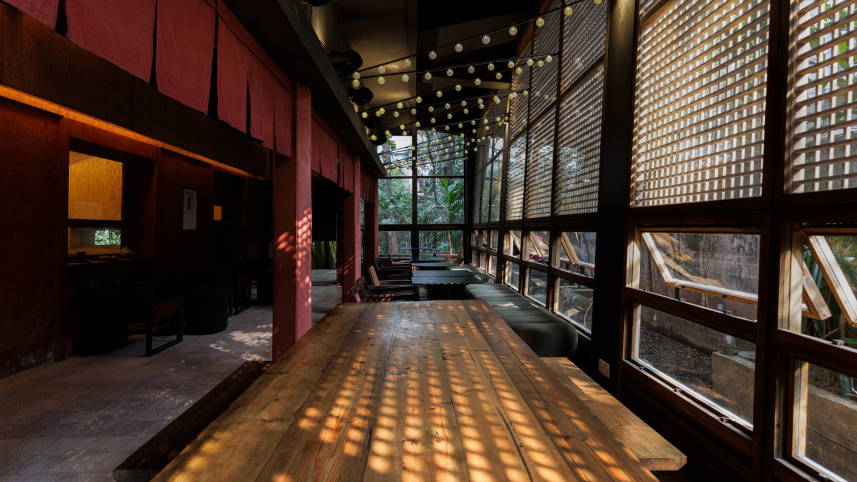
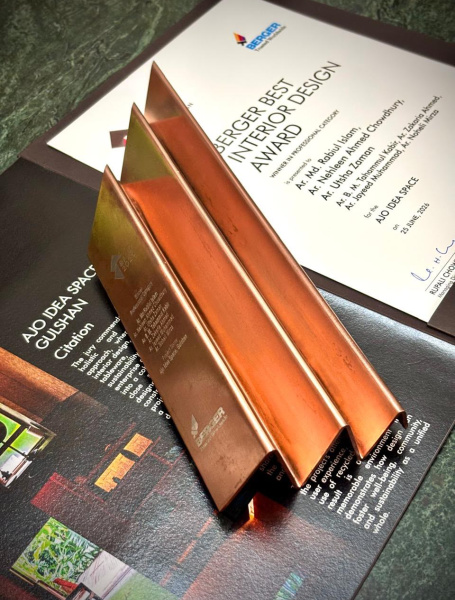
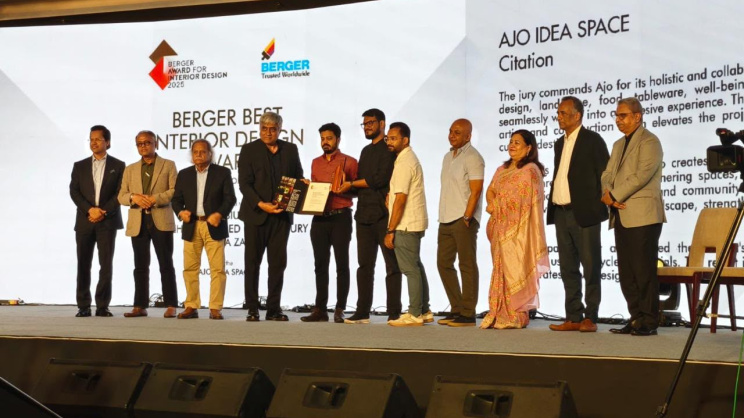
Dhaka is a city of glass boxes and air-conditioned malls. In the middle of this high-polish landscape, Ajo Idea Space stands as a reminder of what happens when architecture decides to breathe. This June, the space achieved a major milestone by winning the Berger Best Interior Design Award 2025 in the Professional category.
Lead architect Md Rabiul Islam and his team led the technical execution of this project, working in a dual partnership with Khalid Mahmud, an entrepreneur and the main ideator behind the space. Together, they worked to bring a deep philosophical journey to life.

“Ajo is not merely a restaurant or a lounge," Mahmud ponders contemplatively, framing the space as a laboratory for the soul rather than just a place for a meal.
He wanted to create something truly local.
The soul of the unborn
The name "Ajo" carries a heavy linguistic weight. In Bengali, it refers to the unborn, the unknown, or the deep wilderness. Mahmud explains that it represents a baby in the mother’s womb or a remote village where the roads have not yet reached.
"We took this name because our manifested cultures are often borrowed," Mahmud notes. He points out that whether it is our food or our fashion, we often follow colonial languages. Ajo was designed to be a space where a new, authentic identity could finally emerge. It is a melting pot for those who live between global sentiments and local roots.
A sanctuary for humans
Walking into Ajo feels like entering a hidden temple. There is intentional stone architecture at the entrance that sets a meditative tone. Inspired by Zen philosophy, the design utilises red hanging screens to create a sense of refreshing openness.
"In a temple, everyone is equal," Mahmud says. This democratic approach to design is the secret behind the comfort of the space. You might see a corporate professional in a suit sitting next to a student in western clothes or a woman in a hijab. The softness of the environment and the surrounding nature connect them through common elements.
Five elements and a weasel burrow
The structural integrity of Ajo is based on Vastu Shastra, an ancient philosophy focusing on mind, body, and spirit. Mahmud and his team ensured that the five essential elements — fire, water, air, earth, and space — were physically present.
Fire lives in the kitchen, while a dedicated water body helps visitors feel an immediate sense of relaxation. The high ceilings facilitate spatial natural ventilation, allowing the wind to flow freely. Perhaps the most unique element is the "Earth" connection.
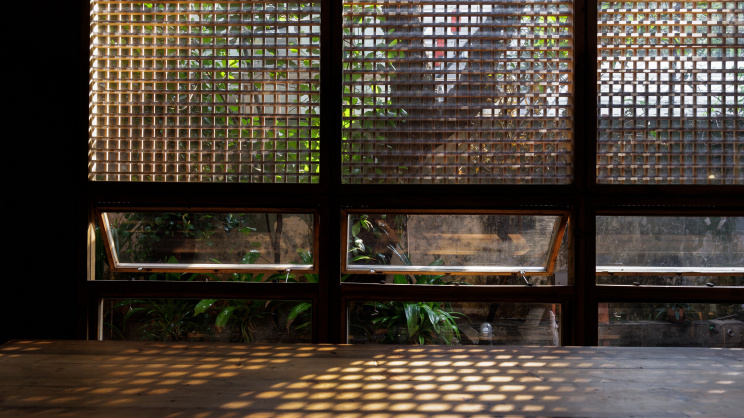
"We built it over a weasel's burrow," Mahmud explains. Instead of using a solid concrete slab that would destroy the habitat, they used a metal structure. This allowed the animals to continue living underneath the floor. Earth is also represented by the lush greenery that surrounds the visitors in a design that respects every living thing.
Finding luxury in the recycled
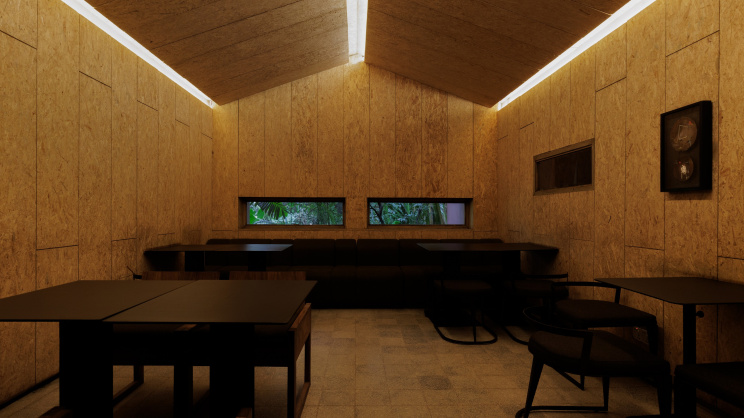
The material palette of Ajo is a masterclass in sustainability. The walls and ceilings are crafted from the Bangladesh Rural Electrification Board's (BERB) recycled electricity poles bought at an auction. The inner side of the walls utilises airport cargo boards, and the soft textures you touch are made from garment industry cotton wastes.
This commitment to upcycling reduced the project cost to one third of a traditional build. This efficiency allowed Ajo to remain affordable for its core audience: the youth and the modern nomads of Dhaka. They invented a way to ensure quality without the typical price tag of luxury.
"We balance the equation by recycling," Mahmud states. He believes that professional design should move away from the rebel ego of post-modernism and toward true inclusion.
Ajo Idea Space is the physical manifestation of that belief. It is a place where duality finds friendship and where the city's noise finally disappears into the red curtains and raw brick.
By the time you leave, you realise it isn't just a meal you were looking for. You were looking for a place to belong.
 For all latest news, follow The Daily Star's Google News channel.
Photo: Prantography



Comments