


China oil fortress will reshape global order
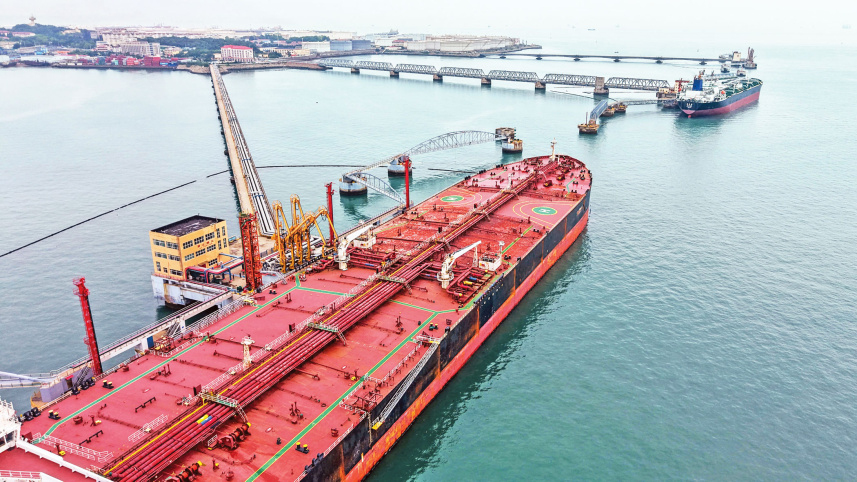
China caught the oil industry by surprise during the Iran war. It pulled powerful levers to shield itself from the biggest energy shock in decades. In the process, it established itself as a new force in global energy markets. It is now an independent, opaque, massive power.
The measures China used to offset the energy supply shock culminated in a decades-long campaign. It sharply cut crude imports, restricted exports of refined fuels, and drew on domestic inventories.

This reduced its heavy dependence on overseas energy supplies. This offers a glimpse into how future crises could play out. There is a lack of transparency surrounding many of Beijing’s policy choices.
China’s assertive strategy points to a future where energy market blind spots may matter more than visible data.
The measures China used to offset the energy supply shock culminated in a decades-long campaign. It sharply cut crude imports, restricted exports of refined fuels, and drew on domestic inventories
It also suggests that we could be entering an era where China’s energy dynamics are a weapon.They are both defensive and offensive, not a vulnerability.
China has been insulated from much of the extreme price volatility that followed the outbreak of war. The war in Iran began on February 28.
The Strait of Hormuz effectively closed, through which 20 percent of global energy supplies previously transited. Brent crude surged from around $72 a barrel to a peak of $118 in late March.
It then retreated to pre-war levels by early July. The global benchmark has risen again in recent days as US-Iran strikes picked up.
But as prices rose, Beijing stopped buying. June deliveries plunged more than 41 percent from a year earlier to 7.12 million barrels per day.
This was the lowest level since October 2016, extending a sharp decline recorded in May. The scale of the slowdown caught many traders and analysts off guard.
It turned out to be a critical factor that allowed the global economy to absorb the loss. The Middle East lost over 13 million barrels per day of exports.
The shift was especially striking given China’s importance to world oil markets. The country imported a record 11.55 million barrels per day in 2025.
This was roughly two-thirds of its total consumption and 16 percent of global demand. That dependence would once have made China highly vulnerable to Gulf supply disruptions.
Instead, Beijing entered the crisis well prepared. China’s 4.4 percent increase in crude imports last year was driven by an aggressive stockpiling campaign.
This left it with an estimated 1.3 billion to 1.5 billion barrels in storage. This is equivalent to more than 100 days of average imports.
But cutting imports was only part of the strategy. In March, China also suspended exports of refined products, including gasoline, diesel, and jet fuel.
This ensured its domestic market was well supplied. The controversial move worried Asian countries, including Australia, Bangladesh, and the Philippines.
These nations were already grappling with acute fuel shortages. To put that number into context, Beijing exported around 800,000 barrels per day of fuels in 2025.
This was roughly 12 percent of Asian refined fuel imports. The government partially eased the restrictions in July, relieving Asia’s fuel market. Yet the episode demonstrated how quickly Beijing can tighten supplies if conditions deteriorate again.
 For all latest news, follow The Daily Star's Google News channel.
 What may be China’s most powerful line of defence is its enormous oil stockpile. It has been deployed only sparingly so far, suggesting Beijing still has significant dry powder. Beijing provides no official data on inventory levels or movements.
This leaves traders and policymakers to piece together the picture through indirect indicators. Reuters calculations suggest inventories fell between April and June by a relatively modest rate. The drop was 500,000 to 1 million barrels per day.
Calculations are based on crude imports and domestic production minus refinery throughput. Inventory draws were limited because Beijing chose to reduce refining activity instead. June throughput was down 18 percent from a year earlier at around 12.5 million barrels per day.
This was the lowest level since the height of the pandemic in March 2020. China’s ability to release inventories on a much larger scale therefore remains largely untested.
But the Hormuz crisis demonstrated that Beijing possesses a tool capable of reshaping global oil balances. At the same time, Beijing has steadily reduced its reliance on oil imports by boosting domestic production.



Comments