 |
|||||||||||||||
| Home | Dhaka Saturday July 14, 2007 |
||||||||||||||
Tajuddin Ahmed --- dedicated leader, tragic hero
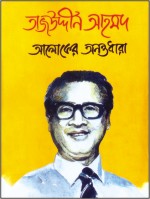
Tajuddin Ahmad was one of the noblest leaders to be born in this part of the world. He remains a great tragic character in Bangladesh's politics. It was only natural that history would thrust upon his capable shoulders the great task of leading our people during the war of liberation in the absence of Bangabandhu Sheikh Mujibur Rahman. The work under review is one that preserves the ethos, indeed the memories of the war, honours millions of Bengali martyrs and freedom fighters and evaluates the great leader of the war. It is the first part in a series of volumes on Tajuddin Ahmad, the recollections having been assembled and edited by Simin Hossain Rimi, the late leader's second daughter. It may be remembered that she also produced the well-made film on Tajuddin Ahmad, most capably directed by noted film-maker Tanvir Mokammel. The book has twenty-two people close to Tajuddin Ahmed reminiscing about him. They include Ataur Rahman Khan and Khan Shamsur Rahman; friends like Khan Sarwar Murshid, Nurul Islam and Arham Siddiky, civil and military bureaucrats who worked with him, such as AK Khandaker, Mir Shawkat Ali, Mohammad Nurul Kader, AMA Muhit, Abu Osman Chowdhury, Kafiluddin Mahmud, Matiul Islam, Muzaffar Ali, Abu Saeed Chowdhury and Matiur Rahman; close political aides like Barrister Amirul Islam, Rafiquddin Bhuiyan and Bahauddin Chowdhury; and Indian admirers KF Rustamji and Golok Mazumder. These brilliant minds have reflected on Tajuddin Ahmed's ability, honesty, dedication, patriotism and his pivotal role in 1971. The book also contains a brief biography of the late leader, a few of his memorable speeches delivered in 1971 and later, a few pages of his diary written during his student days and a few of his letters. His Bangla and English prose was excellent and so was his handwriting. One feels sad that the diary he wrote in jail in 1975 has been lost forever. He was without doubt the most scholarly politician of his time, very well-read and well-informed and blessed with a sharp, analytical mind. His honesty, patriotism and love for the common people were exemplary. On July 23, the nation will observe the martyred leader's 82nd birthday. Tajuddin was born in Dardaria of Kapasia. After changing a few schools he landed at St. Gregory's High School, from where he stood 12th in the Dhaka Board in the SSC exams. He was fourth in the HSC exams. He was a scout and was in politics as a student. He became a Jukto Front MLA in 1954 even before passing his MA. He defeated a very senior Muslim League leader by a huge margin. He was in jail when he got his Bachelor of Law degree. The 1943 famine shook him to his roots and turned him into a devoted social worker. He belonged to the progressive section of the Muslim League in his youth. Later he was one of the founders of the Chhatra League. He actively participated in the Language Movement. He was one of the founding members of the Awami League on June 23, 1949. At 28 he was general secretary of Dhaka District Awami League. At 30 he was the party's cultural and social welfare secretary. He was joint secretary in 1964. He was in the forefront in the turbulent 1960s, leading the democratic movement, going to jail and helping to sweep the 1970 elections. In 1971 he led our liberation war with great wisdom and selflessness. A sad and misunderstood man in independent Bangladesh, he lived a retired life for a few months till his tragic killing inside Dhaka central jail on November 3, 1975. Ataur Rahman Khan recalls that he was very fond of Tajuddin Ahmed, the sober leader who deeply loved the people. Loving people was his religion. He was a courageous person. He had all the qualities of a perfect politician. When Khan looked at Tajuddin's dead face, he turned away in heart-rending grief. He couldn't tolerate the scene. Arham Siddiky was Tajuddin's schoolmate at St. Gregory's and was a little younger. They were great friends for many years. Siddiky hasn't seen a more honest and sincere person. Tajuddin had strong beliefs, had a logical mind and enjoyed an argument with friends. He welcomed suggestions and respected the opinions of others. Amirul Islam's interview deserves special mention. He came to know Tajuddin Ahmed as a teenaged Chhatra League worker in 1954, when the former was a rising leader of the Awami League. Islam gradually became Ahmad's close aide and eventually worked with him in 1971. They were even neighbours in the 1960s in Dhanmandi. Islam was one of Bangabandhu's lawyers in the so-called Agartala conspiracy case. He got very close to Tajuddin Ahmad at the time. His recollections tell us a lot about Tajuddin Ahmad, Bangabandhu and the Awami League. His vivid descriptions of how he and Tajuddin reached India after struggling against great odds, how they met Indira Gandhi and how they worked for our freedom in 1971 are exciting and delightful. Abul Ma'al Abdul Muhit gives us the civil servant's view of Tajuddin Ahmad. Muhit was in student politics and knew a lot about Ahmed then. He found him very learned, very amiable and simple. In 1971 Muhit was in Washington. Bangladeshis reaching the USA via India praised Tajuddin Ahmad's sacrifice, dedication, patriotism and courage. Muhit met both Bangabandhu and Tajuddin Ahmad in 1972. He found the latter very respectful of Bangabandhu. However, Tajuddin was hurt that Bangabandhu never asked him about the war of liberation. Abu Osman Chowdhury gives us a sector commander's view of the wartime prime minister. He feels that it was Tajuddin Ahmad's firmness that made the Mujibnagar government possible and nullified all the anti-liberation activities of Khondokar Moshtaque. His patriotism and administrative skills were incomparable. Ali Tareq worked as Tajuddin Ahmad's PRO during the war. He notes that Tajuddin was a very disciplined and patriotic person. He had an analytical mind and could take quick decisions. Abu Saeed Chowdhury, the civil servant, was Tajuddin Ahmad's private secretary in independent Bangladesh. He came to know the leader very closely. He found him a wise politician and a capable administrator at the same time, who respected his elders and was very fond of his juniors. He worked hard and was always an idealist. He took an aversion to then World Bank president Robert McNamara for his 1971 role but after they met, the latter became his admirer and considered Tajuddin a brilliant finance minister. Tajuddin Ahmad was always honest and just, never encouraged sycophants and never betrayed his country or people. His respect for the rule of law was incomparable. He was a great optimist and would gain strength from reading books during a crisis. AK Khandaker, the deputy commander-in-chief of the Mukti Bahini, admires Tajuddin's belief, sincerity, hard work, simplicity and sacrifice. Kafiluddin Mahmud, finance secretary in independent Bangladesh, found his minister honest to a fault. He never encouraged nepotism. Nobody had the audacity to seek undue favours from him. He never asked civil servants to support his party and encouraged them to be neutral and fair. KF Rustamji remembers 1971 and the dedication of Tajuddin Ahmed. He found him a great idealist and ready to die for his land and his ideals. Khan Sarwar Murshid's recollections deserve special attention for their literary merit. The learned professor tries to understand Tajuddin Ahmad and locate his place in history. Bangabandhu depended a lot on this intelligent man. Prof Nurul Islam, the gifted economist, once told Dr. Murshid that he was amazed at Tajuddin's ability to see so many sides of so many problems at a time. Prof Murshid found him modest, scholarly, thoughtful and sober. Golok Mazumder, the Bangalee BSF chief, admired the wartime Bangladesh leader hugely. He found him a man of great human qualities. Bahauddin Chowdhury calls Tajuddin a creator of history. History will one day pay him proper respect, he feels. Nurul Islam, the brilliant deputy chairman of the Planning Commission, gives us a riveting account of his association with the gifted leader. To him, Tajuddin was self-effacing, very simple, very polite and very sincere. Motiul Islam stresses the forgiving nature of Tajuddin Ahmad and his fairness of mind. Mohammad Nurul Kader worked closely with the leader in 1971 and recollects his experience in detail. Mir Shawkat Ali praises the leader's patriotism and far-sightedness. Muzaffar Ali remembers his friend with touching affection. People loved Tajuddin because of his qualities, he reminds us. Rafiquddin Bhuiyan pays his sincere tribute to the great leader. Khan Shamsur Rahman generously praises him for his great loyalty to Bangladesh and its people. Readers, now that they have gone through this volume, will surely wait for the next book on Tajuddin Ahmad. ................................................................ Inhabiting the regions of desperate silence Mohsena Reza reads of the pains and passions of women and comes forth with her feedback
Galpa is basically a work of writers who are alarmed at the status of women at home and society at large and an eye opener for social workers like us. Niaz Zaman, an old favourite of students and an object of praise for her erudition, brings out the pitiful destiny of common women in our country in The Daily Woman. She exhibits our culture when she makes a half-starved pregnant woman think of nothing but look after her sick mate, who has practically given her nothing in life. When she receives a reward of two imitation bangles in return for her daughter, the author leaves us with a maudlin feeling that a girl child has always had a lesser demand than a boy. The most poignant problem of our society dowry has been dauntlessly written. We salute Selina Hossain for her intrepid attempt to portray it through Motijan's failure in marriage. Motijan's Daughters sets one thinking about who is to blame for Motijan's extra-marital affair. Abul? A husband who never came home to his wife. Gulnoor? A mother-in-law who almost starved her to death or was it Motijan's desire to break all the norms of society because it had cheated her by giving her false hopes of a happy married life? Shabnam Nadiya's A Journey Into Night depicts the in-law problem, or 'women trouble' and cannot escape one's appreciation for contemporary writing. With all her efforts Anjona is still the girl without the “Banglar Bodhu” qualities, culminating in the fact that “nothing really changes in life, we just grow heavier, older and more wrinkled”. Rokeya Sakhawat Hossain's Sultana's Dream is in fact the wishful thinking of a lady-land, free from sin and harm where virtue reigns. She asks women to fight for their natural rights. It's a dream of a corruption-free, non-violent and want-free world. A dream to “convert the whole world into a grand garden, whose religion would be based on love and truth”. In M.Fatema Khanum's Chamely, the message is that natural beauty, which the Lord of the Universe has blessed us with, should not be tarnished with an attempt to be something which we are not. “Chamely, tell me that you won't be dressed like a man again,” is Malek's last request to her. Razia Mahbub in her Troubles depicts the day-to-day problems, very similar to ours, in a very unique way. Dilara Mezbah in The Ballad of Nihar Banu wonders whether women will forever “be preserved like a crystallized fruit in a glass jar”. She is a scapegoat without justice meted out in her case oppressed and degraded by men who succeed in trapping them by kind words and soft touches. Helena Khan's Projection is based on intense love and absolute trust the two vital forces that keep a marriage well-tied and blissful. Rabeya Khatun's Obsession gives us a picture of the sparkling, elegant, sometimes pretentious lifestyle of the upper class. It explains how at times petty and mean feelings tarnish this beautiful world. Khaleda Salahuddin has given us a crystal clear picture of the floods that had affected the lives of millions not only in the rural areas but in the cities too. It reminds me of the days when I personally delivered food to my family at Banani riding a raft. Relief Camp is a document of those horrid memories. What Price Honour? by Rizia Rahman is a very sad saga of a most fortunate woman, escaping by jumping into the fire and surviving the clutches of the cruel blood-thirsty Pakistani soldiers. It's a portrayal of the fact that hunger is always the victor in the war against poverty and the heroine succumbs to this mighty frailty willingly, deciding to surrender the very honour that she had prized. Nayan Rahman's Bon Voyage is an interesting story of emotions focused on love and betrayal. Dilara Hashem's The Immersion is a daring legend of an incapacitated young man growing up with natural desires, a dauntless attempt to reveal a man's longing for the essentials of life. In Jharna Das Purakayastha's Barbecue we get a grim picture of disparity, not only in society but also in nature that chooses to devastate only those who live in the rural areas. In Syeda Farida Rahman's Roots, the mention of Bangabandhu and incidents of the liberation war are quite appreciated. It presents the reality of life “Love never ends; at all stages of life one must embrace love, in empty spaces in the deep recesses. This is the essence of love”. Why Does Durgati Weep? by Parag Chowdhury is basically a tale of a woman who sacrificed her life and honour for the freedom of Bangladesh. She is the symbol of all women tortured and raped by the Pakistan army. Purobi Basu's Radha Will Not Cook Today, a most unconventional piece of writing, is very interesting to read. It leaves a message “sometimes the most normal things in life can make you ill”. Shamim Hamid's The Party is a narration of the subtleties of games played in high circles. The presidential visit to an embassy, the diplomatic parties, cover the whole story which is especially interesting for people who have not been posted abroad. Under The Lemon Tree by Sonia Nishat Amin is an unusual saga of an old woman Gopal Banu. “We console ourselves about the tragedies of life by thinking up alternatives, but no imagined alternative story could soften the truth in this story.” Naheed Hossain's The Deal is not a story but an authentic account of the condition of dark girls in our society. While going through the extract it seemed weddings are successful only because of the timely payment of dowry. Though unfair and immoral, it is the hard reality of life that we visualise here. Jharna Rahman's Arshinagar is an amazing piece of writing with a most unpredictable end. A very uncommon piece of writing, Different, is a pathetic story by Nasreen Jahan of a young widow who wants to be different from the rest of the world, to overcome her frustration at being lame. The Make-Up Box is a tragic saga by Shaheen Akhtar of a prostitute's corpse not finding a resting place in such a huge world. The Rainbow Bird of Slumber and Dreams by Papree Rahman is a minute inspection of poverty, old age added to loneliness. It has been brought forth through the tale of a widower. No one could have better described the lifestyle, tradition and social values of the “Dhakaiyas” than Nuzhat Amin Mannan in her story The Wardrobe. Audity Falguni's Wild Flower is a story of how the Achik Mande detached from eternal nature and religion are faring here with a Bengali majority. When Hashu agrees to live with Badshah in the city it is the helplessness of our half-starved destitute womenfolk that is so vividly portrayed by Makbula Manzur. The girl whom Lalmiah meets in On The Road is in reality a representation of the curse of dowry in our country. In analysing the leap of imagination that the writing of such stories entails, we feel that our women writers are performing an act of solidarity in trying to speak for women who have no voice in our society. .......................................................................................... Men in uniform and unstable politics Mustaqim Kazi reads a history of Pakistan and reflects on its predicament as a state
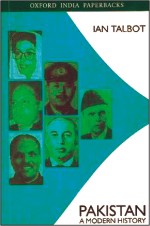
Since the partition of 1947 Pakistan has always been an unstable country where the military's dominance of politics has become the rule rather than the exception. Pakistan's unstable nature of government may be seen to be a result of its failure to build a solid platform to unify the cultural diversities of various ethnic peoples on the basis of a common identity. Islam, which was the basis of Muhammad Ali Jinnah's two-nation theory, the raison d'être of the state of Pakistan, could not succeed in stopping the second partition of 1971, the breakaway of its eastern province to become Bangladesh. Pakistan's political development, unlike that of India where secularism was chosen as a state principle and where a fairly stable democracy has been in place since the partition, is ephemeral and marked with changes in governing systems. On the basis of the thought-line of Pakistan's failure to give the nation its true identity and unity, Ian Talbot, a British expert on South Asia, has authored this comprehensive study, Pakistan: A Modern History, which charts the problems that have beset Pakistan since its chaotic birth. One completely agrees with Talbot when he says, “Language and religion, rather than providing a panacea for unity in a plural society, have opened a Pandora's box of conflicting identities.” The problem of Punjabi domination of society and politics in Pakistan and negligence of the rights of the people of other provinces, particularly East Pakistan, were among the disturbing factors which made the nation unsettled. That the decision to make Urdu the only state language of Pakistan in the formative days of Pakistan was unreal was a lesson Pakistan's ruling classes understood later. Even after 1971, the position of Urdu among the other provincial languages is fifth, after Punjabi, Pashto, Sindhi and Siraiki. And many oppressed Pakistanis equate Punjab's domination with the British rule of the colonial days. On the other hand, the hostile nature of Pakistan's relations with India just after its formation is another major problem that has exacerbated the state of Pakistan's fragile economy. Its huge military budget every year to counter India's puissance is largely responsible for the nation's economic bankruptcy. True, Pakistan is a nuclear state, but it is equally true that the country is so plagued with political uncertainty, violence, corruption and economic crises that some political scientists rank it among the 'failed states' of the world. In 1998, when Ian Talbot wrote this book, the democratically elected government of Miah Nawaz Sharif was in power and the author suggested how a 'substantive democracy' in Pakistan soundly based on social justice, instead of a mere 'procedural democracy' of casting of a ballot, could be achieved. But who could have guessed that soon the country was going to be ruled by the military again? The collapse of democracy, first in 1958 with General Mohammad Ayub Khan's seizure of power followed by the rise of General Agha Muhammad Yahya Khan in 1969 as president, then again in the era of Zulfiqar Ali Bhutto, who took charge as president and civilian chief martial law administrator in 1971 and yet again through the coup launched by General Muhammad Zia-ul-Haque in 1977, followed twenty two years later by the arrival of General Pervez Musharraf, has been a regular, almost organised affair. Successive regimes have made it pretty clear that democracy in Pakistan is as elusive as ever. The very brief rule of General Yahya Khan from 1969 to 1971 gave a severe blow to Pakistan when he ill-advisedly ordered a military crackdown in East Pakistan on 25 March 1971 when negotiations after the PPP's sweeping victory in West Pakistan and the Awami League's in East Pakistan reached a cul-de-sac. About the creation of Bangladesh, Ian Talbot has provided an adequate account. His use of such words as 'brutal army assaults' and 'massacres' to describe the tumultuous events of 1971 are apt. But was it not 'genocide' against the innocent civilians of Bangladesh in those dark days? The wholesale killing of Bangladesh's intellectuals on the eve of the Pakistan army's surrender only held up the image of Yahya Khan as a military ruler seeking his own doom. His actions against the people of Bangladesh earned him the sobriquet of 'traitor' even in West Pakistan and he had to read the banner headline of a Lahore newspaper: Aik awaz aik elan: Qaum ka katil Yahya Khan (One voice, one declaration: Yahya Khan is the murderer of the nation). Ian Talbot observes that Islam proved 'an insufficient bond' to hold West Pakistan and East Pakistan together. What Talbot maintains about the cause of Pakistan's splitting into two is beyond any question when he says, “Pakistan had not fallen apart because of Bengali primordialism or Indian machinations. The primary responsibility lay in Islamabad chauvinism had compounded folly in the dangerous denial of Bengali democratic urges.” Democracy before Ayub Khan's takeover and many years later during the regimes of Benazir Bhutto and Nawaz Sharif was not successful. Instead, weak governance, misuse of power and corruption legitimised military rule in Pakistan in the 1950s and later. Benazir Bhutto and Nawaz Sharif brought charges and counter charges of corruption against each other, and in their times Pakistan's economy became dependent on foreign resources for capital formation. Great expectations of a democratic future for Pakistan, which the 1988 general election generated, were dashed to the ground through mishandling and mismanagement by the country's leaders. Ian Talbot observes, “Instead of a modern two-party system, Pakistani politics had become a zero-sum game in which the opposition denied the ruling party any legitimacy and governments used selective accountability to harry and intimidate their opponents.” Since Ian Talbot compiled this comprehensive study, nine years have elapsed and Pakistan has witnessed turbulent times and newer political upheavals. Only recently the intriguing personal diary of General Ayub Khan was published, revealing, among other things, the late military ruler's intense hatred of the Bengalis. Any watcher of Pakistan's events since its formation or events of the subcontinent for that matter cannot afford to ignore this book. ............................................................................ Bears and rabbits
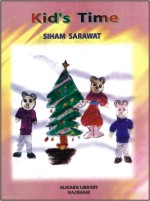
When one reads the book Kid's Time, one feels as if the sun is rising majestically on the horizon with its brightest light. The feeling comes as we get to know that the writer of the book, Siham Sarawat, is a very young person indeed. Just in her early teens, she seems to be an upcoming writer who holds great promise for herself and her country. Siham is a bright star in the field of the young writers. Kid's Time is collection of short stories. The stories come with life's lessons learnt through tales of bears, polar bears and rabbits. They remind one of Aesop's Fables. Most of the stories take place in cold countries. The language of the story is lucid and it is easy to get carried away until the last word of the book is read. There is the story of Telenie bears, three bear cubs that are lost in the forest. They cannot find their way home for snow has covered up their way. A polar bear takes them in and offers them shelter from the bitter cold. The polar bear tells them that they have to wait for the snow to stop and that the sun will come up and melt the snow. The Telenie bears learn the lesson that they have to be patient for something good to happen. Thus they wait for the snow to stop and for the sun to come up before retracing their steps home. There is also the story of Max, the rabbit who challenges some bears to run a race. Max wins the race by a trick. The lesson given in this story is that one needs courage for success to come to them. Then there is the story 'Christy Bears', a bear family that celebrates Christmas every month. Then one day a guest bear comes to visit them and explains why Christmas has to be celebrated on the 25th of December only. The moral in this story is that ignorance leads to confusion. The lessons taught through the stories are indeed worthy ones and shed light on the writer's deep insights. Siham has done the illustrations of the book on her own. The pictures are beautifully drawn and come in wonderful blends of bright colours. Readers will definitely be impressed with this young talent who is a promising writer and is an artist too. From the bottom of the heart one wishes Siham success in the world of writing. ........................................................................... Book launch
© Copyright thedailystar.net 2007 |
|||||||||||||||
 Amar Kichhu Kotha
 Mapmaking
 Ghalib
 Erotic Tales