 |
|||||||||||||||
| Home | Dhaka Saturday June 9, 2007 |
||||||||||||||
Current history for future estimation
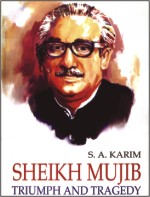
With very good reason the adage holds true that history is best recorded from a distance in time. It is particularly applicable to political history. Sensitive and controversial issues of a specific period, which might arouse heated, even violent, debate and boiling passion in people living during that particular time, could be discussed and analysed in a more or less detached fashion by historians removed by time and in possession of relevant material that might not have been available then (for any number of reasons). As new matter is unearthed and scrutinised, perspectives and conclusions might shift or change altogether, and might conceivably lead to revisionist history. Nonetheless, current history must be chronicled, as much for recording events as they are happening, or have recently come to pass, as for assessment in the future. The book under review, or, more appropriately, the subject matter it deals with, would almost certainly be subject to relatively more dispassionate, probably more objective, treatment in the future, when everyone who even lived through the period from when Sheikh Mujibur Rahman emerged as the most potent and visible symbol of the nationalist aspirations of the people of East Pakistan, probably during the so-called Agartala Conspiracy Case, begun on 19 June 1968, till his tragic death on 15 August 1975, have taken their final bow from this world. Bangladeshis are normally emotionally-charged people, and the acrimonious debate that often breaks out between differing viewpoints regarding the contribution of Mujib to the emergence of Bangladesh bears ample testimony to the contention that future generations would have to come up with the kind of history about the man and his political activities that would not arouse high passion in entrenched positions. Actually, there should be no controversy regarding at least the minimum contribution of Mujib to Bangladesh's emergence, but incredibly, and sadly, there is. S.A. Karim's assessment of the man embodies the minimalist viewpoint, and it is broad enough not to evoke the kind of illiberal outlook that has divided the nation and vitiated its political culture: "Mujib's role in bringing about the independence of Bangladesh was a great accomplishment. This alone guarantees him a place in history" (p. 391). Sheikh Mujib: Triumph and Tragedy traces the path taken by the central figure in the narrative from his school days, where "his future career as a politician was launched as much by chance as by his personality traits", when he was selected by local party leaders for the position of Secretary to the Muslim League Defence Committee in Gopalganj (p. 17), to his end, when he was President of the People's Republic of Bangladesh, in a hail of bullets. Much of the account is of Mujib as a political person, and the bare facts of the story have been chronicled by various writers. In this context, Karim has some interesting thoughts in the preface: "…no one has written a comprehensive biography of Mujib…. To write a biography of a man with a mythic aura around him, the primary task of a writer is to separate legends from facts" (p. xv). Biographies of Mujib do exist, and some may claim to be all-encompassing or in depth, although the claim may not necessarily turn out to be substantive, but Karim's book, too, could be deemed to fall short of being a profound study, precisely because of the shortcomings of current history mentioned at the outset of this review. The author himself has acknowledged the difficulty of obtaining information on crucial matters from primary sources within Bangladesh: "Some of (my fellow-countrymen) would agree to talk only on the condition that they should not be mentioned as a source. One of them quite frankly told me that while it was all right for me as a non-resident retiree (Karim divides his time between the United States and Bangladesh) to be outspoken, it was another matter for a person like him who has to deal with touchy people with power and influence in the government of the day. The point was well taken" (p. xv). Indeed! Enough said! And at times he did not succeed in garnering information even though the source had agreed to talk to him, as evidenced, for example, by former police superintendent Mahboob's failure to keep an appointment with him (f.n. 7, p. 357). The author suspects that Mahboob might have apprehended that he was going to be quizzed about Siraj Sikdar's mysterious death, which, indeed, was Karim's intention, but he had given no inkling of it to the interviewee. One is not sure if the author has actually succeeded in his intention of separating myths from facts, simply because he does not provide enough untruths to dispel. But, as with any larger-than-life figure, which Mujib indubitably was, legends about him had accompanied him during his lifetime, and seem to be growing, some to ridiculous and/or jocular proportions, after his death. That, however, is as much a sad commentary on the average Bangladeshi's tendency to resort to hyperbole as it is a reflection of the abysmal state of intolerant political culture that has taken hold of the country almost from its inception as a sovereign independent entity. Furthermore, one is equally not certain if the author has made too many startling and controversial revelations of the kind that would justify the assertion that he could be making them only from the security of his retiree life away from Bangladesh. There are several instances of contentious information, though, some of which might never be resolved even through the grace of distance in time. For example, Karim states that, when the commando detail assigned to capture him alive arrived at his house shortly after 1 A.M., 26 March 1971, "they found Mujib ready for his arrest with a packed suitcase" (p. 200). And then he assesses the consequences of that action: "Mujib's last-minute decision to allow himself to be captured proved to be a colossal blunder…. He preferred Pakistani captivity, rather than lead the impending liberation struggle in person. He did not apparently think through the consequences of his action" (pp. 386-387). The author provides some thoughtful arguments for holding that view, but the interesting part is the very motive for Mujib choosing to court incarceration. While many believe, with Karim, that "(g)iven his soft sentimental nature, it seems plausible that humanitarian motives primarily influenced his decision to surrender" (p. 194), others attribute less noble motives for his action (or inaction). Among the more intriguing ones has been given by Motiur Rahman Rentu, a former close aide to Sheikh Hasina from 1981 to 1997, in his book Amar Fanshi Chai (1999). He seems inclined to believe that Mujib courted arrest (and uses Sheikh Hasina to corroborate his viewpoint) because he had hoped to salvage a negotiated settlement with Pakistan's President Yahya Khan at the eleventh hour, and thought it prudent to do so from the safety (from his own party loyalists) of being in custody in (West) Pakistan. And several authors have commented on what could have led Mujib to resort to such prudence, if indeed that was his motive in the first place. Rounaq Jahan in Pakistan: Failure in National Integration (1973) writes: "As the negotiations (between the Awami League and Yahya that started in mid-March 1971) became protracted, Mujib came under increasing pressure from the radicals of his own party" (f.n. 22, p. 196). And a few days earlier, in retired Pakistani Lt. Gen. Kamal Matinuddin's account, Mujib told Yahya and Admiral Ahsan, then Governor of East Pakistan, “Please set a new date for the session (the postponed National Assembly session that sparked the Bengali outrage)…. There will be a pressing demand by my people for a unilateral declaration of independence…. If…a new date is given, I would be able to control the situation" (Tragedy of Errors: East Pakistan Crisis 1968-1971). There are a number of such contending issues that can hopefully be sorted out with the passage of time, uncovering of new evidence, and careful analysis. Karim, along with several other scholars, has justifiably concluded that Mujib was, above all, a firm believer in the constitutional process. This quality of upholding the constitutional procedure while also making political speeches that seemed to undermine it has often confused scholars. And David Loshak in Pakistan Crisis (1971) holds that he was "always the most moderate in his party" (p. 68). That just might have made it difficult for him to take certain necessary hard decisions at the appropriate times. He was impulsive, a public speaker who lacked nothing in charisma and the quality of being able to touch the common people, generous, often mercurial, and never lacking in courage. These qualifications are brought out in the book, as is what proved to be his Achilles' heel: "his loyalty to friends, old associates, and his family members…made him turn a blind eye to their misdeeds. What could have been considered a merit in his private life became a demerit in a national leader" (p. 391). Sheikh Mujib: Triumph and Tragedy is easy reading, and, therefore, except for some hiccups in terms of following antecedents of events, eminently readable. One might have expected that, as the first foreign secretary of sovereign independent Bangladesh, Karim might have provided extensive revelatory information on the diplomatic front. Maybe he had nothing more to give than the ones he has written about. The book, however, contains some wonderful snippets pertaining to the life of a remarkable man who had a number of faults that held him back from becoming a true statesman in sovereign independent Bangladesh, and which contributed to his assassination, but who was endowed with enough sterling qualities of the right kind to be a fascinating politician who could galvanise an entire nation into carving out its destiny. ................................................................ When life is lived at the micro level Pk. Md. Motiur Rahman studies two books on poverty and likes the approach taken
The work comprises five chapters. Chapter I deals with the background of the study, data collections and concepts and definition, Chapter II with basic information on respondents and macro-credit as recovered by them, Chapter III with the impact of micro-credit and some selected socio-economic variables, Chapter IV with rates of interest, cost of borrowing, loan repayment and velocity of credit creation, and Chapter V with micro-credit and women empowerment. The choice of topic is the most appropriate for these present times. From such a perspective, the work is a welcome addition to the wealth of information we already have on micro-credit, rate of interest, cost of borrowing, et cetera. The major findings in the work are based on 2,501 rural micro-credit receivers. The computation of effective rate of interest, effective cost of borrowing and velocity of credit creation of PROSHIKA, Grameen Bank (GB), BRAC and ASA portrays current research interests in the area of micro-credit provided by them and opens up new research problems on interest rates of micro-credit. Effective interest rates have been calculated in the book. They have been found to be 26.6 percent for GB, 40.8 percent for BRAC, 44.8 percent for ASA. These interest rates indicate that in a majority of cases, the operation of micro-credit in Bangladesh has not been yielding the desired socio-economic development benefits to the micro-credit receivers. Professor Md. Anisur Rahman has rightly pointed out his great concern in this regard in his forward section.
The book is well written and replete with different exercises on interest rates, rates of effective cost of credit and the like. In the present context, it can be considered a guideline in the area of micro-credit operations or, more properly, the benefits derived by micro-credit receivers. There is much food for thought here. Notably, the possibility of doing further research work in the area of micro-credit, high interest rates collected by the NGOs and impact of socio-economic conditions of the credit receivers comes to the fore. In a nutshell, it is fairly representative of contemporary development in the area of micro-credit operations among the poor. Making a Living covers 12 chapters and it is an outcome of a three-year research project on 'The Livelihoods of the Extreme Poor'. The coverage of the book is broad ranging, from the importance of social capital and capabilities, labour market, roles of organisations and institutions for poor people's livelihoods, importance of trust and reciprocity in the maintenance of social networks, migration for making a living, impacts of natural hazards on migration and livelihoods, vulnerability to poverty, dowry, marriage and women's legal framework and rights to the earnings of urban and rural adolescent girls. The work offers several answers to questions relating to how the extreme poor survive. It takes this discourse into the deep structures and culture of rural Bangladesh. An important feature of this book is the inclusion of 105 real-life case studies of poor people's own livelihood experiences and presenting them in highlighted boxes in the relevant chapters. Unlike any other book, an attempt has been made to develop this work on the basis of the stories and experiences related by the poor men and women about their lives and livelihoods. The joys and sorrows that the poor people face and the constraints faced by poor women and adolescent girls in their everyday life are the main focus of this book. The reality of those people's livelihoods has been highlighted especially in different chapters of the book. Most of the authors are well known for contributions to their own fields. Among them, Professor Geoffrey D. Wood is renowned in the field of poverty, capability and livelihood analysis. This volume has brought together many high-quality and thought provoking aspects of the livelihoods of poor people. It will, therefore, be of interest to anyone involved in policy making and socio-economic research. Although the contents of the book are based on the livelihood issues of the rural poor in Bangladesh, the ideas underlining in it are more particularly needed for academics, practitioners, development economists and national and international researchers.
.......................................................................................... Going beyond traditionalism What goes around always comes around,writes Efad Huq, and maybe that's what Ghosh means to say in this work
Alu, (not potato) is the name of our hero whose lead we follow through his native village in India, the shanties of Kolkata, to breezy Goa and across the sea to impoverished Africa which are largely the smaller parts of the bigger disordered world where myths cloud men's reason. The protagonist is an eight year old boy with an alien shaped, bulged-bumped-and-knotted head which is the inspiration for his name and something that distinguishes him from the rest. After being orphaned, he is adopted by his uncle who has a passion for determining people's personalities by examining the shape of their heads. No wonder Alu becomes his golden boy! As if that's not enough, this man is also in a quest for truth and he instills his life-long urge in Alu, as the young weaver boy grows up with him. Not surprisingly, Alu's uncle gets embroiled in a personal conflict with one of his neighbours because of the radical views he possesses including his passion for literally cleansing people (another strange habit of his). Eventually this leads to chaos and amidst the turmoil when there is a terrorist attack in the village, death ensues. The police storm the village and Alu flees India. Africa shelters our hero or rather our hero discovers his own nest there. He meets many like minds and forms another likely plan. In his search for truth he realises that money is the cause of all evil and forms a community revolting against the use of money. Once again the hunter of truth, Alu clashes with the authorities much like his uncle but it's a bigger fish he is duelling against this time; no more a neighbour but a horde of law enforcers. The Indian police have followed him to Africa and the African police are against him; pressed in between he fails to find an escape route; his destiny is not supporting him. Maybe it is! Surely you cannot expect me to blurt out the whole story to you, can you? So not revealing any more than that, I can confidently say that this book comes with a whole set of interrelated and amalgamated chain of reasonable events that culminates into one logical ending where the circle of reason has completed drawing one full circle. But the last sentence, “Hope is the beginning” (where the survivors from the battle of reason hope for a better tomorrow) reminds you that circle has no end and whether it be written or not, the circle of reason will continue drawing circle after circle. There are three major characters along with many other less significant characters that clutter the pages. Maybe it is this particular aspect of the novel that takes away much of the entertainment just like Spidey's third installment. Although Ghosh tries to describe all his characters equally, something seems amiss from the jigsaw puzzle and the characters do not seem to fill in the empty space. However, the story evokes a sense of reality and the atmosphere in all the scenes is very well imagined. In fact, they made me picturise the story at times. The Circle Of Reason is three sectioned: “Satwa” (Reason), “Rajas” (Passion), and “Tamas” (Death). What makes the naming of the section more apt, according to my interpretation, is the fact that “Satwa” is the longest section symbolizing the long time span one needs to fully master the art of reasoning and seeing the truth, “Rajas” has a mediocre length denoting the passionate time that people spend preaching the truth once they have discovered it and “Tamas” is the shortest section suggesting that death is the fastest conqueror regardless of the number of truths one knows. Throughout the book Ghosh brings about the distinction between traditional idealism and modern day thoughts with subtlety. Say, for instance, the traditional idea that money is the root of all evil versus the modern day thought that money is the only weapon against evil. This, however, rekindled in my mind the old Bengali saying, 'macher telay mach bhaja' (to fry the fish in its own oil). Was Amitav Ghosh, a Bengali, thinking about this particular Bengali proverb while writing The Circle of Reason? Well, this is just one of the many questions that bug you when you read the book. There are memorable characters and a remarkable plot, ready to be devoured. The Circle Of Reason is definitely a fine book that deserves to be read by the finest readers. ............................................................................
© Copyright thedailystar.net 2007 |
|||||||||||||||
 Ila Mitra
 Stars in the Sky
 Turbulence and Tranquillity
 Khushwant Singh's Book of Unforgettable Women