Celebrating International Women's Day
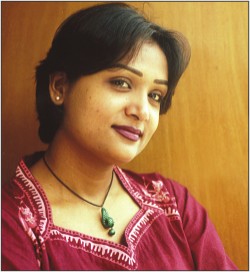
Shabnam Ferdousi
Representing a new generation of women filmmakers
Kavita Charanji
Several women filmmakers have a grouse--not being taken seriously by their male counterparts despite their obvious talent and a scenario where women are pigeon holed as pretty faced actresses or at the most assistant directors. On the occasions that women are portrayed in mainstream films, they are often shown as domestic help, quarreling with their husbands and generating disharmony in the family.Here's where stalwart filmmakers of the alternative genre such as Shameem Akhtar, Catherine Masud and Yasmin Kabir come in. Catherine has worked closely with her husband Tareque Masud as co-director, co-scriptwriter and editor of alternative films such as Ontorjatra. In turn, Yasmin has done bold documentaries, including Shadhinota and My migrant soul. There is also Shameem Akhter with feature films like Shila Lipi and Itihas Konya. As a new generation of women take to filmmaking, particularly documentaries, there's room for hope. In the new breed is intrepid filmmaker Shabnam Ferdousi. One only needs to see one or two of her documentaries to realise just how sensitive she is to the women's cause. There is, for instance, a hard-hitting film about eunuchs, titled Spring of Desire (2003) for which she did the research, script and direction. Later came In Quest of Life (2004-2005), produced by the NGO Steps Towards Development. Once again she took on the research, script and direction. The assistant director of the film is Wahida Binte Razzak Misha. In Quest of Life homes in on the life and travails of a single young woman, named Masuma Pia. A media consultant who owns a media communication house called Matri, Masuma is also a passionate photographer who says that nature is her love and through her medium she 'frames' her own emotions. "Film is the canvas," says Masuma at one point. Through conversations with family and friends, one gets to realise both Masuma's vulnerability as a single woman as well as her strengths. Last year Shabnam also worked as assistant director in a German 90-minute documentary film, called Iron Eater. The filmmaker, Shaheen Dillriaz is a Bangladeshi. This film focuses on the ship breaking yard at Chittagong. Shabnam is also a news presenter of Channel i. Others endeavours are Noho Mata Noho Kanya (on sexual harassment) in 2001 and The Awaiting (based on mothers waiting in front of their children's school) in 2000. These documentaries emerged from a four-month workshop conducted by Steps Towards Development. In the sphere of development productions, she has done documentaries on domestic violence against women (for Oxfam GB) and two TV spots on election campaigning awareness for Proshika. Now Shabnam has her hands full with two other documentaries, which depart from women's issues. My Name is Beggar, for Channel i, is specifically about the ubiquitous phenomenon of street beggars. The second work, titled The Elegy of my saree, depicts the lives of Tangail saree weavers. This is a 90-minute documentary. Why is the woman's cause so dear to Shabnam? For one, she believes that despite the lip service paid to gender equality, women do not have real freedom. And even though she is better off than most women, the niggling reminders of a secondary status do surface. As she says, "When my maid does not show up for work, life goes on for my husband Amit Habib, a journalist and my son Anindya. However I have to get things in order and only then can I go out to work." With more young women entering into filmmaking, the time is ripe for change. By voicing their concerns articulately like Shabnam, women behind the camera will serve as much needed catalysts for change.
|
|

